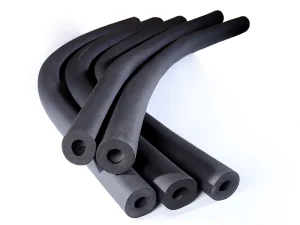
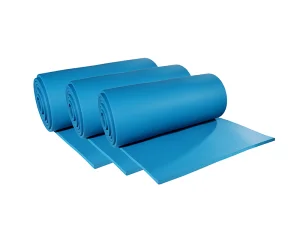
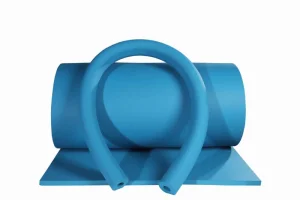
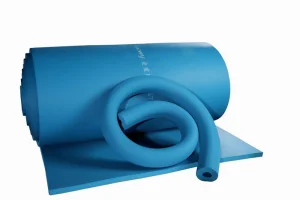
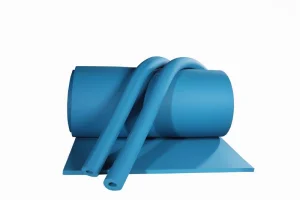
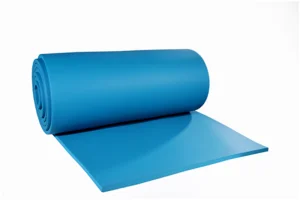
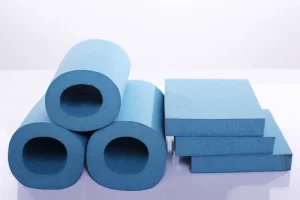
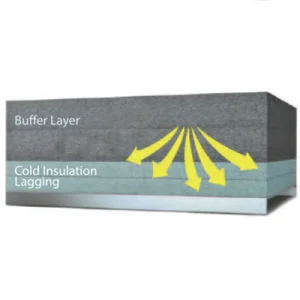
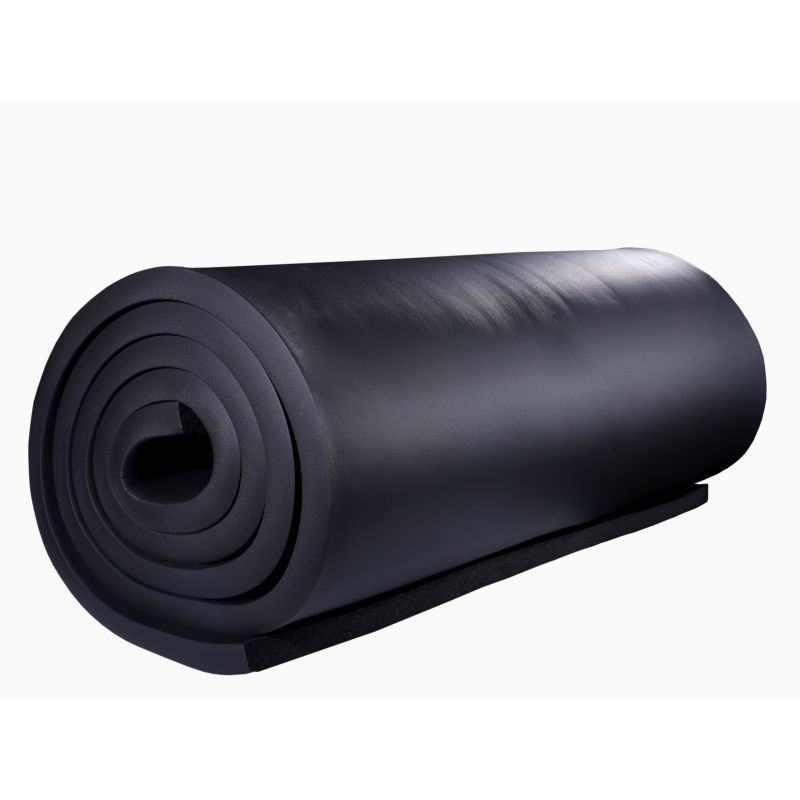
The flexible ULT insulation system does not need to install a moisture barrier. Due to the unique closed cell structure and polymer blend formulation, LT low temperature elastomeric materials are highly resistant to water vapor permeation. This foamed material provides continuous resistance to moisture penetration throughout the thickness of the product. This feature greatly extends the life of the entire cold insulation system and significantly reduces the risk of corrosion of the pipes under the insulation.
Frequently Asked Questions (FAQ)
What is the operating temperature range of this ULT insulation system?
The insulation system is designed to maintain its flexibility at extremely low temperatures, operating within a range from -200°C up to +125°C. The standard technical data range specifies (-200°C to +110°C) for optimal safety parameters.
Does this insulation system require the installation of an external moisture barrier?
No, the flexible ULT insulation system does not require an additional moisture barrier. Its unique closed-cell structure and polymer blend formulation make the material highly resistant to water vapor permeation across its entire thickness.
How does the insulation reduce the risk of under-pipe corrosion?
By providing continuous resistance to moisture and water vapor penetration, the material prevents water accumulation on the pipe surface. This significantly reduces the risk of corrosion of the pipes under the insulation (CUI).
What is the thermal conductivity performance at cryogenic temperatures?
The material exhibits excellent low thermal conductivity. It is tested to achieve ≤0.028 W/(m.k) at -100°C and ≤0.021 W/(m.k) at -165°C.
How resistant is this insulation material to external environmental factors?
The low-temperature elastomeric materials demonstrate good resistance to fungi, ozone, ultraviolet (U.V.) light, and weathering, ensuring long-term durability in various application environments.
Why is a low glass transition temperature important for this insulation?
A low glass transition temperature ensures that the material does not become brittle at extreme low temperatures. It maintains its elastomeric flexibility, which dramatically reduces the risk of crack development and propagation under thermal stress.
 Kingflex