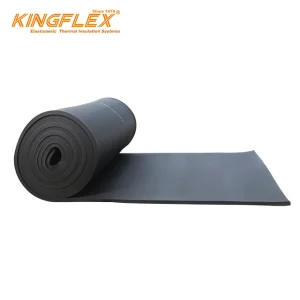
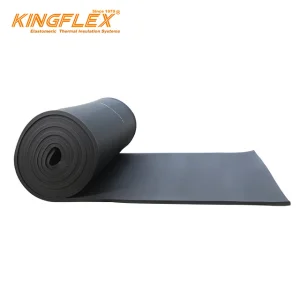
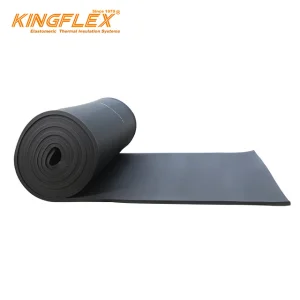
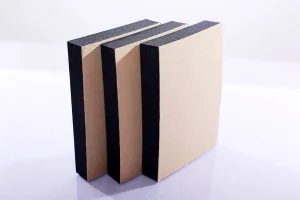
Rubber Foam Insulation Sheet Roll Factories & Pricelist

High-Density Closed-Cell Elastomeric (NBR/PVC) Thermal & Acoustic Insulation Systems for Global HVAC, Industrial Pipelines & Cryogenic Engineering

Material Science of Elastomeric Rubber Foam Sheets

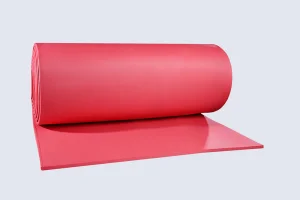
The global demand for high-efficiency thermal insulation has driven significant advancements in material science, positioning Rubber Foam Insulation Sheet Rolls (synthesized from Nitrile Butadiene Rubber/Polyvinyl Chloride - NBR/PVC blend) as the premier standard for modern HVAC, construction, and mechanical piping systems.

Key Metric: A closed-cell structure exceeding 98% effectively prevents thermal drift, locking air pockets in place to guarantee a remarkably low thermal conductivity (λ ≤ 0.034 W/m·K at 0°C).

Unlike traditional fibrous materials, rubber foam requires no additional vapor barriers. Its dense molecular composition provides inherent resistance to water vapor transmission (μ ≥ 10,000), making it immune to moisture accumulation, mold growth, and the structural deterioration typically caused by condensation on chilled surfaces.

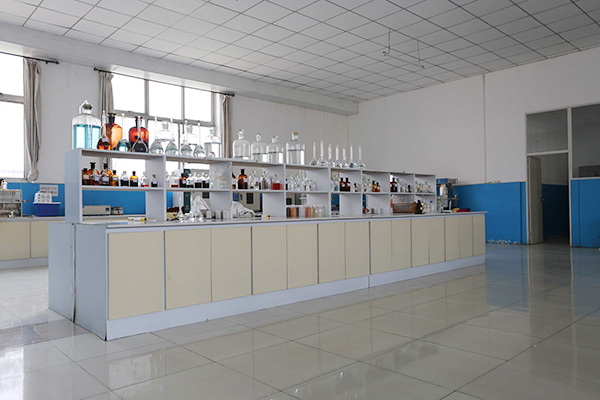
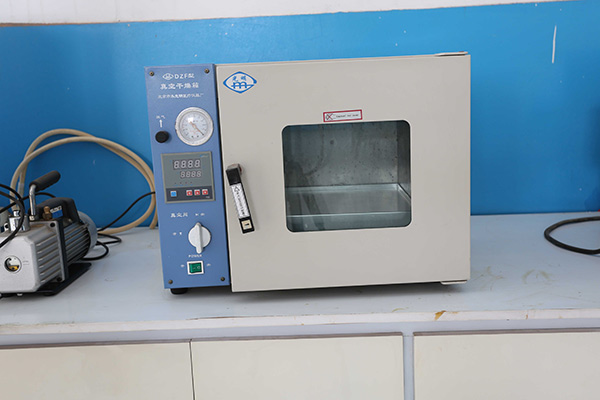
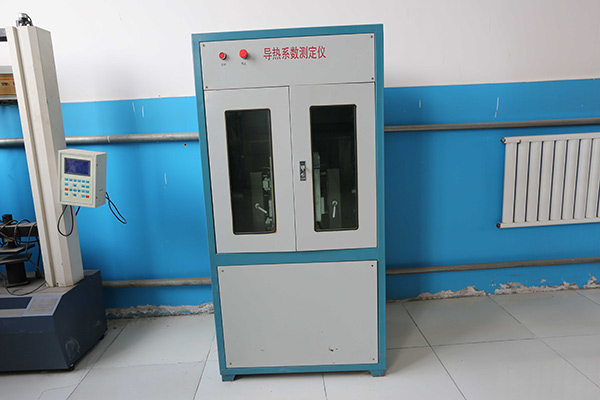
Kingflex Factory Manufacturing Process

Global Market Demands & Procurement Dynamics

How Tier-1 HVAC Contractors and Industrial Engineers Make Procurement Decisions

HVAC Ducting & Condensation Control

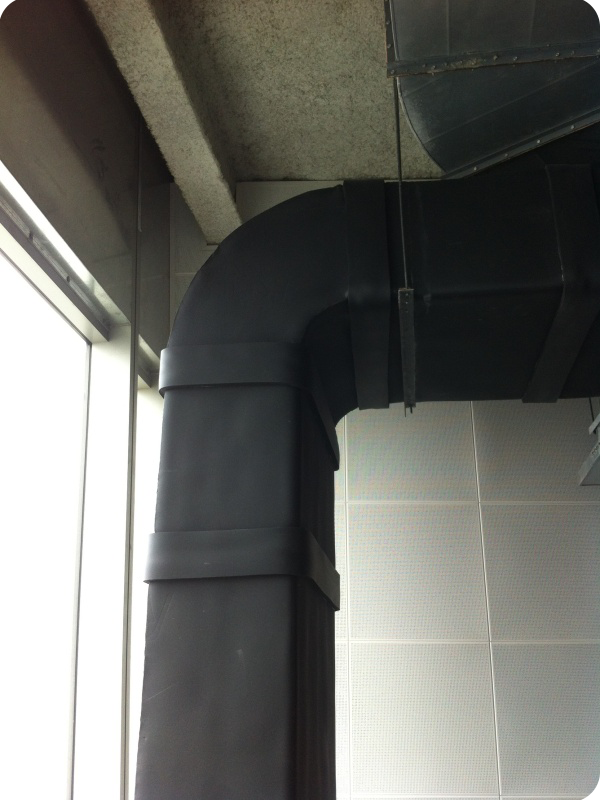
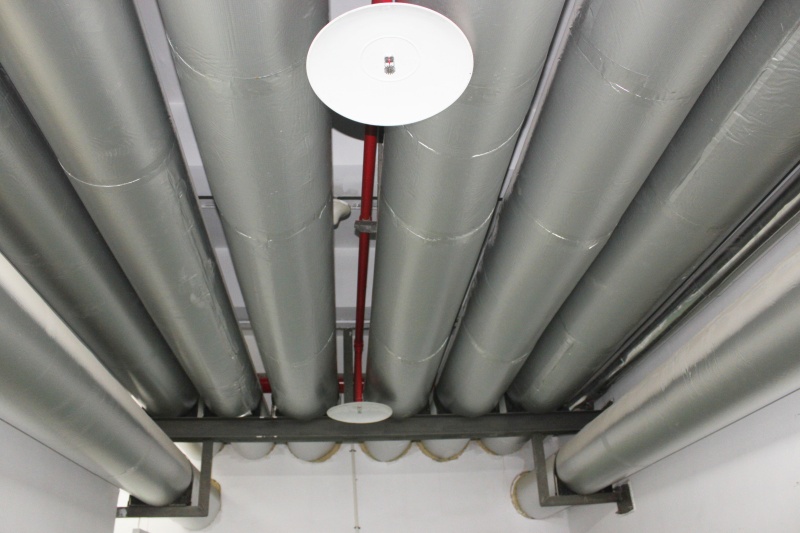
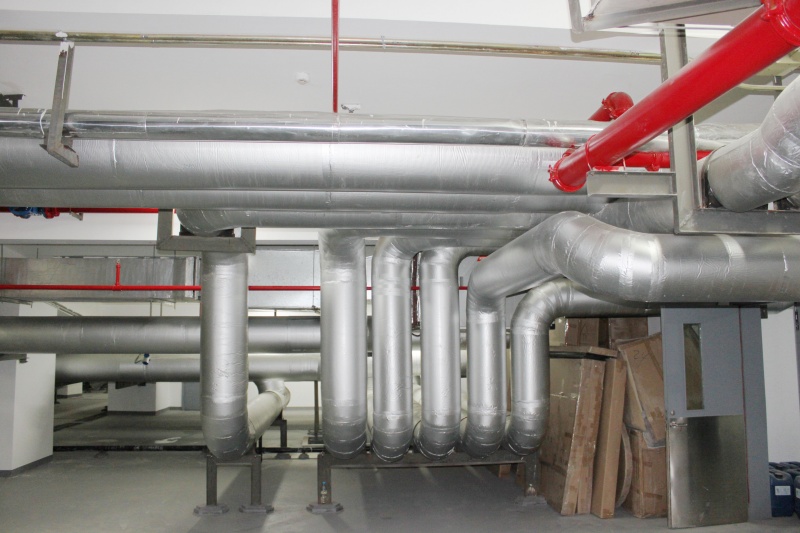
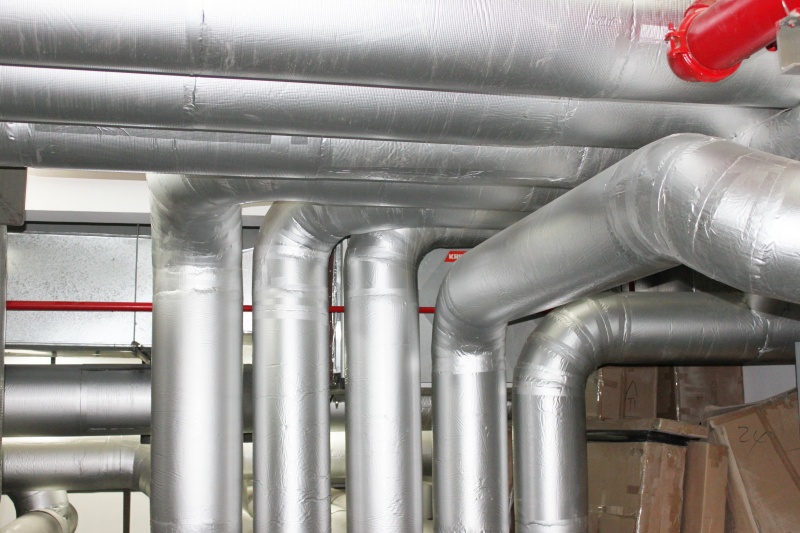
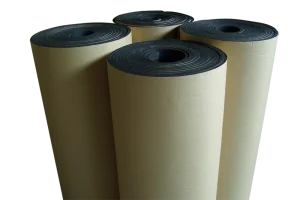
In humid or tropical regions, exposed ductwork easily condensates. Self-adhesive rubber foam sheet rolls adhere directly to steel sheets, forming a seamless, continuous moisture barrier that preserves indoor air quality (IAQ) and prevents ceiling damage.

Cryogenic & Low-Temp Pipelines

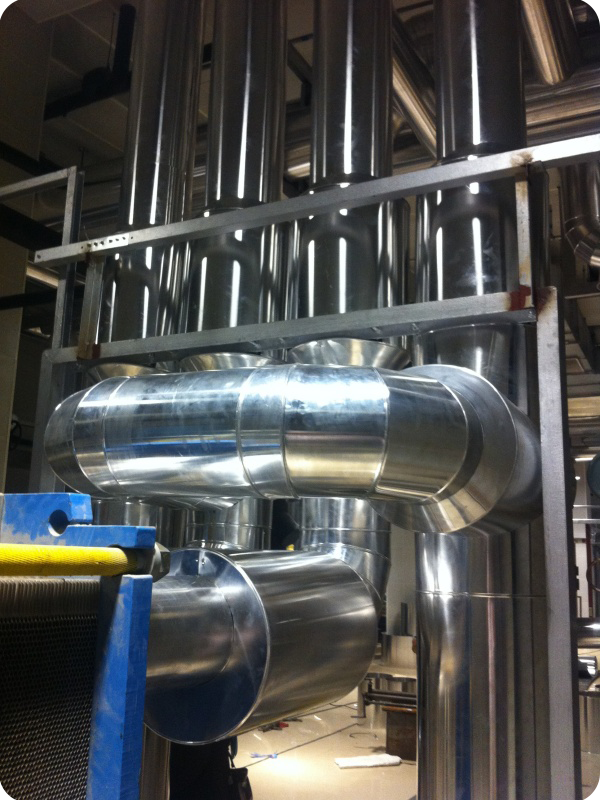
For industrial chemical plants and cold storages operating between -40°C and 105°C, regular insulation cracks under thermal stress. The structural elasticity (compression resilience ≥ 80%) of NBR/PVC foam allows it to absorb pipeline contractions and expansions.

🔥

Fire Protection Compliance

Strict building safety regulations demand Class 0 or Class 1 fire-rated materials. High-quality rubber foam formulations incorporate halogen-free flame retardants, ensuring self-extinguishing behavior and minimal toxic smoke emission in emergency situations.

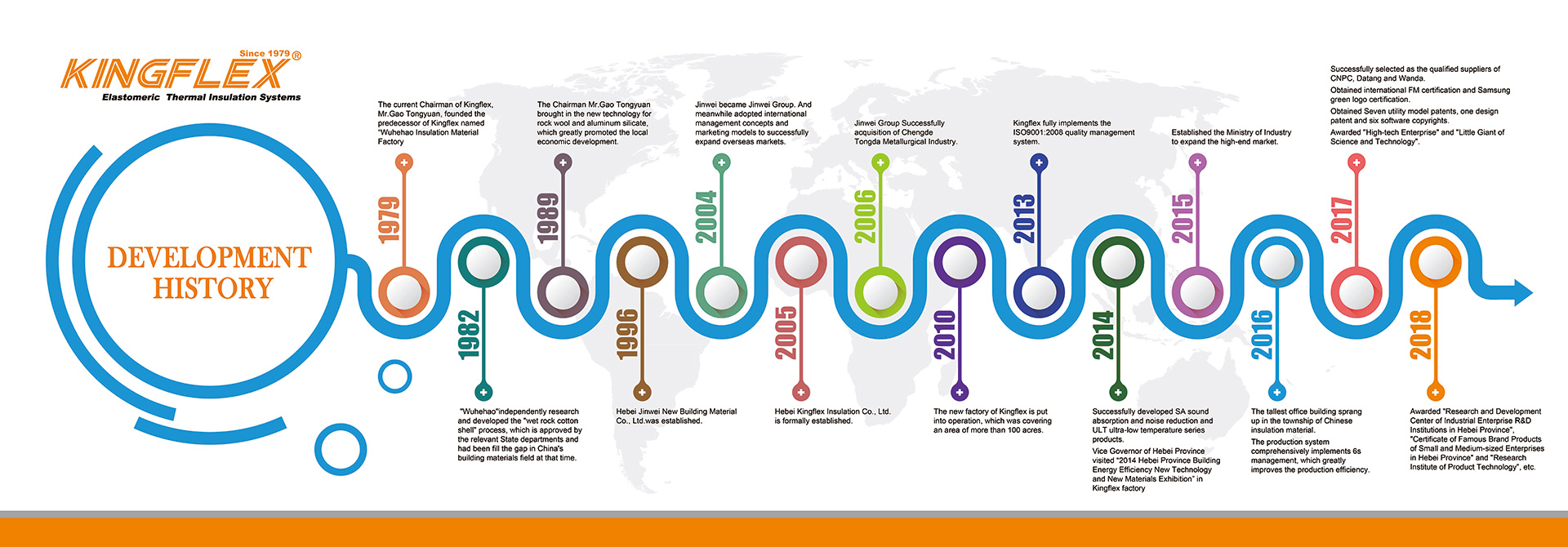
Kingflex History Jinwei Group 1979

Over 40 Years of Pioneering Insulation Excellence

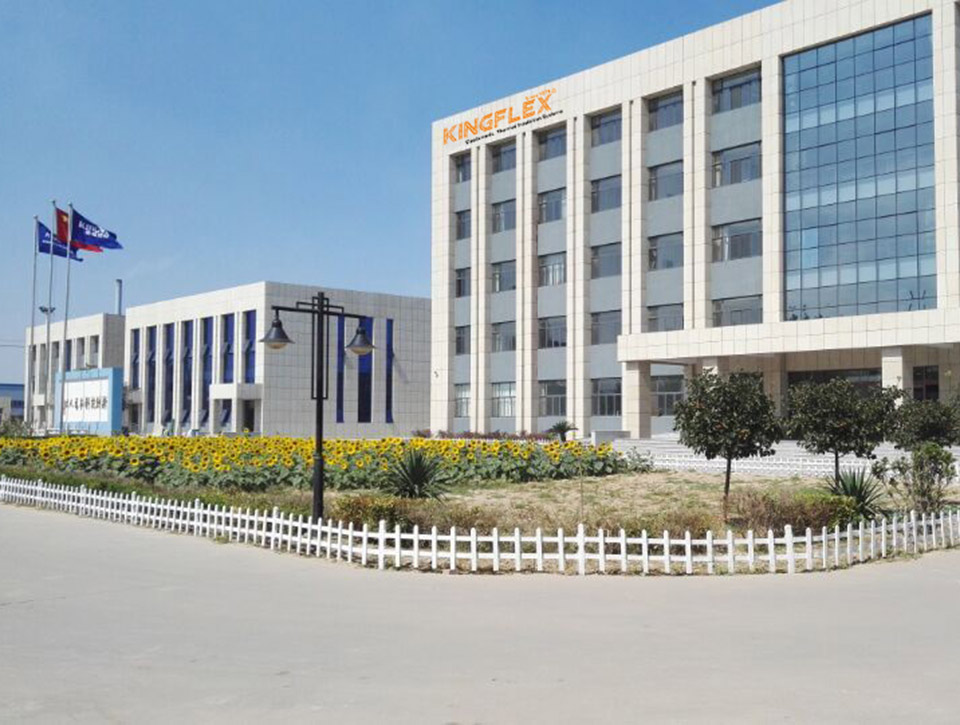
Kingflex Insulation Co., Ltd. is a globally recognized manufacturing and trading integration specializing in high-performance thermal insulation products. Our roots go back to 1979, founded under the Jinwei Group—the first manufacturer of thermal insulation materials north of the Yangtze River in China.

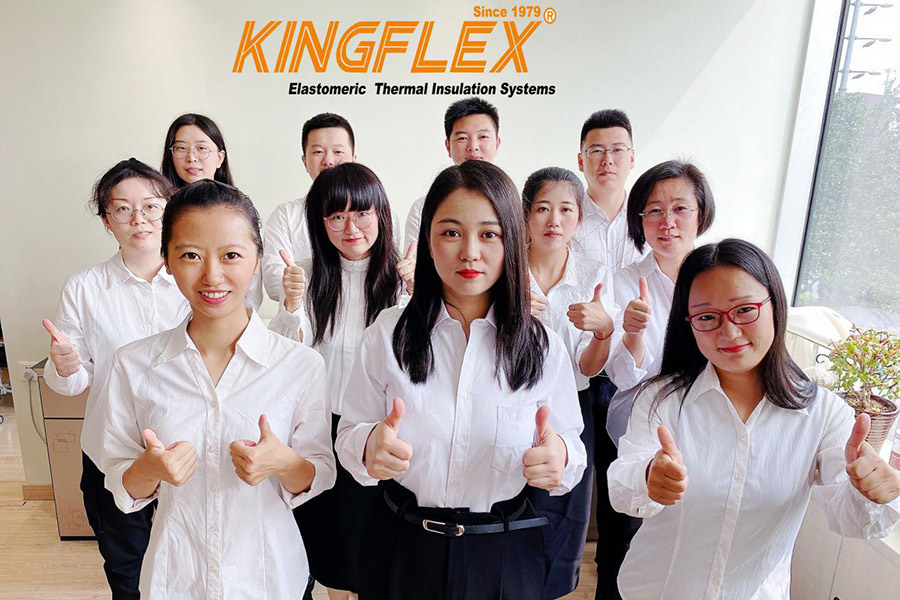
Today, our main production center sits in Dacheng, the green building materials capital of China. Operating under an energy-saving and consumption-reducing core ethos, Kingflex provides end-to-end insulation systems, encompassing consultation, R&D, manufacturing, site installation guidance, and dedicated post-sale support.

40+
Years Experience
660k+
m³ Annual Capacity
66+
Export Nations
5
Auto Assembly Lines

China Factory 4.0: Supply Chain Resiliency & Cost Efficiency

To fulfill massive infrastructure projects globally, production scaling is paramount. Kingflex operates 5 large, state-of-the-art automatic extrusion assembly lines. By transitioning to digitized production monitors, raw material feeding systems, and automated vulcanization ovens, we guarantee consistency across thicknesses ranging from 6mm up to 50mm.

Our dedicated R&D division is staffed by 8 professional materials engineers who collaborate with national research labs to refine chemical formulas for better flame retardancy and lower VOC emissions. With 6 international sales agents and a dedicated production force of 230 workers, we handle complex global supply requirements with agility.

Industrial Product Range & Dimensions

Standard Spec Sheets for Mechanical and Building Insulation Applications

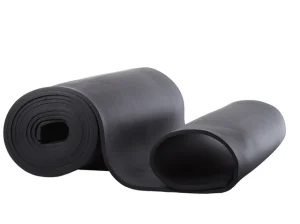
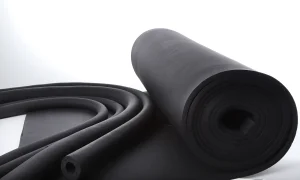
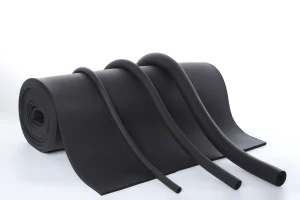
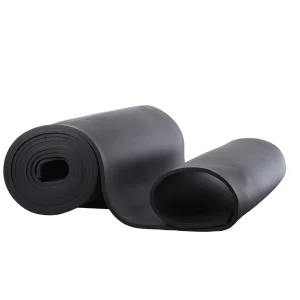
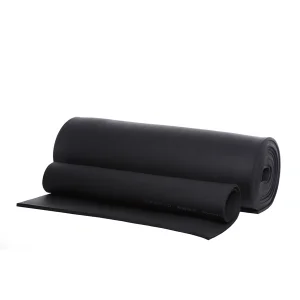
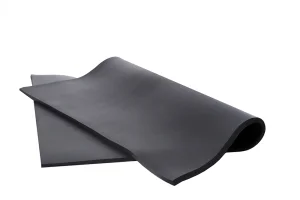
Black Rubber Foam Insulation Sheet Roll

  • Material Composition: Elastomeric NBR/PVC blend
  • Standard Thicknesses: 6mm, 9mm, 13mm, 15mm, 19mm, 25mm, 32mm, 40mm, 50mm
  • Density Range: 40 - 55 kg/m³
  • Service Temperature: -40°C to 105°C
  • Core Advantages: High closed-cell ratio (>98%), low thermal conductivity, high moisture resistance, self-extinguishing.
  • Key Applications: HVAC air ducts, building wall/roof insulation, process steam tanks, chilled water tanks.

Black Rubber Foam Insulation Pipe

  • Material Composition: Elastomeric NBR/PVC blend
  • Standard Thicknesses: 9mm, 13mm, 19mm, 25mm, 32mm, 40mm
  • Inner Diameter (ID): 6mm to 114mm
  • Density Range: 40 - 55 kg/m³
  • Service Temperature: -40°C to 105°C
  • Core Advantages: Seamless extrusion coating, anti-cracking resilience, anti-freezing for outdoor pipe runs.
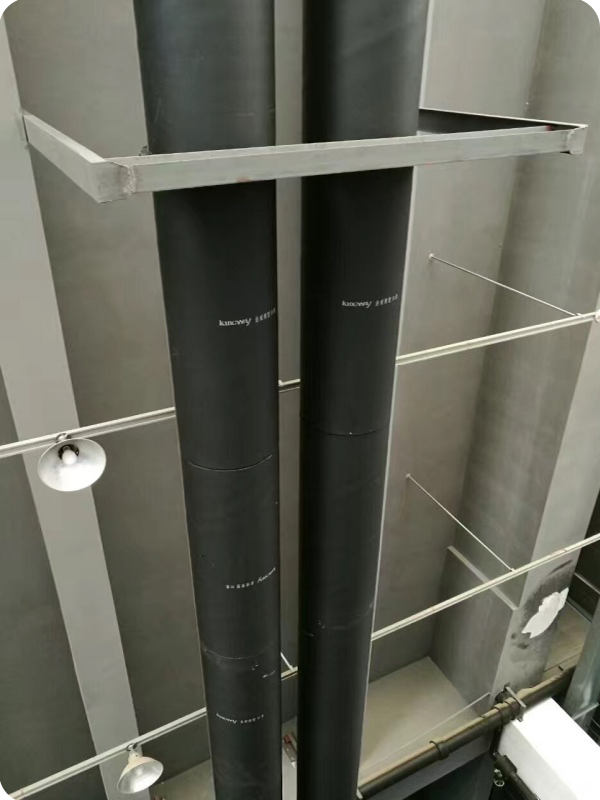
  • Key Applications: Chilled water pipes, split-unit refrigeration lines, boiler return pipes, solar hot water pipelines.

Comparison: Rubber Foam vs. Rock Wool vs. Glass Wool

Ensure the correct specification based on technical metrics and operating conditions

Material Metric NBR/PVC Elastomeric Rubber Foam Rock Wool Insulation Glass Wool Insulation
Structural Density 40 - 55 kg/m³ 60 - 150 kg/m³ 12 - 48 kg/m³
Moisture Resistance (μ) ≥ 10,000 (Inherent vapor barrier) ≤ 1.2 (Needs external barrier) ≤ 1.1 (Needs external barrier)
Flexibility & Installation Extremely High; Easy to wrap and glue Low; Rigid slabs or wire mesh blankets Medium; Soft rolls but generates fibers
Thermal Conductivity 0.034 W/m·K at 0°C 0.038 W/m·K at 25°C 0.036 W/m·K at 25°C
Max Service Temp Up to 105°C (Special low down to -196°C) Up to 650°C Up to 350°C

International Certifications & Trust

Rigorous compliance to international testing standards to guarantee reliable construction performance

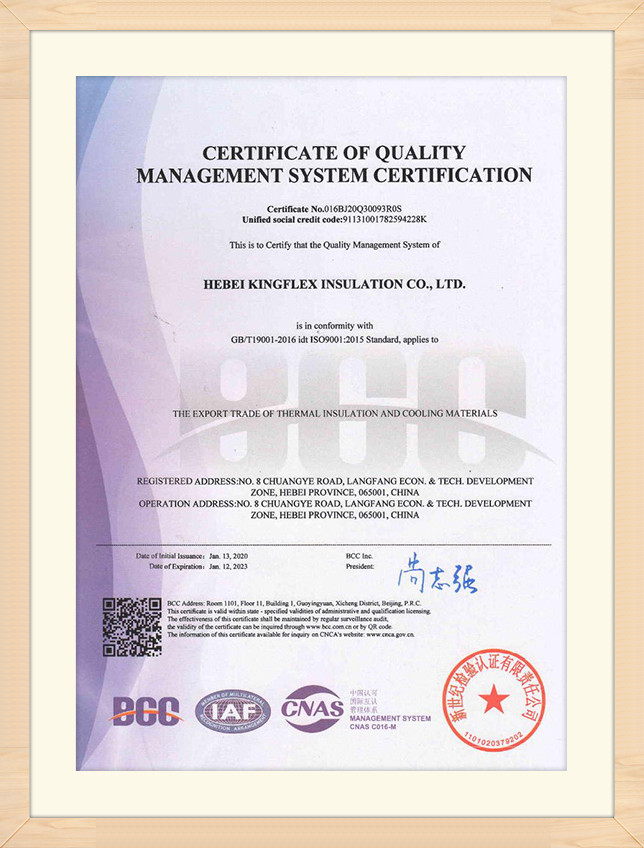
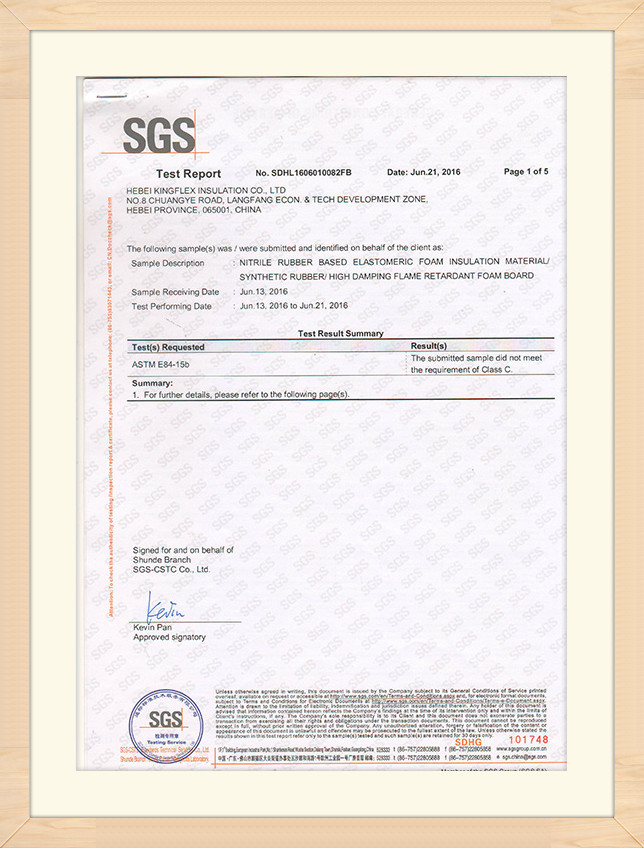
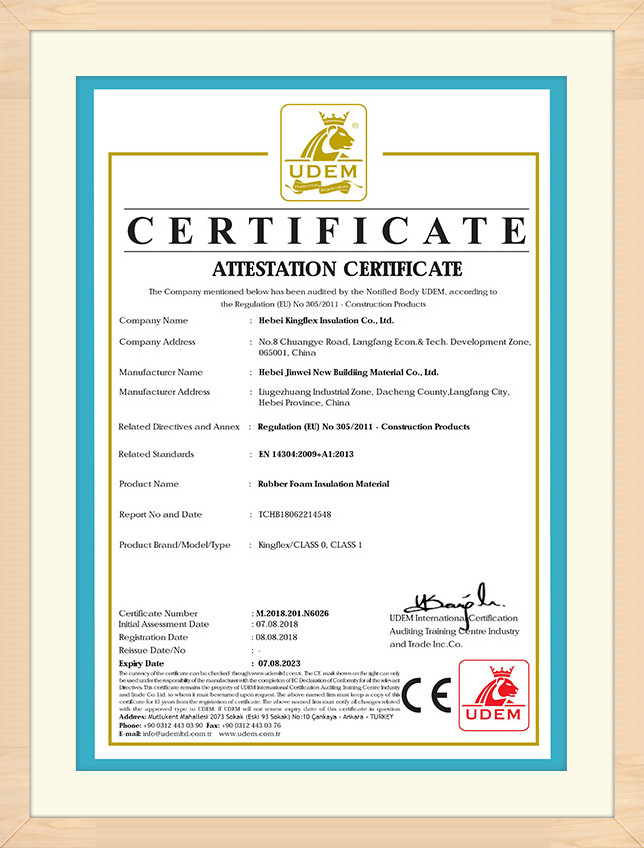
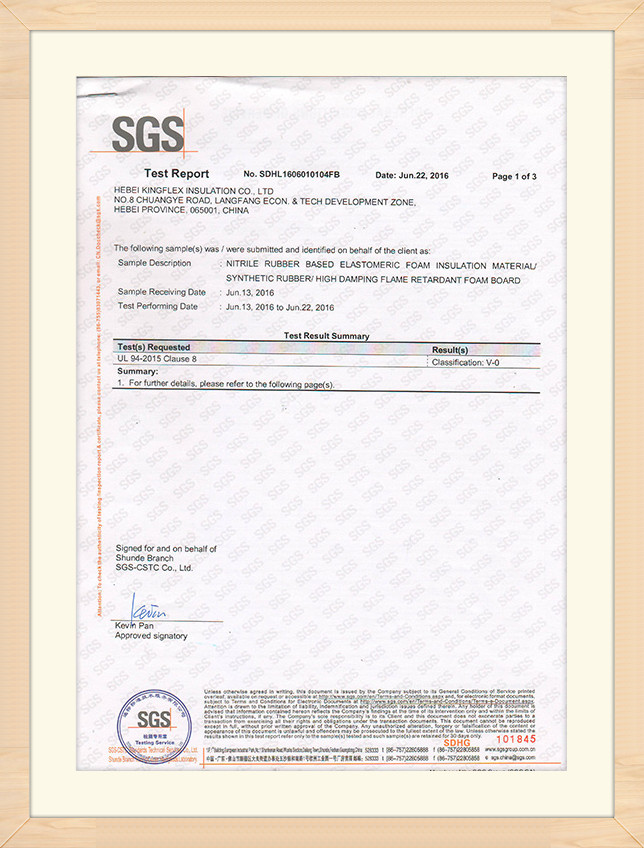
Our products strictly comply with BS 476 Parts 6 & 7 (Class 0 & Class 1), CE, REACH, RoHS, UL94, and ASTM standards. Each manufacturing run is fully traceable back to raw batch inspection documents.

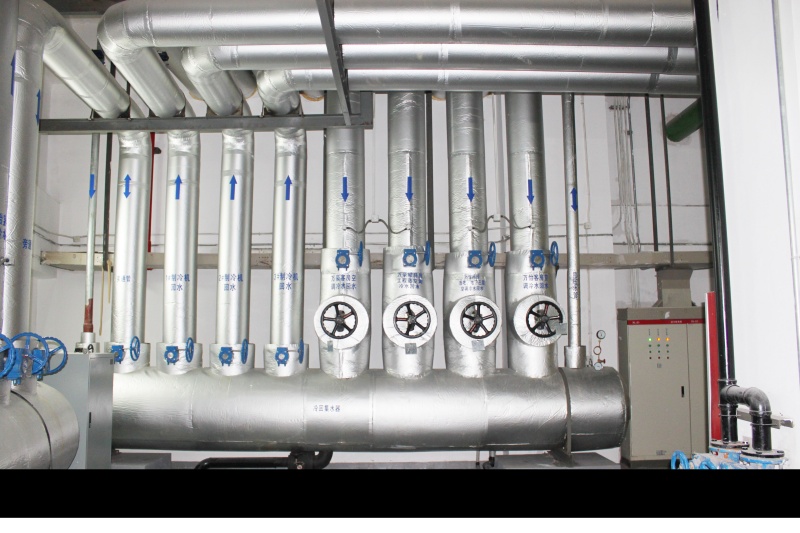
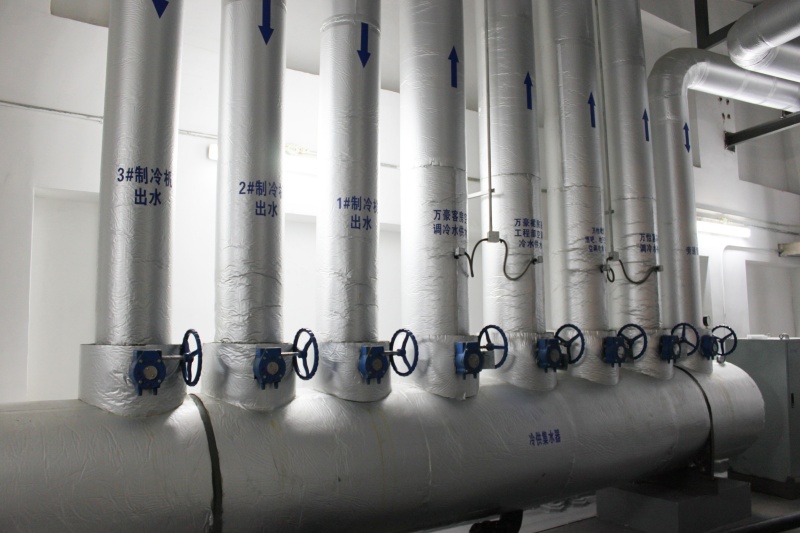
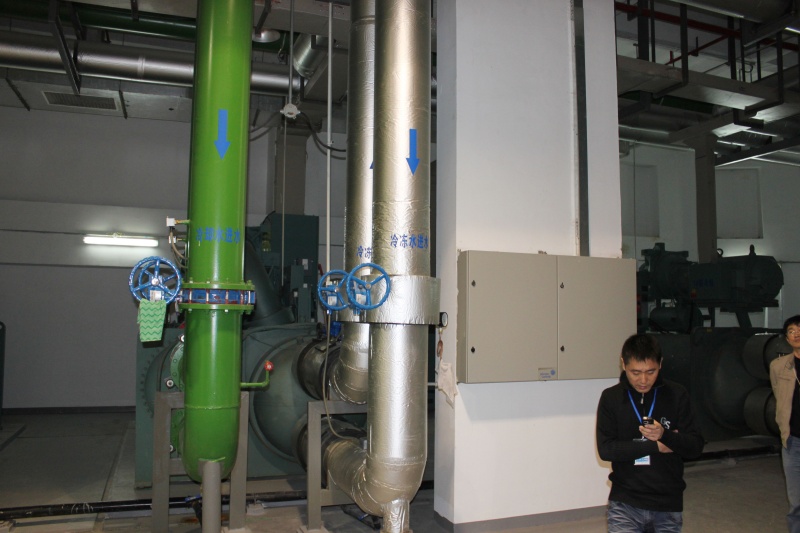
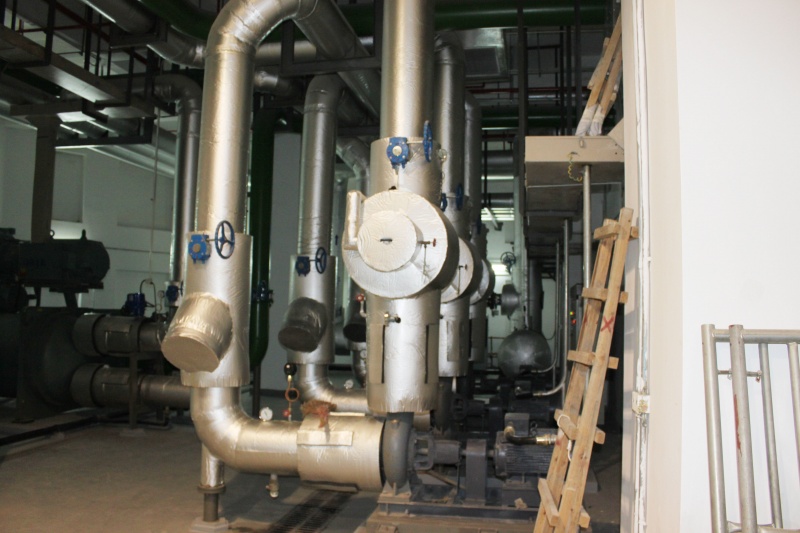
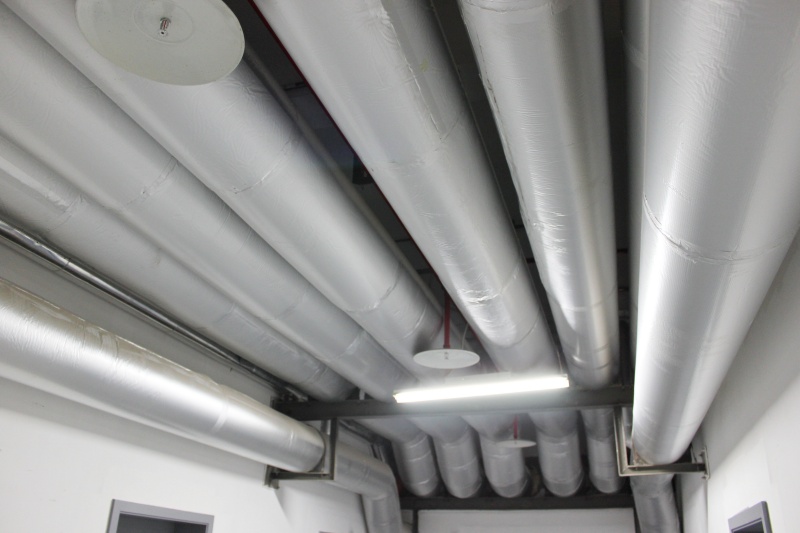
Engineered Projects & Applications

Delivering high-performance insulation systems to construction and industrial projects worldwide

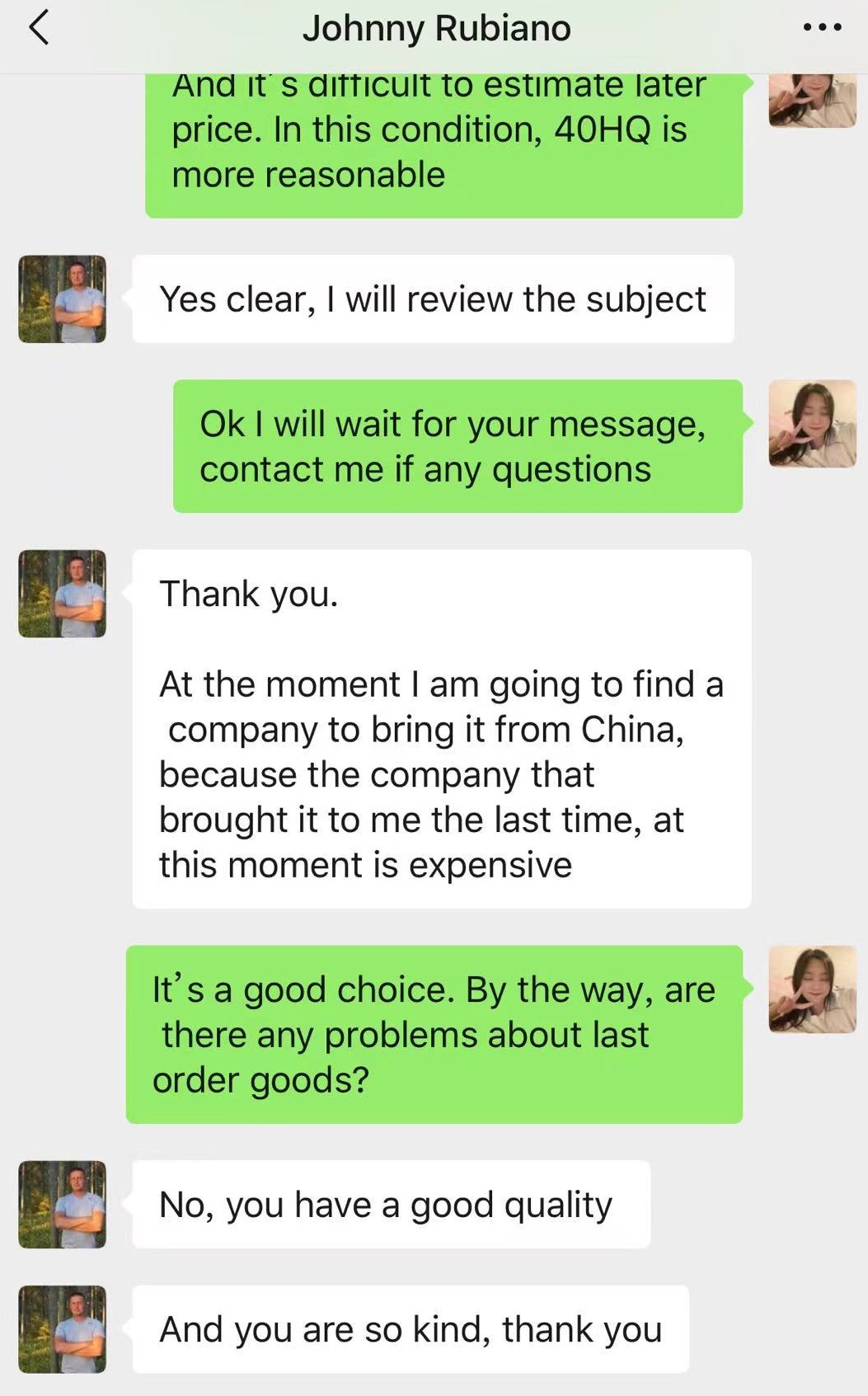
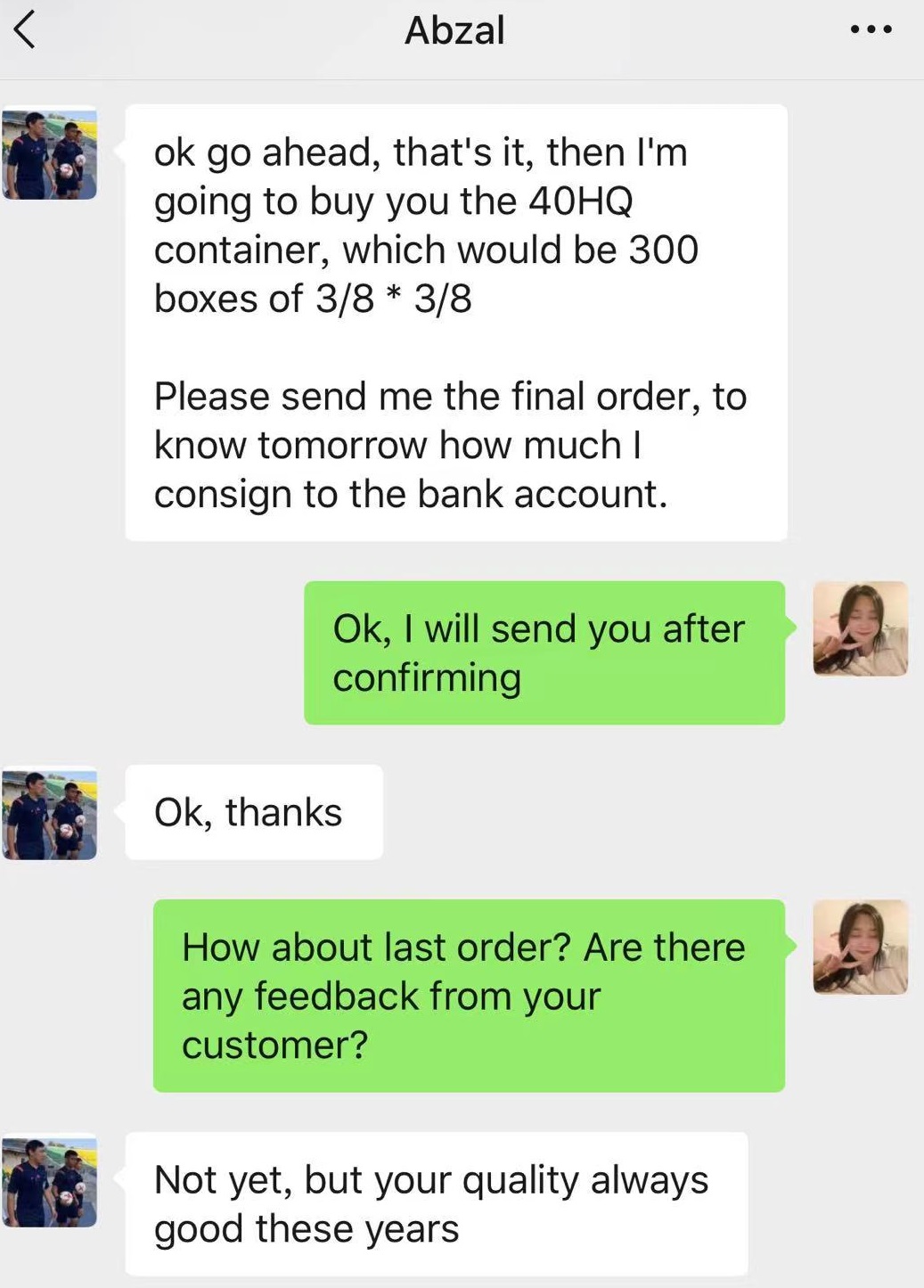
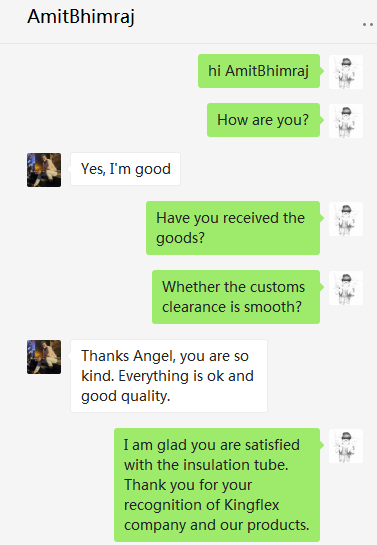
Client Validation & Real-time Support

Committed to transparent and active business interactions with global procurement managers

Frequently Asked Questions (FAQ)

Technical and procurement advice for insulation specification engineers and distribution partners

Q1: What is elastomeric rubber foam insulation used for?
It is primarily used for mechanical line HVAC ducting, air conditioning pipes, building envelope thermal insulation, industrial cryogenic storage tanks, acoustic damping in engine rooms, and heavy-duty cold insulation on condensate piping systems.
Q2: Is Kingflex rubber foam insulation fire resistant?
Yes, our rubber foam sheets are engineered with advanced fire-retardant additives. They comply with critical safety ratings including BS 476 Class 0 and Class 1, UL94 V-0 flame-retardant specifications, and self-extinguish when removed from open flames, releasing minimal toxic smoke.
Q3: What is the main difference between NBR/PVC rubber foam and rock wool insulation?
NBR/PVC rubber foam features a closed-cell structural matrix, giving it built-in resistance to moisture vapor and making it ideal for HVAC and refrigeration systems where condensation is a concern. Rock wool is a fibrous, open structure with higher thermal resistance at extreme high-temperature ranges, making it suitable for industrial chimneys or heavy fire-wall partitions.
Q4: Do you offer customizable dimensions and OEM options?
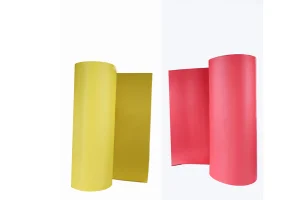
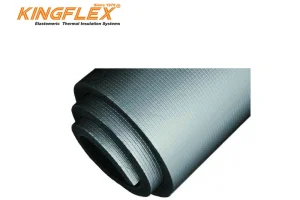
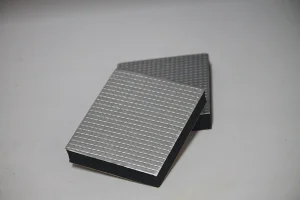
Yes, we provide extensive OEM and custom services. This includes producing non-standard roll widths, custom laminations like reinforcing aluminum foil (Alu-Glass scrim) or high-tack acrylic adhesive backings, and manufacturing specific color profiles for fluid coding identification.
Q5: What international quality certifications do your factory products carry?
Our materials are tested and certified under leading international frameworks, including CE, BS 476, REACH, RoHS, UL94, and ASTM. This ensures compliance with regional environmental laws and strict structural safety codes.
Q6: How are Kingflex shipments tracked and verified for trace quality?
Every production batch is assigned a unique tracking lot ID. We archive raw material testing inputs, curing times, expansion rates, and QC thickness maps for up to 5 years, providing full supply chain traceability for global engineering projects.
Q7: What ranges of thickness can you produce for your rubber foam sheet rolls?
Our automated lines produce continuous sheets ranging from 6mm (ideal for tight space configurations) up to 50mm (for maximum thermal barriers in refrigeration and cold room environments).
Q8: What is the typical service life of NBR/PVC elastomeric insulation boards and pipes?
When installed correctly according to mechanical design specifications and away from persistent UV degradation, our rubber foam products have a lifespan of 10 to 15 years, maintaining consistent thermal performance and structural integrity.
Continuous Supply Chain & Logistics Operations

With an annual output of 600,000+ cubic meters, we keep deep stock reserves to guarantee fast global delivery

Trusted by Global Distributors and Engineering Firms

Partner Logo
Partner Logo
Partner Logo
Partner Logo
Partner Logo
Partner Logo
Partner Logo
Partner Logo
Partner Logo
Partner Logo
Partner Logo
Partner Logo
Partner Logo
Partner Logo
Partner Logo
Partner Logo
Partner Logo
All Rubber Foam Insulation Sheet Roll Products