1 / 2
 Kingflex
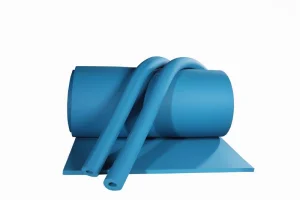
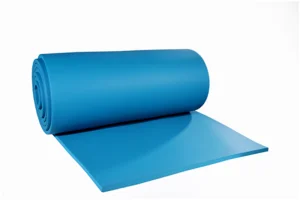
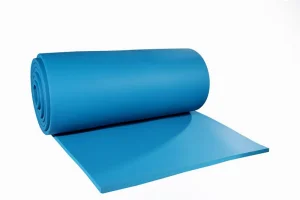
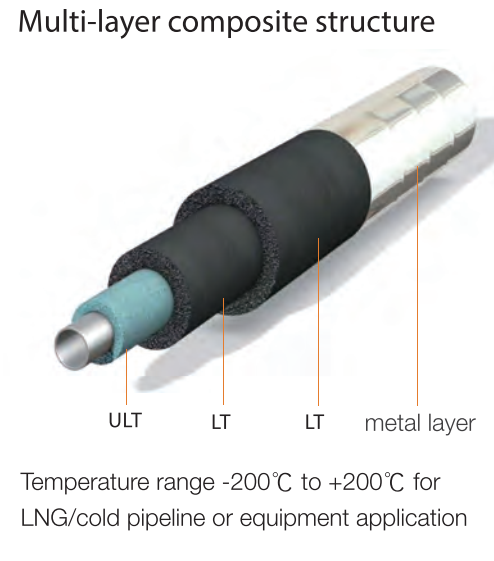
Cryogenic Systems are suitable for temperatures as low as -200°C.
Inner layers of ULT provide optimum mechanical properties at cryogenic temperatures, while outer layers of NBR-based insulation provide excellent thermal efficiency.
ULT is a purpose-built, low-temperature Diene Terpolymer, providing low-temperature flexibility to minimize thermal stress.
The distinctive color of ULT facilitates installation and inspection.
An integral feature of the system is the closed-cell foam technology which offers a high water vapor resistance. This may eliminate or reduce the need for additional vapor barriers.
Cryogenic Systems can be fitted under compression so traditional open-cell, fibrous in-fill pieces for contraction and expansion joints are unnecessary.
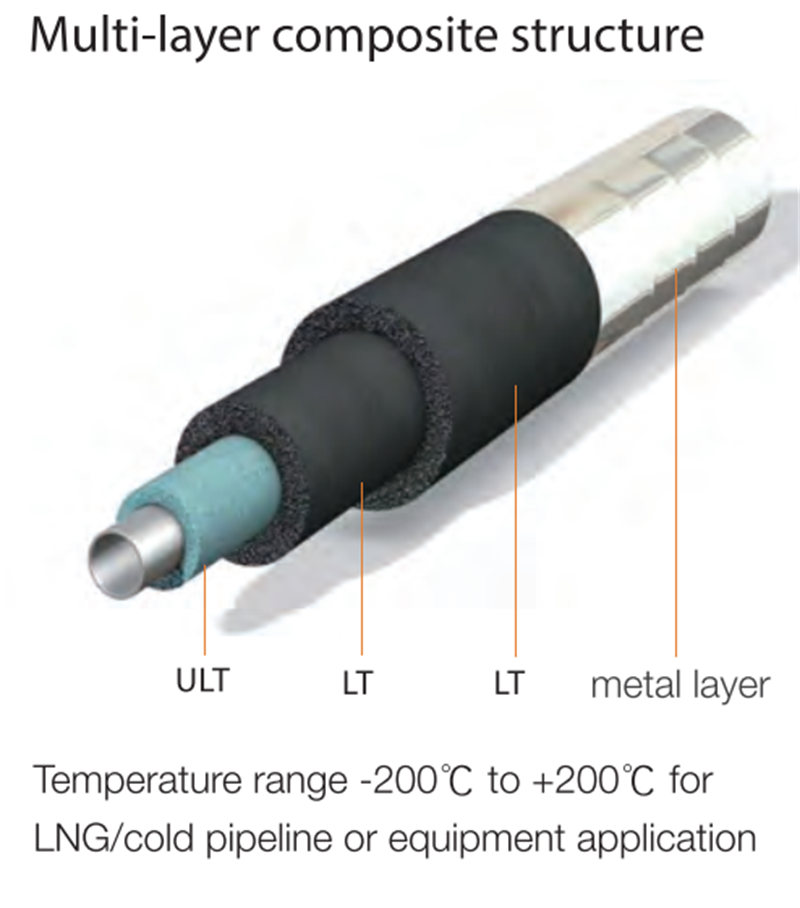
Cryogenic Systems are suitable for extreme environments, performing effectively at temperatures as low as -200°C.
The inner layers of ULT provide optimum mechanical properties at cryogenic temperatures, while the NBR-based outer layers deliver excellent thermal efficiency.
ULT is a purpose-built, low-temperature Diene Terpolymer. It is engineered to provide excellent low-temperature flexibility, which helps to minimize thermal stress on the systems.
Due to the built-in closed-cell foam technology that offers high water vapor resistance, the need for additional vapor barriers is often reduced or completely eliminated.
Fitting the system under compression eliminates the need for traditional open-cell, fibrous in-fill pieces for contraction and expansion joints.
The products undergo rigorous testing at independent laboratories to comply with standards including BS476, DIN5510, CE, REACH, ROHS, and UL94.