China Pipe Insulation Thickness Guide: Supplier & Pricelist
A Professional Engineering Manual for Closed-Cell Elastomeric & High-Temperature Thermal Insulation Systems. Direct from China's Premier Manufacturing Base.
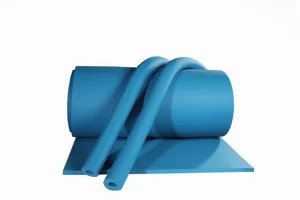
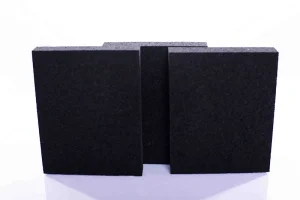
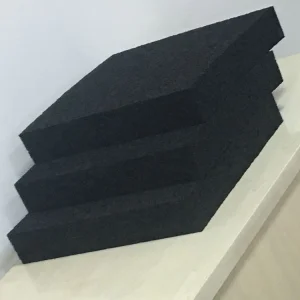
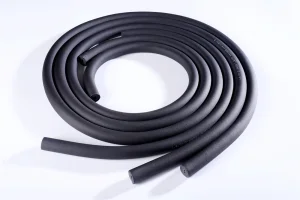
Primary Industrial & HVAC Insulation Products
Engineered rubber foam tubes, high-temperature boards, and low-temperature elastomeric sheets manufactured to exceed international building codes.
Overcoming thermodynamic energy loss and preventing industrial corrosion under insulation (CUI) through strict material thickness guidelines.
In modern engineering networks, the selection of the correct pipe insulation thickness is not merely a task of thermal preservation. It represents a complex calculations matrix involving heat transfer coefficients, fluid dynamics, ambient dew points, structural space limits, and long-term operating economics. System designers must calculate the exact thickness required to control energy dissipation, eliminate surface condensation, and protect underlying metals from chemical oxidation.
As a leading global supplier, Kingflex Insulation Co., Ltd. delivers custom solutions engineered to perform under extreme ambient profiles. Whether insulating a -196°C liquefied natural gas (LNG) pipeline or a hot steam process network, using the correct material with precise wall thicknesses ensures structural reliability and regulatory safety.
Thermal Efficiency
Reducing heat transmission by up to 95% in both high-temp steam systems and cryogenic fluid transport lines.
Condensation Control
Guarding against surface dew point breaches in humid environments to block moisture accumulation and mold.
Fire Retardancy
Engineered to meet BS 476 Part 7 Class 1 and UL94 V-0 flame spread indexes for critical safety compliance.
A reference guide to recommended minimum wall thickness across varying pipe dimensions and operating temperatures.
Determining correct insulation thickness depends on three primary variables: the temperature of the fluid medium, the ambient dry-bulb temperature, and the relative humidity (RH%) of the surrounding air. When relative humidity levels exceed 80%, the dew point temperature approaches the ambient air temperature, requiring thicker insulation to prevent surface moisture condensation.
The table below provides standard thickness reference limits for our NBR/PVC Elastomeric Rubber Foam Insulation Tube series under typical HVAC and process pipeline environments:
Pipe Nominal Size (NPS)
Chilled Water (4°C to 10°C)
Domestic Hot Water (50°C to 70°C)
Steam & Heating (100°C to 150°C)
Cryogenic System (-40°C to -196°C)
1/4" to 1/2" (DN8 - DN15)
9 mm (3/8")
13 mm (1/2")
19 mm (3/4")
25 mm to 32 mm (1" - 1.25")
3/4" to 1-1/4" (DN20 - DN32)
13 mm (1/2")
19 mm (3/4")
25 mm (1")
32 mm to 40 mm (1.25" - 1.5")
1-1/2" to 3" (DN40 - DN80)
19 mm (3/4")
25 mm (1")
32 mm (1.25")
40 mm to 50 mm (1.5" - 2")
4" to 6" (DN100 - DN150)
25 mm (1")
32 mm (1.25")
40 mm (1.5")
50 mm to 75 mm (2" - 3") *Multi-layer
8" and above (DN200+)
25 mm (1")
38 mm (1.5")
50 mm (2")
75 mm to 100 mm (3" - 4") *Multi-layer
The Thermodynamic Formula for Insulation Wall Thickness (S)
For critical installations, engineers use Fourier's Law of Heat Conduction in radial coordinates to evaluate the minimum required thickness:
Q = 2 π k L (Tp - Ta) / ln(Do / Di)
Where:
- Q = Heat transfer rate (W)
- k = Thermal Conductivity of insulation (W/m·K)
- L = Length of the pipeline (m)
- Tp = Outer pipe wall operating temperature (°C)
- Ta = Ambient design temperature (°C)
- Do = Outer diameter of insulation layer (mm)
- Di = Inner diameter of insulation layer (equivalent to pipe outer diameter) (mm)
By maintaining the outer surface temperature of the insulation above the atmospheric dew point ($T_{dew}$), surface condensation is avoided. Our R&D department assists design firms globally in carrying out these thermal calculations to ensure performance parameters match physical product tolerances.
Why Sourcing from China's Premier Insulation Factory Matters
A look at scale, technical leadership, and supply chain control at Kingflex Insulation Co., Ltd.
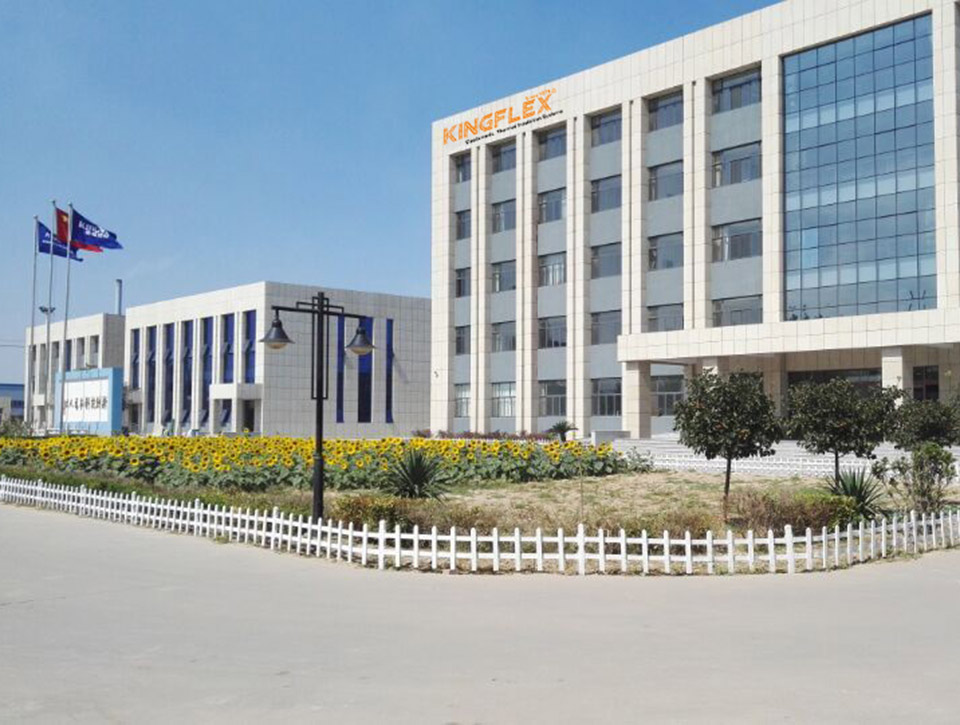
China's building materials industrial zone—specifically Dacheng County in Hebei Province—represents the world's most dense cluster of insulation engineering, research, and production capacity. Kingflex Insulation Co., Ltd. stands as a premier manufacturer in this green-building cluster, combining research, automated production, and global supply logistics.
600K+ m³
Annual Production Capacity
Operating 5 state-of-the-art automatic continuous foaming assembly lines to guarantee short lead times on large projects.
40+ Years
Industrial History
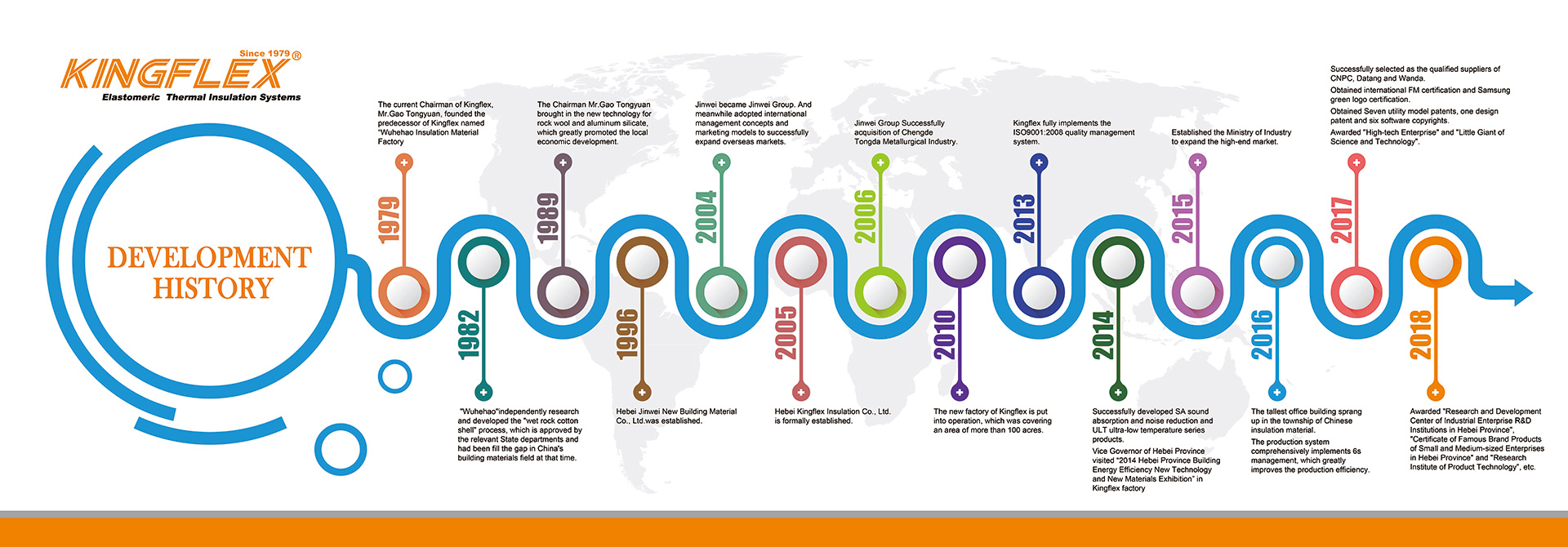
Established under the Jinwei Group (founded in 1979), the first primary thermal insulation factory north of the Yangtze River.
66+ Countries
Global Trade Footprint
For over 16 years, Kingflex products have protected infrastructure networks across North America, Europe, Asia, and the Middle East.
Advanced Manufacturing Quality Control
Our factory utilizes computerized automated raw material mixing and high-precision temperature control lines. This guarantees that our closed-cell elastomeric rubber foam reaches a closed-cell ratio of over 98%. This high density of micro-bubbles limits moisture vapor permeability, keeping thermal conductivity stable for 10 to 15 years.
Global Technological Trends in Pipeline Insulation
How green regulations, carbon neutrality, and safety requirements are shaping product formulation.
1. Halogen-Free Formulation
Traditional rubber foam materials often contain halogen flame retardants (chlorine or bromine), which emit toxic, acidic smoke in a fire. The market is shifting to halogen-free, low-smoke, non-toxic (HF LSF) thermal insulation. Our advanced formulas prevent corrosion on stainless steel pipes by keeping halogen content below limits defined by international standards.
2. Low-Temperature & Cryogenic Materials
LNG transport, pharmaceutical cold storage, and aerospace require materials that resist cracking at low temperatures. Kingflex’s ultra-low temperature cryogenic elastomeric systems stay flexible down to -196°C, offering physical durability where standard polyurethane or mineral wool fails.
3. Integrated Vapour Barriers
Applying separate foils or jackets on-site adds labor cost. The industry is moving to factory-applied composite foils and outer weather barriers. This improves moisture resistance and reduces labor costs for contractors during installation.
4. High Density Acoustic Performance
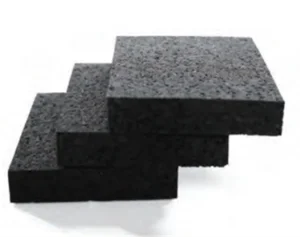
As urban areas become denser, controlling mechanical noise in commercial buildings is vital. High-density acoustic rubber foam panels control both thermal transfer and compressor/pipe vibrations, reducing noise levels in HVAC ducting.
Global Enterprise Procurement & Logistics Guidelines
Key quality criteria, transport safety, and compliance benchmarks for international EPC contractors.
Global purchasing departments face challenges with product compliance, supply chain logistics, and price stability. When importing container volumes from China, verifying certifications and quality trace systems is crucial to avoiding project delays.
Compliance Audit
Verify manufacturer test reports against international codes including BS 476, CE, REACH, RoHS, UL94, and ASTM.
Volumetric Optimization
Rubber foam products are lightweight but bulky. Our export logistics team optimizes container volume through vacuum packing, reducing shipping costs per cubic meter.
Quality Traceability
Each production batch includes a unique serial code. This allows full quality trace tracking from raw material delivery to the final installation site.
About Kingflex Insulation Co., Ltd.
Kingflex Insulation Co., Ltd. is a professional manufacturing and trading combo for thermal insulation products. Our research, development, and production facility is located in Dacheng, China—a well-known capital for green building materials. As an energy-saving and environmentally friendly enterprise, we focus on research, development, production, and sales.
We prioritize energy efficiency and consumption reduction. Kingflex provides total insulation systems through engineering consultation, R&D production, installation guidance, and dedicated after-sales support.
Our Heritage & History
Kingflex was established by the Jinwei Group, which has more than 40 years of history. Founded in 1979, the group was the first major manufacturer of thermal insulation materials north of the Yangtze River. This deep industry heritage allows us to manage manufacturing processes with high quality standards and efficiency.
Our Workforce & Team
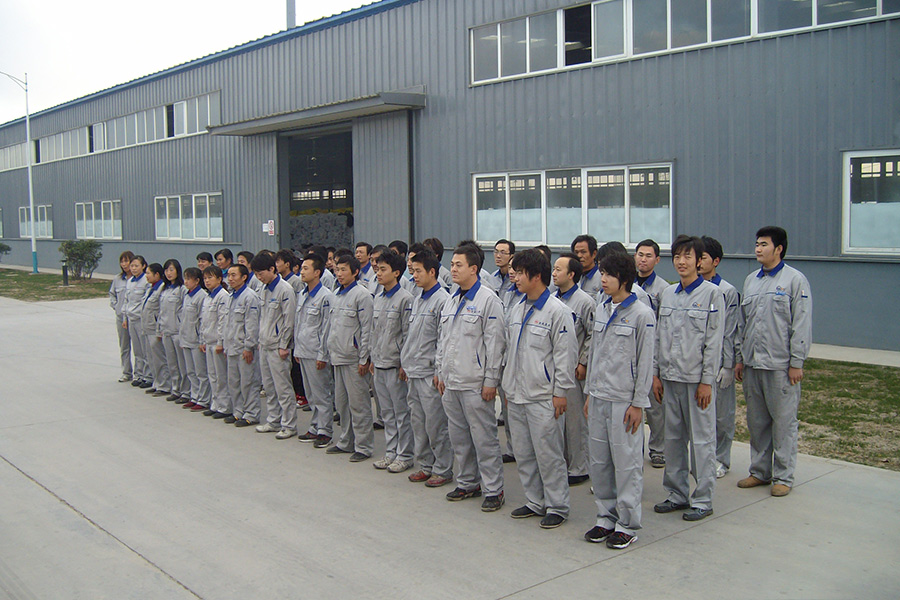
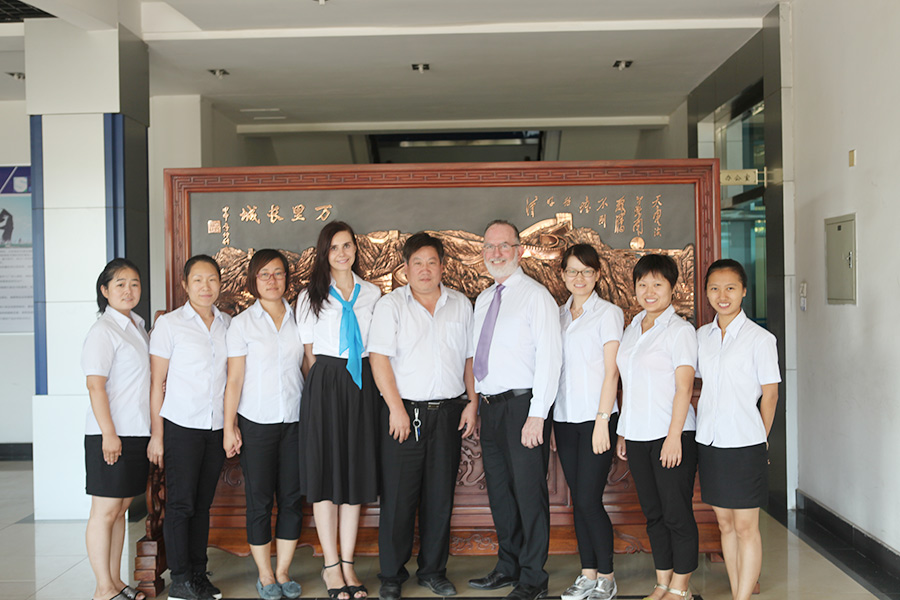
Our team is a close-knit group focused on providing high-quality service. Kingflex employs 8 professional engineers in our R&D department, 6 international sales specialists, and 230 workers in the production department.
Technical R&D Center & Quality Laboratories
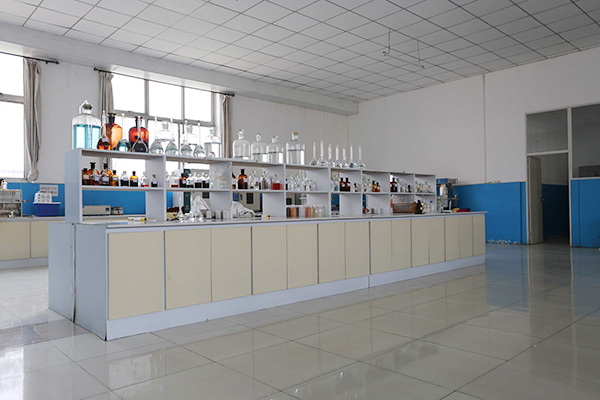
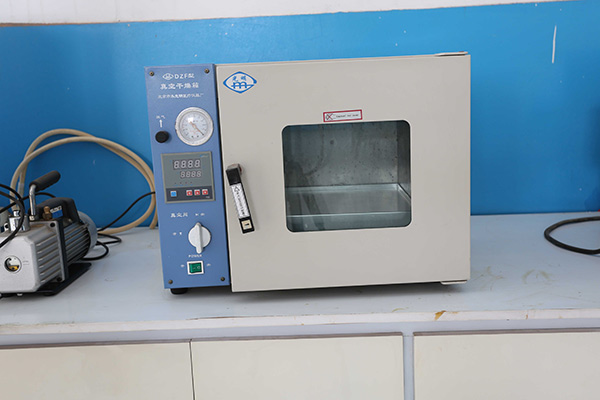
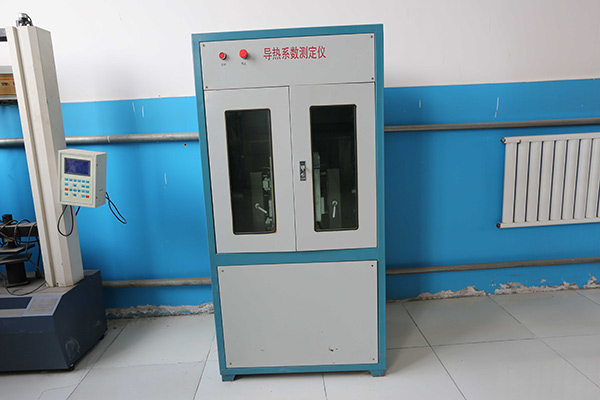
Our testing facility is equipped to verify the mechanical properties of each production run. We continuously test thermal conductivity, moisture absorption, density, and flame spread parameters to ensure our products meet strict international design standards.
Certified Quality & Project References
Tested and approved for commercial infrastructure and high-spec industrial sites worldwide.
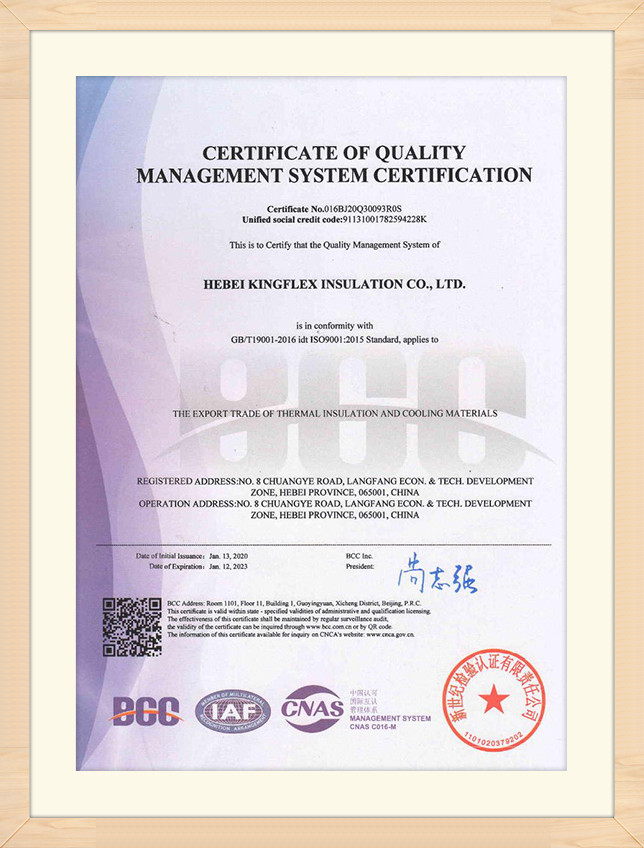
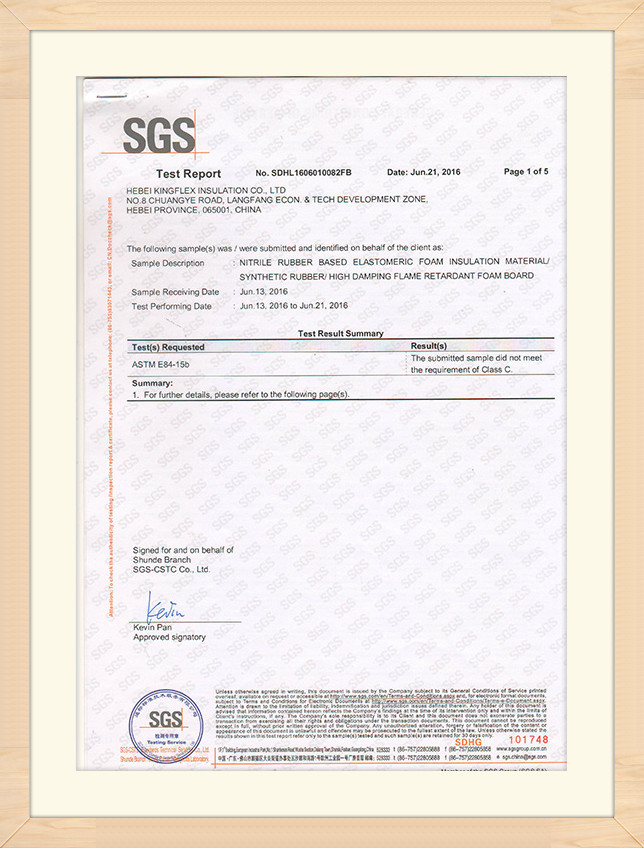
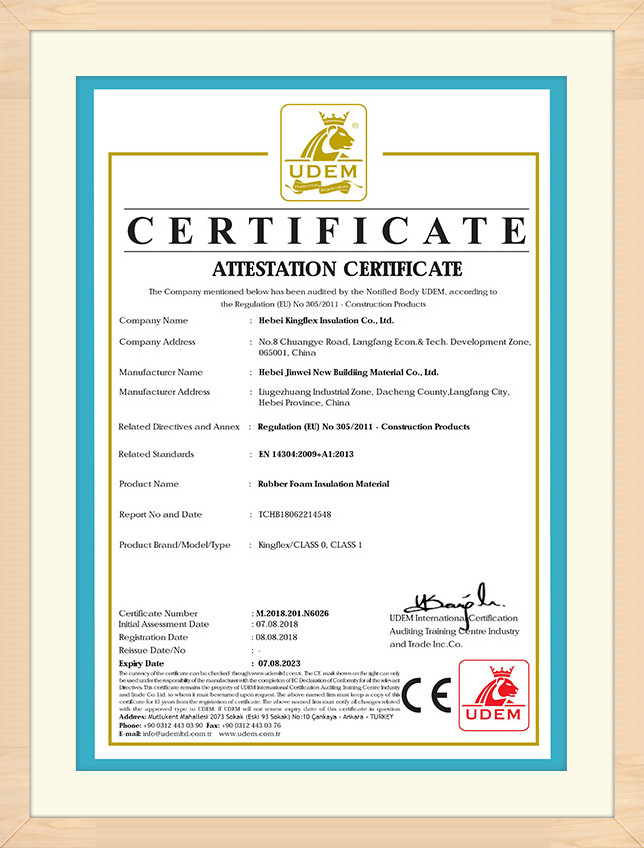
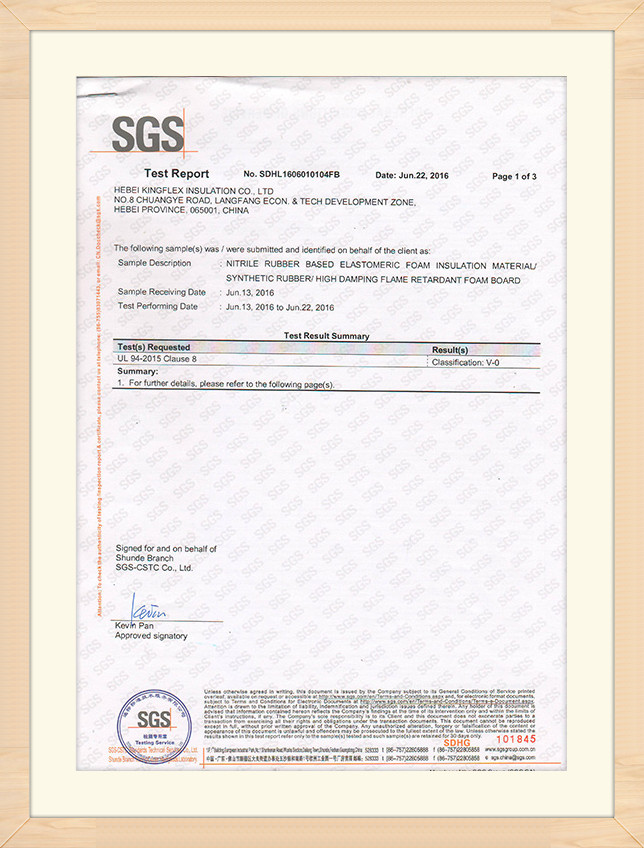
Our materials are manufactured to pass major global fire safety and environmental tests, including BS 476, CE, REACH, RoHS, UL94, and ASTM. This ensures compliance with regional building standards in Europe, North America, and the Middle East.
Global Client Projects & Communications
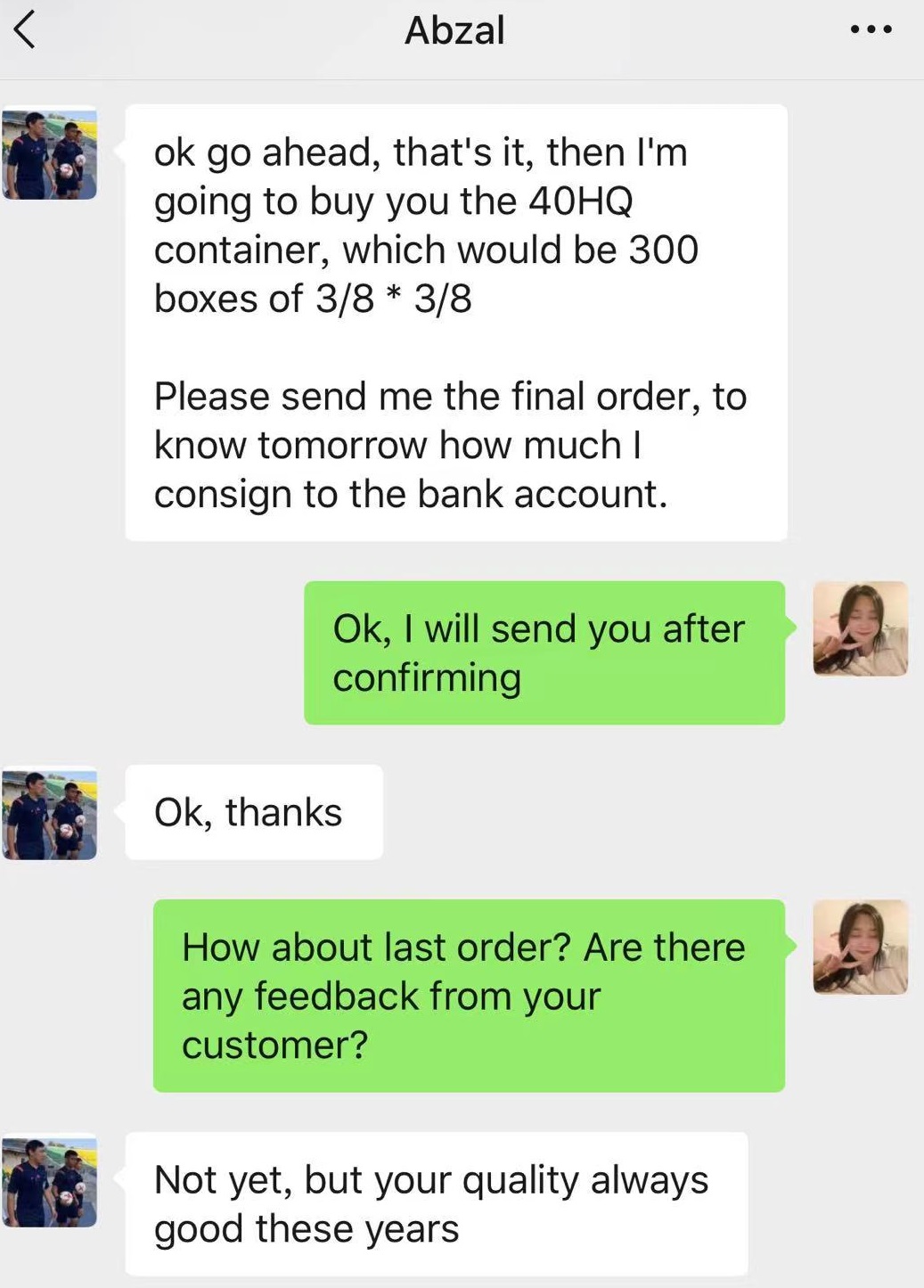
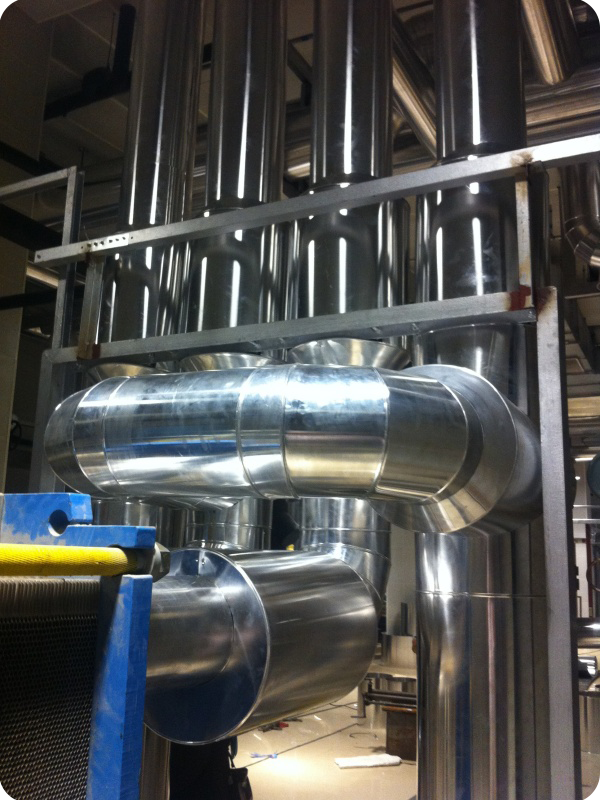
We supply integrated insulation solutions for commercial buildings, power stations, chemical plants, and cold storage networks. Our engineers provide step-by-step guidance to help contractors achieve proper joints and insulation wall thicknesses.
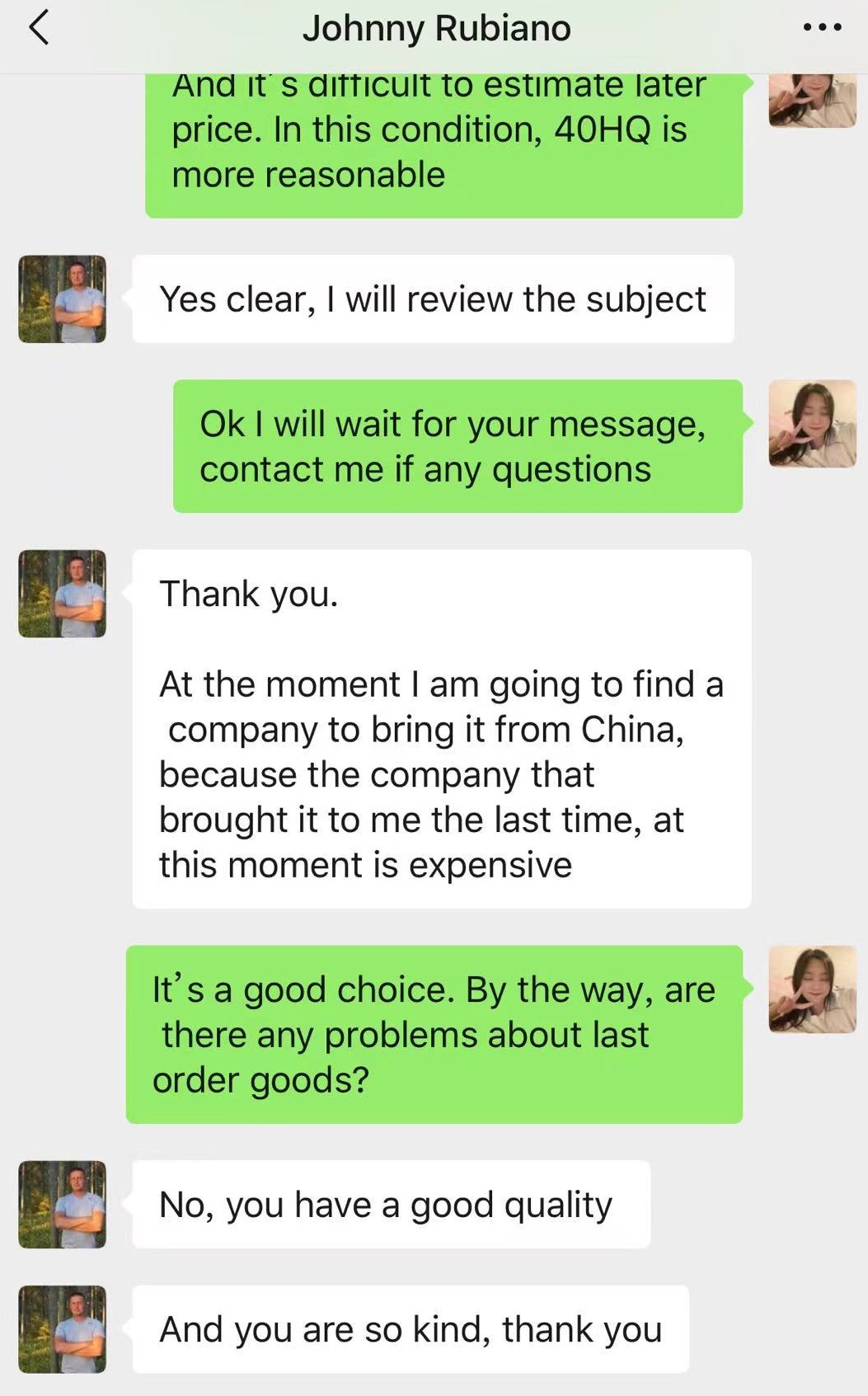
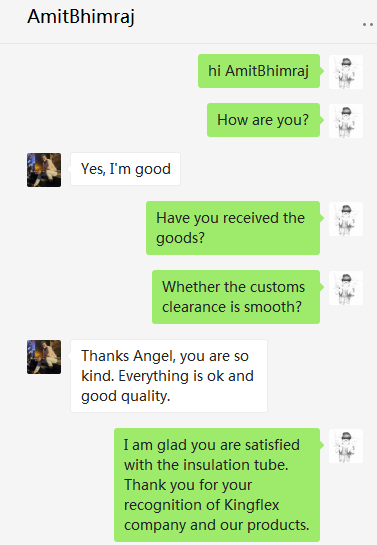
Direct Feedback & Transparent Partnerships
We maintain close communication with our global clients, providing technical advice from design phase through installation. Our export team coordinates production schedules and updates customers on shipping status.
Kingflex Standard Product Specifications
Physical parameters and performance limits of our elastomeric rubber foam sheets and tube lines.
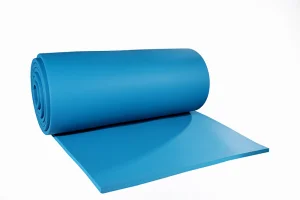
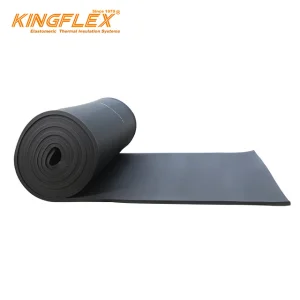
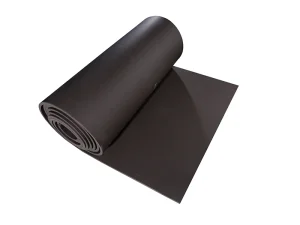
Black Rubber Foam Insulation Sheet Roll
Material: NBR/PVC elastomeric rubber foam
Thickness: 6 mm to 50 mm
Density: 40 to 55 kg/m³
Service Temp Range: -40°C to 105°C
Key Benefits:
Uniform foam structure with closed-cell rate exceeding 98%.
Low water absorption for long-term thermal performance.
Compression resilience over 80%.
Self-extinguishes when exposed to fire.
Typical Applications:
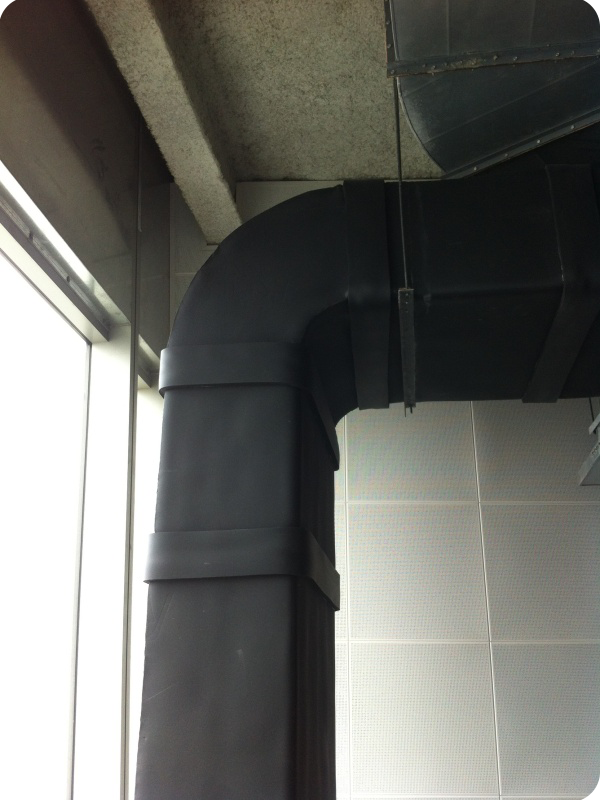
Central air conditioning ducts, building walls, roofs, basements, domestic hot/cold water piping, transport cars, and chemical processing lines.
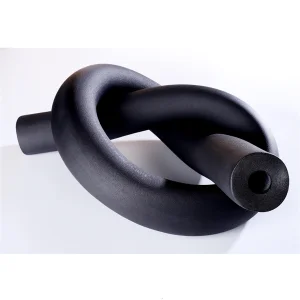
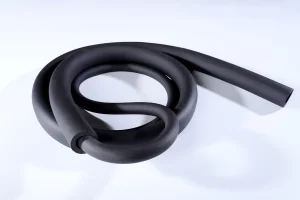
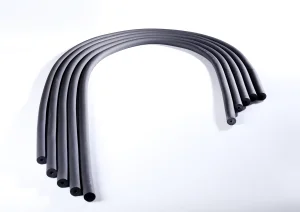
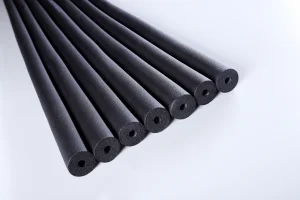
Black Rubber Foam Insulation Pipe
Material: NBR/PVC elastomeric rubber foam
Thickness: 9 mm to 40 mm
Inner Diameter (ID): 6 mm to 114 mm
Service Temp Range: -40°C to 105°C
Key Benefits:
Extruded tubes slide easily onto steel or copper piping.
High flexibility speeds up installation on complex pipe runs.
Protects outdoor systems from freezing and pipe splitting.
Helps eliminate condensation on chilled water pipes.
Typical Applications:
Air conditioning refrigerant piping, chilled water networks, steam pipe systems, solar hot water lines, and chemical processing pipelines.
Expert Q&A: Pipe Insulation Thickness Guidance
Answers to common questions from engineers, buyers, and field installers.
Q1: What is elastomeric rubber foam insulation used for?
It is mainly used for HVAC air ducts, refrigeration pipelines, building insulation, industrial pipeline cold insulation, and acoustic absorption. It helps control thermal loss, prevents condensation, and reduces system noise.
Q2: Is Kingflex rubber foam insulation fire resistant?
Yes, our rubber foam products are formulated with flame retardants. They meet international fire safety standards, including BS 476 Part 7 Class 1 and UL94 V-0 ratings, making them suitable for commercial and high-density residential installations.
Q3: What is the difference between rubber foam and rock wool insulation?
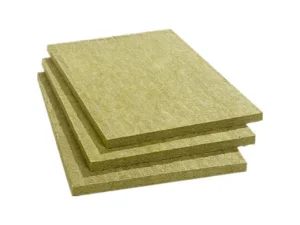
Rubber foam features a flexible, closed-cell structure that resists moisture ingress. This makes it suitable for HVAC, chilled water, and refrigeration systems. Rock wool has an open fibrous structure and is suitable for high-temperature steam lines and industrial furnace pipes.
Q4: Do you provide customized insulation products?
Yes, we support complete OEM/ODM production. We customize wall thickness, inner diameter, roll width, surface colors, and back adhesives to match project specifications.
Q5: What certifications do your products have?
Kingflex insulation has passed BS 476, CE, REACH, RoHS, UL94, and ASTM testing. These certifications ensure our products meet safety and quality requirements in global markets.
Q6: Does Kingflex products have traceability?
Yes, our system records batch runs, formulation codes, raw material source details, and final QA verification logs to ensure quality traceability.
Q7: What thickness of Rubber foam insulation sheet roll can you produce?
We produce insulation rolls in thicknesses from 6 mm up to 50 mm. If a project requires thicker insulation, multiple layers can be wrapped sequentially.
Q8: What is the service life of rubber plastic pipe and board?
In typical indoor environments, properly installed rubber foam insulation lasts between 10 and 15 years. For outdoor installations, applying a UV-protective coating or cladding is recommended to prevent degradation from sun exposure.
Specialty Cryogenic & High-Temperature Products
Specialized elastomeric solutions designed for extreme operating conditions and industrial environments.
Flexible Cryogenic Insulation for Cryogenic Systems
 Kingflex