1 / 1
 Kingflex


| Technical Data | |||
|---|---|---|---|
| Property | Unit | Value | Test Method |
| Temperature range | °C | (-50 - 110) | GB/T 17794-1999 |
| Density range | Kg/m3 | 45-65Kg/m3 | ASTM D1667 |
| Water vapor permeability | Kg/(m.s.pa) | ≤0.91×10 ﹣¹³ | DIN 52 615 / BS 4370 Part 2 1973 |
| μ | - | ≥10000 | - |
| Thermal Conductivity | W/(m.k) | ≤0.030 (-20°C) | ASTM C 518 |
| ≤0.032 (0°C) | |||
| ≤0.036 (40°C) | |||
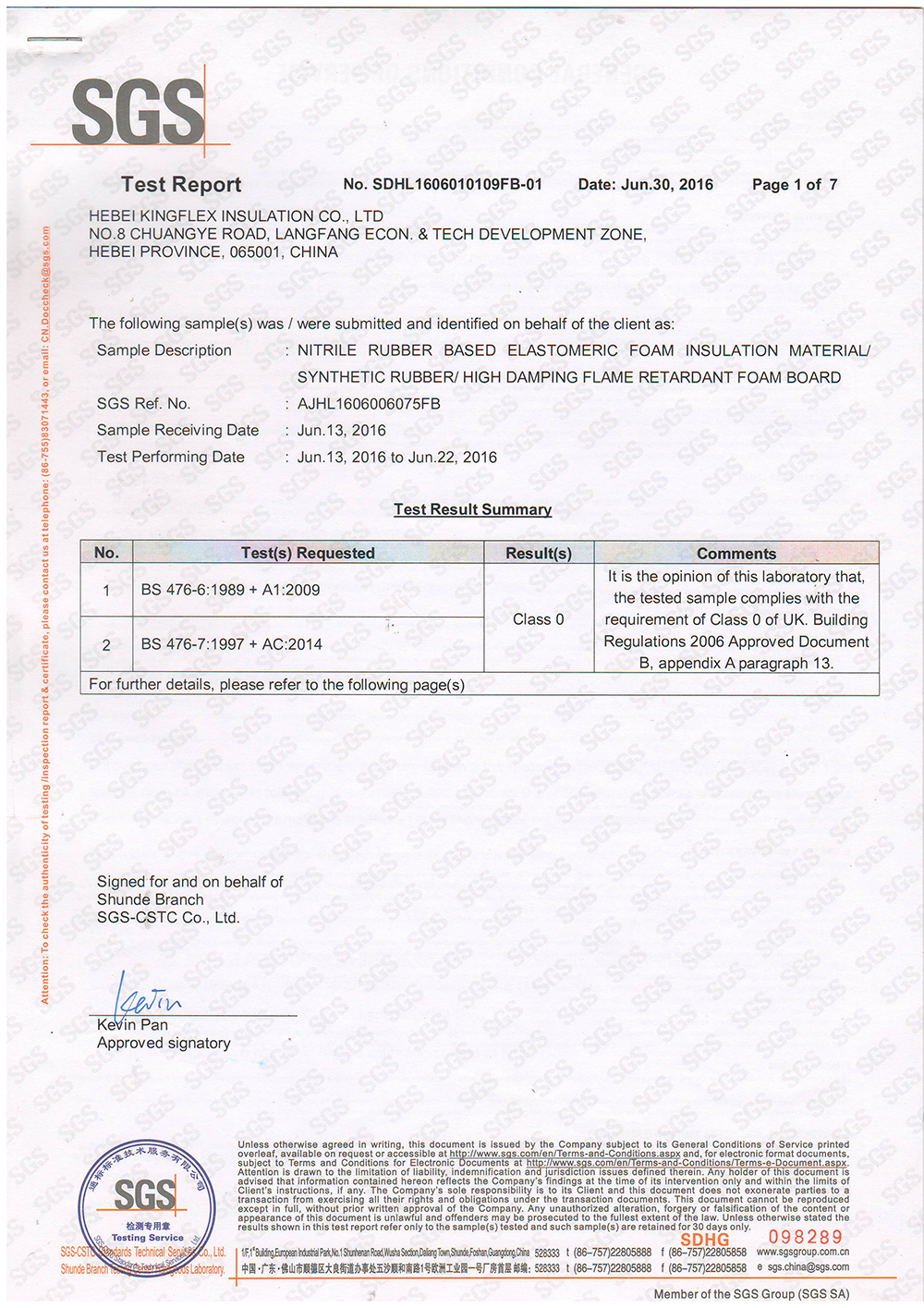
| Fire Rating | - | Class 0 & Class 1 | BS 476 Part 6 part 7 |
| Flame Spread and Smoke Developed Index | - | 25/50 | ASTM E 84 |
| Oxygen Index | - | ≥36 | GB/T 2406, ISO4589 |
| Water Absorption, % by Volume | % | 20% | ASTM C 209 |
| Dimension Stability | - | ≤5 | ASTM C534 |
| Fungi resistance | - | Good | ASTM 21 |
| Ozone resistance | Good | GB/T 7762-1987 | |
| Resistance to U.V. and weather | Good | ASTM G23 | |
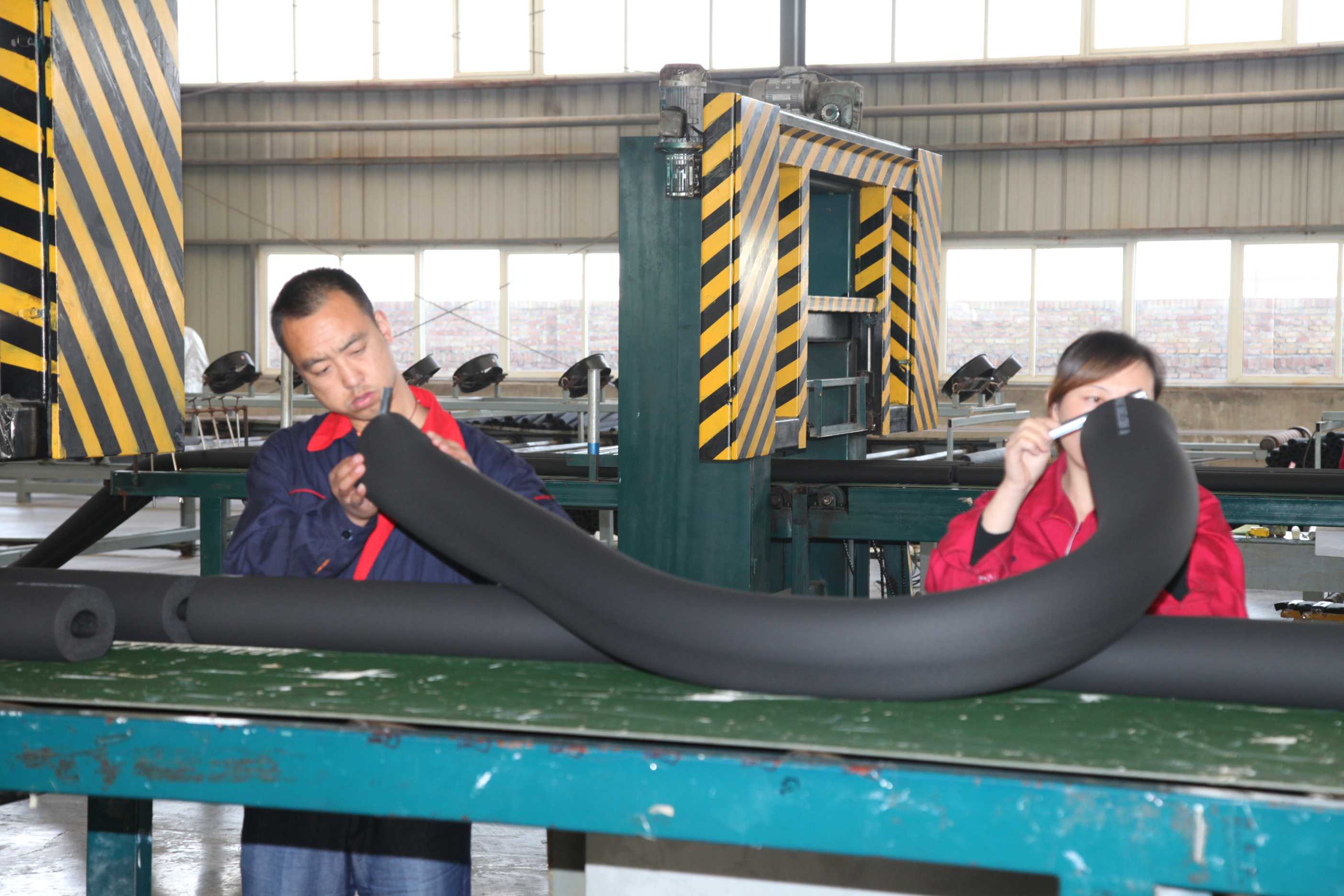
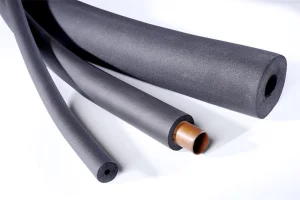
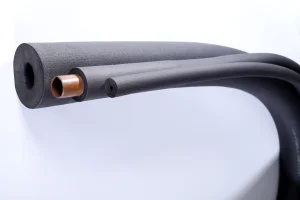
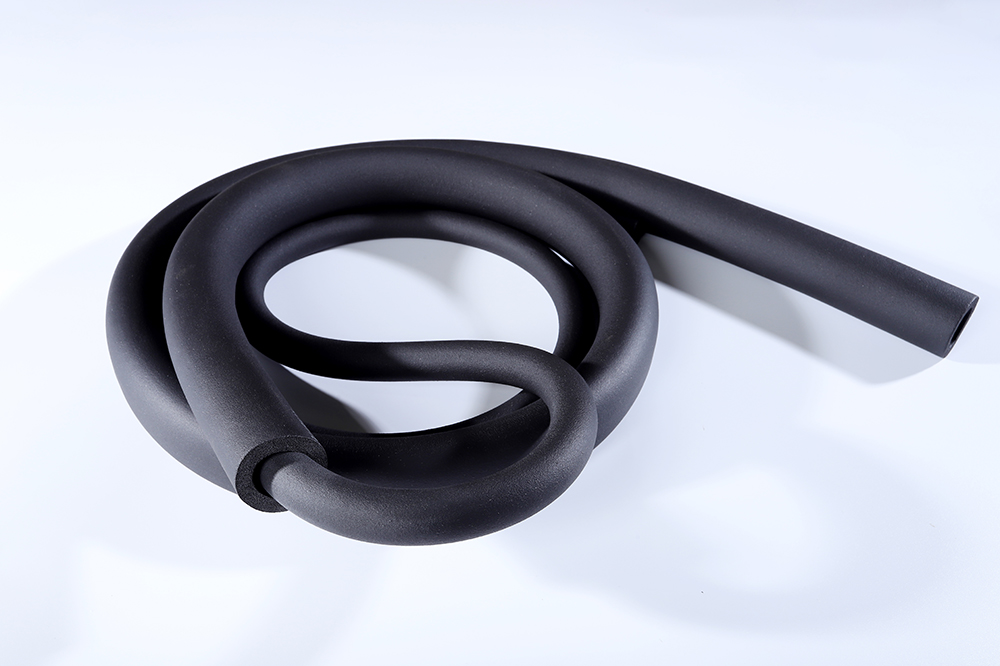
Slip the tubular insulation onto unconnected piping or, for connected piping, slit the insulation lengthwise and snap it over. Seal all the joints and seams with high-strength adhesive.
When installed outdoors, a weather-resistant protective finish is highly recommended to be applied over the surface to achieve maximum UV protection.
The insulation is rated for an operating temperature range of -50°C to 110°C, making it suitable for both cooling and dual-temperature heating systems.
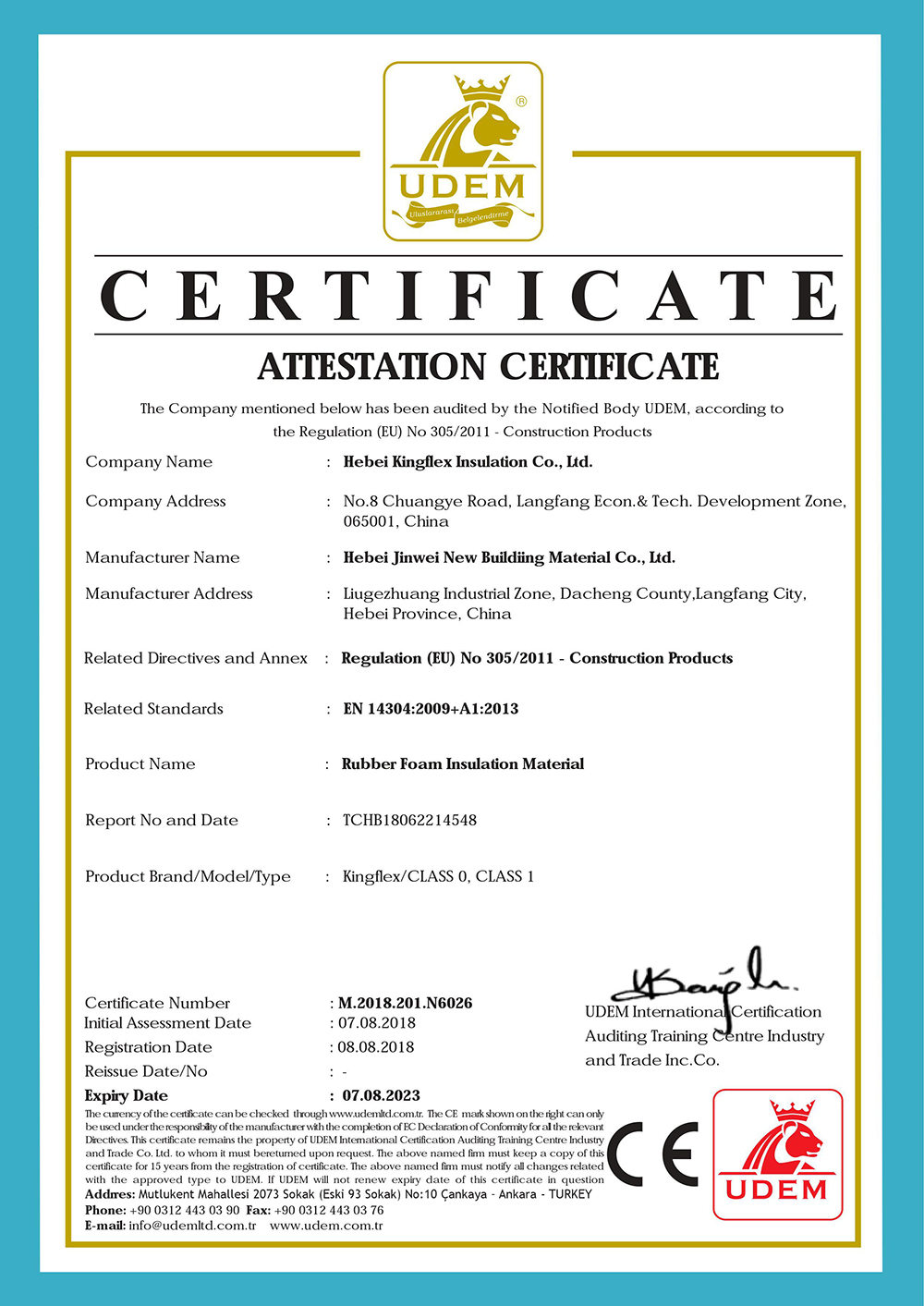
It achieves a Class 0 and Class 1 fire rating according to BS 476 Part 6 & 7 standards. It also meets the ASTM E 84 standard with a 25/50 Flame Spread and Smoke Developed index.
Yes, with a high resistance to moisture vapor transmission (μ ≥ 10000) and low water permeability, it restricts moisture penetration to prevent condensation on cold surface pipes.
Absolutely. For pre-existing or connected piping, you can slit the tube insulation lengthwise, wrap it over the pipe, and seal it completely with specialized adhesive.
Yes, it features good resistance to ozone, UV, and harsh weather conditions. To maximize the service life and UV protection outdoors, applying a weather-resistant protective finish coating is recommended.
It has extremely low thermal conductivity values (≤0.030 W/(m.k) at -20°C and ≤0.036 W/(m.k) at 40°C), ensuring minimal heat transmission and energy loss.