Rock Wool Insulation Products Factory & Pricelist in the Netherlands Market
Industrial-grade thermal efficiency, extreme fire safety class A1, and certified acoustic isolation tailored for modern Dutch construction and carbon-neutral initiatives.
Why professional insulation engineers, HVAC designers, and civil contractors specify our Rock Wool materials.
0.034
W/m·K Min
Excellent thermal conductivity meets Dutch BENG building standards.
A1
Fire Class
Non-combustible stone wool mineral core safe for high-occupancy structures.
650°C+
Heat Resistance
Ideal for Dutch offshore, chemical, and heavy industrial steam pipelines.
98%
Closed-cell Option
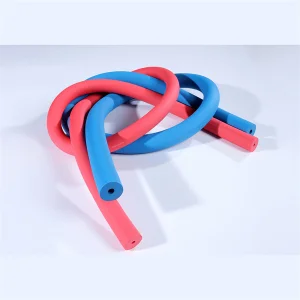
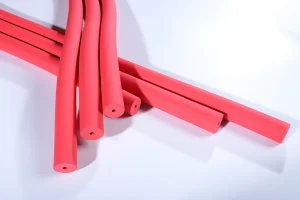
For elastomeric foam configurations matching cold/cryogenic requirements.
1. The Energy Transition and the Dutch Construction Landscape
The Netherlands is currently executing one of Europe’s most aggressive strategies for structural decarbonization, known locally as the transition to *aardgasvrij* (natural gas-free) buildings and industrial complexes. Under the revised Dutch Building Decree (*Bouwbesluit*) and the stringent *BENG* (Bijna Energieneutrale Gebouwen) standards, building projects must meet exact benchmarks for primary energy consumption, thermal envelopment, and carbon footprint reduction.
In this regulatory climate, Rock Wool (stone wool) has emerged as the definitive specification choice. Unlike traditional petrochemical foam alternatives (such as EPS or polyurethane), rock wool presents a mineral-based structure synthesized from volcanic basalt rock. This basaltic foundation yields distinct physical advantages that match the safety and sustainability priorities of the Dutch construction framework.
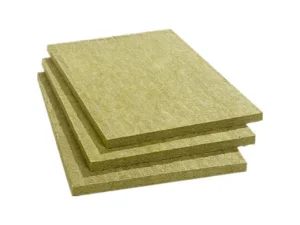
Particularly in dense urban settings like Amsterdam, Rotterdam, and Utrecht, where building footprint separation is minimal, fire propagation control is a paramount design criterion. Structuring building envelopes with high-density rock wool boards limits risk, boasting a natural melting threshold exceeding 1,000°C. This meets the ultimate requirements for Euroclass A1 non-combustible materials, satisfying structural designers, municipal safety officers, and insurers alike.
Google E-E-A-T Regulatory Insight:
The Dutch *Bouwbesluit* mandates strict limits on smoke generation (s1/s2 classification) and droplet formation (d0 classification) in escape paths. Kingflex rock wool insulation matches the elite A1, s1, d0 profile, providing structural integrity under fire conditions where plastic foams fail and release toxic fumes.
2. Technical Chemistry and Physics of Rock Wool
To understand the high efficacy of rock wool, one must examine the microstructural physics of mineral fibers. The raw basaltic rock is melted at temperatures approaching 1,500°C inside specialized coke or gas-fired cupola furnaces. Once liquid, the molten basalt is spun rapidly on high-speed rotor wheels, stretching the liquid mass into microscopic fibers measuring between 3 to 6 micrometers in diameter.
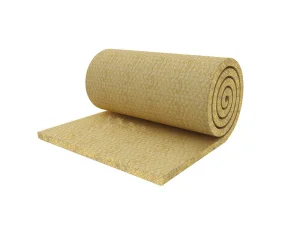
These fibers are coated with a precise volume of thermosetting phenolic binder and hydrophobic additives, before being compressed and cured into dense blankets, boards, or pipe sections. The resulting dimensional network traps air within millions of interstitial voids. Because static air has a thermal conductivity ($\lambda$) of approximately 0.026 W/m·K at room temperature, the trapped air pockets inside the stone wool matrix limit heat transfer to a minimal 0.034 to 0.040 W/m·K range.
Furthermore, the open, multi-directional orientation of these mineral fibers allows acoustic pressure waves to penetrate the material, where friction converts the acoustic energy into harmless thermal energy. This gives rock wool sound absorption coefficients ($NRC$) reaching up to 0.90 to 0.95, a capability crucial for dense housing layouts (*middenhuur*) and commercial high-rises where acoustic comfort between party walls is strictly regulated.
Technical Performance Specification Matrix
Physical Parameter
Test Standard Reference
Measured Performance Metric
Dutch Market Suitability
Thermal Conductivity ($\lambda$)
EN 12667 / EN 12939
0.034 - 0.038 W/m·K
Excellent for low-energy (BENG) structural envelopes
Fire Reaction Rating
EN 13501-1
Class A1 (Non-combustible)
Required for public buildings, schools, and hospitals
Density Range
EN 823
40 kg/m³ to 160 kg/m³
Versatile for flexible partition cavities up to flat roofs
3. Global Dynamics vs. Netherlands Industrial Status
On a global scale, the rock wool and mineral insulation market is transitioning toward carbon-neutral manufacturing. Global supply chains face rising energy and logistics costs, forcing factories to adopt more efficient electric arc furnaces. Our factory incorporates energy-saving, automated assembly lines with a capacity exceeding 600,000 cubic meters annually, keeping us competitive in Europe.
In the Netherlands, this global evolution is shaped by local environmental realities. The Dutch agricultural and industrial sectors face the *stikstofcrisis* (nitrogen emissions crisis), which restricts construction project approvals unless developers use zero-emission equipment or low-embodied-carbon materials. Rock wool’s long service life (typically exceeding 50 years without losing insulation value) reduces lifecycle emissions, helping projects secure building permits under these strict rules.
Additionally, the Port of Rotterdam serves as a key logistical hub. By shipping bulk containers directly from our advanced facilities to Rotterdam, we avoid intermediate handling costs. This direct factory supply model enables us to offer competitive, transparent pricing for Dutch contractors, bridging the gap between high-volume manufacturing and local delivery needs.
4. Application Scenarios Across the Netherlands
Due to the diverse geography of the Netherlands—ranging from high-humidity coastal zones in Zeeland to industrial clusters in the Europoort and residential developments in Almere—insulation systems must perform reliably under varying local conditions:
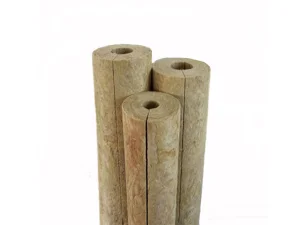
Coastal and Offshore Marine Installations: In areas like Den Helder and Rotterdam, saline moisture can cause corrosion under insulation (CUI) in industrial pipework. Our hydrophobic-treated rock wool pipes resist moisture absorption while providing thermal control for steam systems.
Agricultural Greenhouse Projects: In regions like Westland, greenhouse systems require stable climate controls. Our rock wool blankets insulate heat-distribution networks, minimizing heat loss in Dutch horticultural operations.
Urban High-Density Acoustic Control: In cities like Amsterdam and Rotterdam, dense commercial zones rely on rock wool board insulation in lightweight drywall systems to prevent noise transfer between commercial spaces.
District Heating Infrastructure: As municipalities transition away from gas grids, district heating networks (Stadsverwarming) are expanding. Our pre-formed rock wool pipe sections insulate high-temperature water lines, maintaining thermal efficiency over long distribution distances.
5. Factory Pricelist Factors & Logistics to Rotterdam
Understanding the factors that influence rock wool pricing is critical for procurement managers estimating project budgets. Rock wool prices are determined by raw mineral costs, binder quality, density requirements, and finishing treatments (such as aluminum foil facing or wire mesh backing).
Our direct factory-to-site pricing helps reduce distribution markup. While local Dutch distributors charge premiums to cover domestic warehousing, our containerized shipping system delivers bulk orders directly from production to major Dutch ports.
6. Technology Roadmap, Circularity, & Future Outlook
The future of insulation in the EU rests on circularity. The European Green Deal and the Dutch circular economy target (aiming for 100% circularity by 2050) require building materials to be recyclable. Rock wool is well-suited for circular lifecycles because it can be re-melted and manufactured into new mineral products without loss of quality.
We are also researching bio-based binders to replace traditional phenol-formaldehyde options. This shift aims to reduce the embodied carbon of our insulation boards while maintaining their thermal performance and Euroclass A1 fire rating.
At the same time, we continue to develop hybrid insulation systems. By combining the high-temperature performance of rock wool with the moisture resistance of elastomeric rubber foam, we create custom systems for challenging industrial applications, such as LNG terminals and low-temperature process lines.
Expert answers to common engineering, regulatory, and purchasing queries for Dutch projects.
Q1: What is elastomeric rubber foam insulation used for compared to Rock Wool?
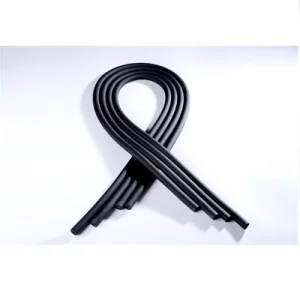
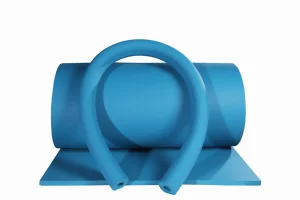
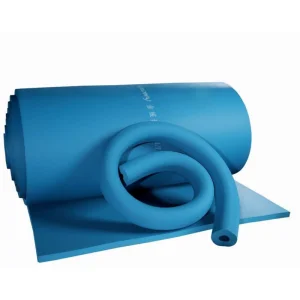
Elastomeric rubber foam is a flexible, closed-cell insulation designed to prevent condensation in chilled water lines, refrigeration systems, and HVAC systems. Rock wool, by contrast, is a dense, high-temperature mineral fiber insulation optimized for thermal resistance up to 650°C+, non-combustible fire protection (Class A1), and acoustic absorption.
Q2: Is Kingflex rubber foam insulation fire resistant?
Yes, Kingflex rubber foam insulation is formulated with flame retardants to meet international standards. It complies with Class 0 and Class 1 standards (BS 476 Part 6/7) and has a self-extinguishing safety profile for building and industrial installations.
Q3: What is the main structural difference between rubber foam and rock wool?
Rubber foam is a closed-cell, flexible elastomeric polymer with high moisture resistance ($\mu \ge 10,000$), making it ideal for cold systems where condensation is a risk. Rock wool is an open-fiber mineral wool made from basaltic stone, offering high-temperature resistance, acoustic dampening, and Euroclass A1 fire safety.
Q4: Do you provide customized dimensions and OEM services for Dutch projects?
Yes, we support complete OEM services. We can manufacture customized insulation thicknesses, densities, roll dimensions, pipe diameters, and facing options (such as aluminum foil or glass cloth facing) to meet specific design and engineering requirements.
Q5: What international quality and environmental certifications do your products hold?
Our products hold certifications including BS 476, CE, REACH, RoHS, UL94, and ASTM. This compliance helps satisfy Dutch national standards (*Bouwbesluit*), permitting requirements, and quality audits.
Q6: Do Kingflex insulation shipments have full traceability?
Yes, our batch coding and manufacturing systems provide full traceability from raw material selection through melt processing, quality testing, and shipping.
Q7: What thickness ranges can you produce for elastomeric rubber foam rolls?
We manufacture flexible rubber foam rolls in standard thicknesses from 6mm to 50mm, which covers typical condensation control and mechanical insulation requirements.
Q8: What is the typical design life of Kingflex insulation systems?
When installed correctly according to engineering specifications and protected from mechanical wear or direct UV exposure, our systems have an average design life of 10 to 15 years for elastomeric materials, and 50+ years for mineral-based rock wool.
From direct factory loading to customs clearance at Rotterdam ports, we provide end-to-end supply chain integration for large-scale construction, HVAC installation, and industrial insulation networks.
 Kingflex