China Different Types Of Cryogenic Insulation Manufacturers & Suppliers

Engineered Closed-Cell Elastomeric Systems, Rock Wool, & High-Performance Cryo-Barrier Materials for Global Industrial Applications

40+
Years of Group History (Est. 1979)
600K+
Annual Capacity (m³)
66+
Exporting Countries
5
Automatic Production Lines

Understanding Cryogenic Insulation Science & Heat Transfer Control

Cryogenic engineering operations involve working at extreme sub-zero ranges—typically between -40°C and -200°C (-328°F). In these thermal states, the performance demands on insulation materials undergo a structural shift. The primary threat is no longer simple heat loss, but relentless moisture vapor invasion driven by massive temperature gradients. When moisture crosses the boundary barrier, it instantly crystallizes into ice, destroying the material's structural integrity, spiking thermal conductivity (K-value), and inducing severe CUI (Corrosion Under Insulation).

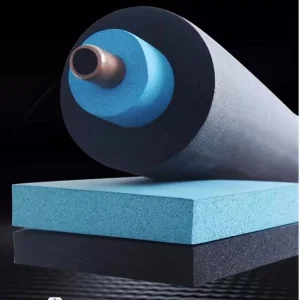
For modern clean energy logistics (such as Liquid Natural Gas/LNG handling and Liquid Hydrogen storage), choosing the correct configuration of cryogenic insulation is the fundamental factor in operational longevity. Traditional fibrous insulations, while sufficient for hot industrial pipelines, fail to block vapor transmission without elaborate, multi-layered external vapor barriers. Advanced elastomeric closed-cell structures, pioneered by Chinese manufacturers like Kingflex, incorporate a built-in vapor barrier directly within the chemical matrix, providing a highly reliable insulation barrier for long-term installations.

1 Thermal Resistance

Maintains extremely low thermal conductivity at deep sub-zero ranges, reducing boil-off rates (BOR) in gas transport pipelines.

2 Closed-Cell Vapor Block

Boasts a closed-cell ratio exceeding 98%, completely locking out humidity and eliminating condensation buildup.

3 Flexible Resilience

Prevents thermal shock fracturing. Unlike rigid foams, elastomeric materials absorb physical expansion and contraction cycles.
Different Types of Cryogenic Insulation Technologies Compared

An optimal industrial setup often integrates multiple types of insulation systems based on the operating temperature, mechanical load, and environment. Below is a comparative breakdown of key technologies currently manufactured and supplied by Kingflex and leading Chinese providers.

Insulation Material Type Effective Temp. Range Closed-Cell Ratio Key Strengths & Advantages Primary Industrial Applications
NBR/PVC Elastomeric Foam -40°C to +105°C >98% Superb flexibility, integral vapor barrier, corrosion-free. HVAC, refrigeration lines, condensate control, low-temp process piping.
Specialty Cryogenic Elastomeric Rubber -200°C to +125°C >98% Designed for thermal shock resistance, extremely low temperature flexibility. LNG pipelines, ethylene transport, offshore maritime terminals.
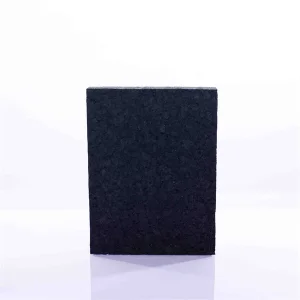
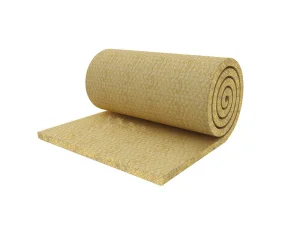
Rock Wool Blankets / Boards Ambient to +650°C N/A (Fibrous) A1 Non-combustible, exceptional heat tolerance, structural stability. Co-generation plants, fire containment panels, high-temp steam pipes.
Polyurethane (PU) / PIR Foam -180°C to +120°C >90% High compressive strength, rigid structural insulation support. Pipe supports, buried pipelines, cold-box modular enclosures.

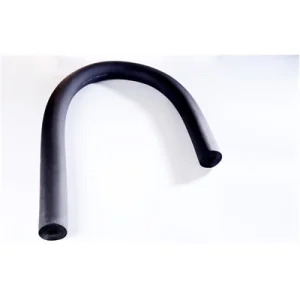
While rigid polyurethane foams offer excellent physical strength for load-bearing pipe shoes and structural supports, they lack the vibration-damping and flexible installation features of elastomeric rubber foam sheets and tube profiles. NBR/PVC systems can be installed directly around complex valves, tees, and flanges, forming a seamless glove that protects metal pipe networks from corrosive atmospheric contact.

Manufacturer Profile

Kingflex Insulation Co., Ltd.

Kingflex Insulation Co., Ltd. is a professional manufacturing and trading combo for high-end thermal and cryogenic insulation products. Strategically located in Dacheng, China—the recognized capital of green building materials—our enterprise focuses on energy efficiency and clean operations. We deliver comprehensive insulation solutions through research, development, high-capacity production, and global consulting services.

Established by the Jinwei Group, which boasts a heritage dating back to 1979 (historically the first insulation manufacturer north of the Yangtze River), Kingflex has grown to support 5 automated production lines with an annual capacity of over 600,000 cubic meters. Our R&D center is run by 8 expert thermal design engineers, collaborating with international sales professionals to distribute systems to over 66 countries.

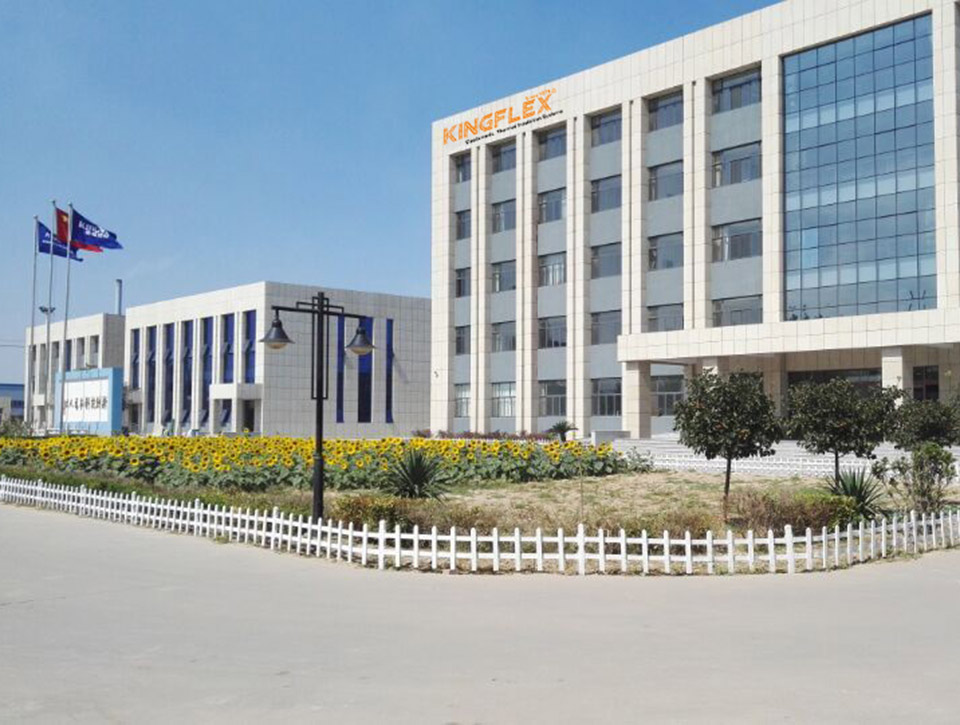
Kingflex Factory Operation and Raw Materials Store
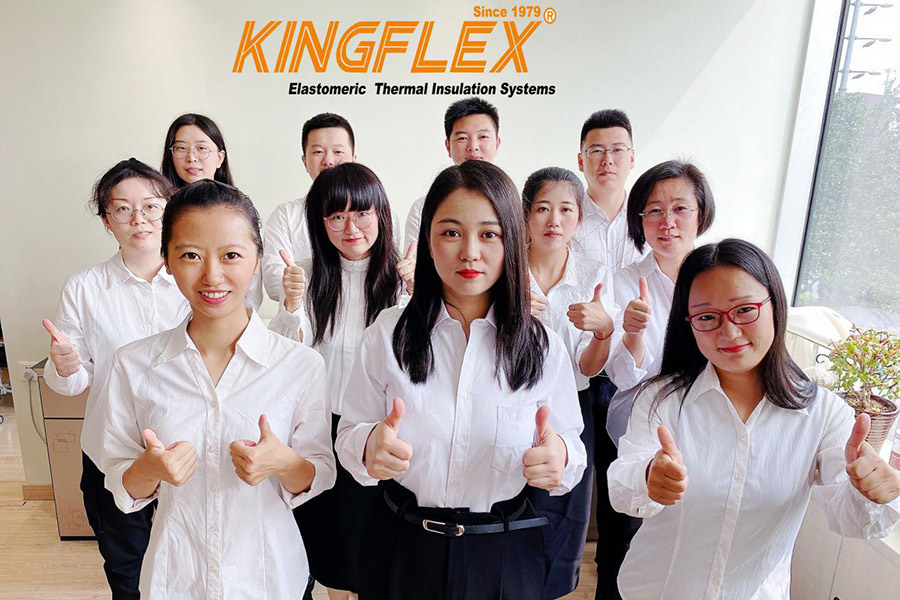
Kingflex R&D Laboratory and Team

Rigorous QA, Research, and International Certifications

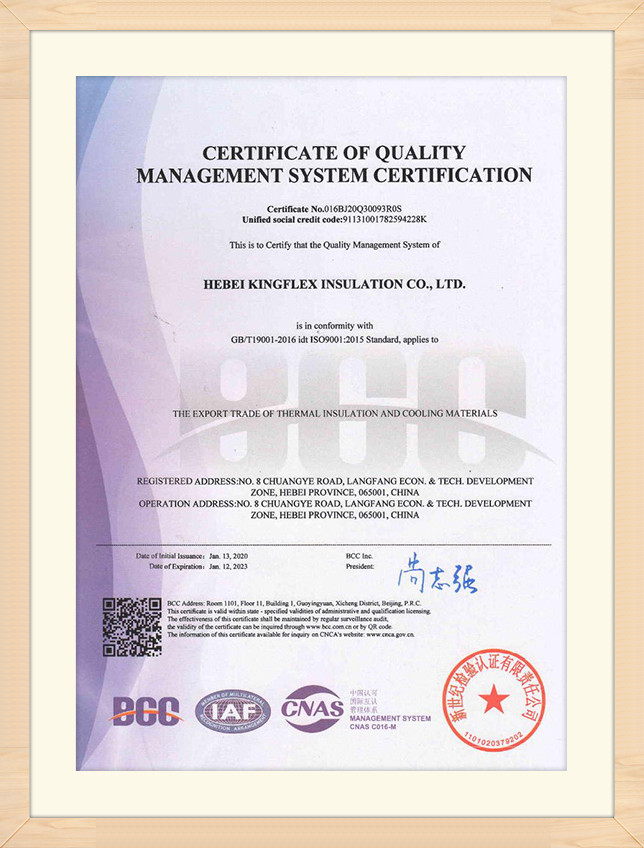
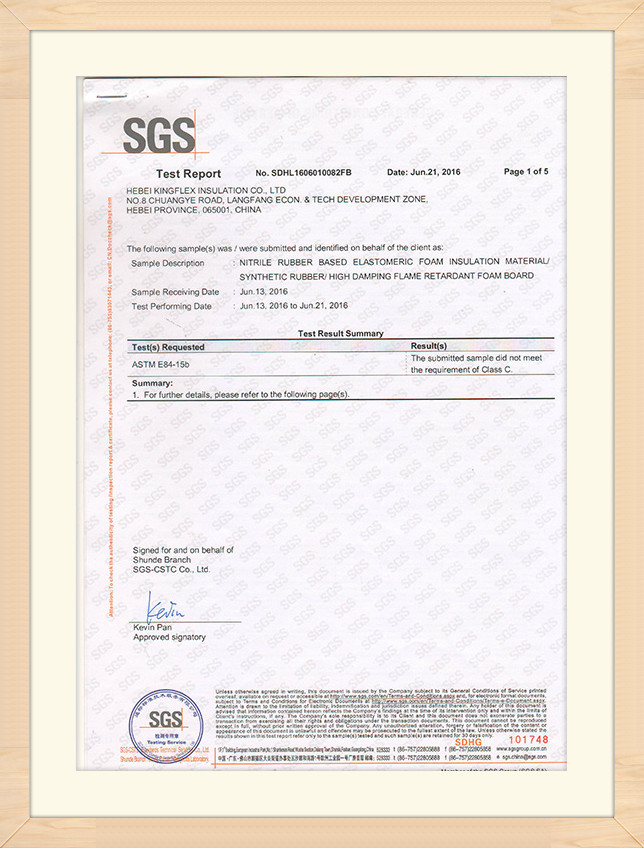
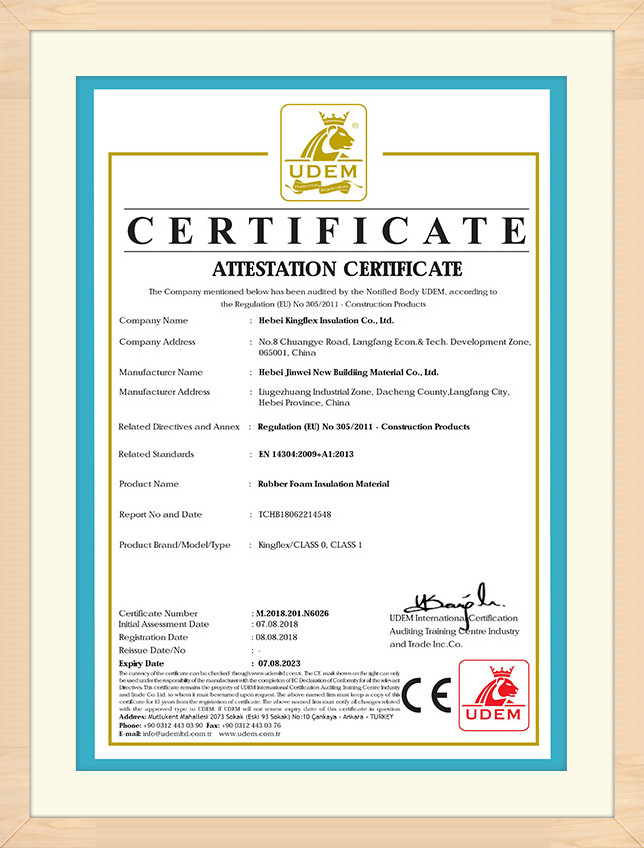
To ensure complete reliability in high-risk environments like gas terminals and chemical refining units, Kingflex products undergo continuous testing. Our NBR/PVC and specialty elastomeric lines carry certifications including BS 476, CE, REACH, RoHS, UL94, and ASTM standards. Each production batch is fully traceable from raw chemical mixing through curing and dispatch.

CE certificate ISO Quality assurance SGS certification test

The Strategic Value of the Chinese Cryogenic Insulation Supply Chain

Procuring thermal and cryogenic insulation from established Chinese manufacturers offers clear advantages for global EPC (Engineering, Procurement, and Construction) companies and industrial distributors:

Automated Scale

Continuous extrusion and computerized vulcanization tunnels ensure uniform cell structure across miles of produced tubing and rolls, removing human error.

Integrated Logistics

Operating from green building materials zones like Dacheng gives Kingflex direct access to chemical feedstocks and deep-water container ports, minimizing shipping lead times.

Global Compliance

Pre-certified to ASTM C534, British Standard (BS 476 Parts 6 & 7 Class 0), and European CE directives, removing import compliance barriers.

Furthermore, our OEM capability allows us to produce sheets with thickness configurations ranging from 6mm to 50mm, and tube diameters matching any global industrial standard. This flexibility reduces the need for secondary field fabrication, minimizing waste on-site and lowering total project labor costs.

Product Specifications & Dimensional Parameters

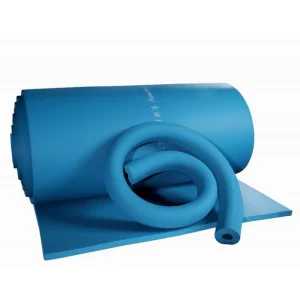
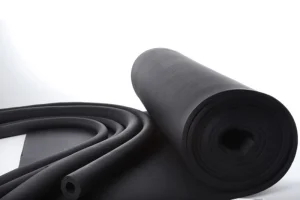
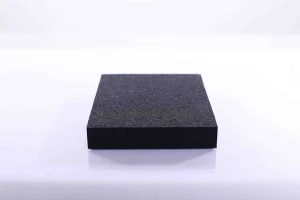
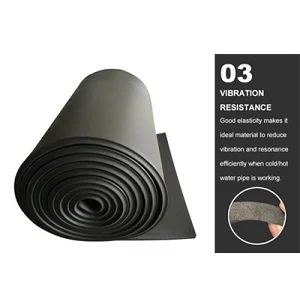
Black Rubber Foam Insulation Sheet Roll

Our high-density NBR/PVC elastomeric sheet roll is formulated to prevent condensation on major commercial duct systems, low-temperature tanks, and chiller housings.

  • Material Base: Premium NBR/PVC Elastomeric Blend
  • Thickness Range: 6mm to 50mm
  • Density Range: 40 to 55 kg/m³
  • Temperature Range: -40°C to +105°C (-40°F to 221°F)
  • Vapor Barrier: Integrated Closed-Cell Matrix (>98% cell structure)

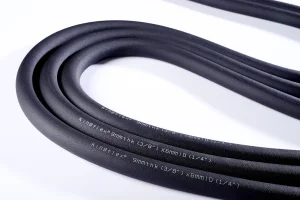
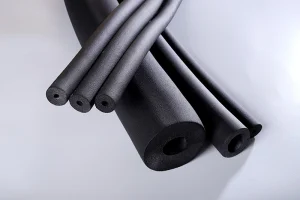
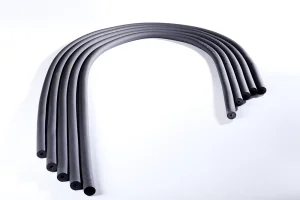
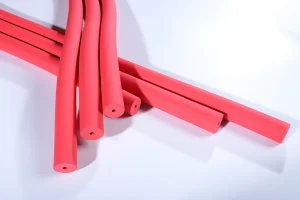
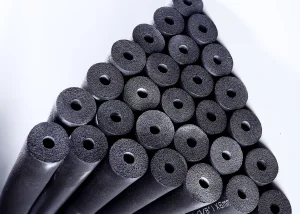
Black Rubber Foam Insulation Pipe / Tube

Manufactured using automated horizontal extrusion lines to provide uniform wall thickness and concentricity, preventing freezing and condensation on copper and steel pipes.

  • Material Base: NBR/PVC Base with UV/Ozone-resistant agents
  • Wall Thickness: 9mm to 40mm
  • Inner Diameter (ID): 6mm to 114mm
  • Density Range: 40 to 55 kg/m³
  • Resilience Index: Compression recovery > 80%

Industrial & Localized Application Scenarios

Kingflex insulation solutions are optimized to deliver energy savings, freeze protection, and noise reduction across diverse sectors:

1. HVAC & Commercial Ducts

Eliminates condensation and mold risk in central air conditioning systems for high-occupancy environments like hotels, hospitals, and shopping centers.

2. Low-Temp Process Piping

Protects chemical, petrochemical, and pharmaceutical process lines from thermal loss and corrosion under insulation (CUI).

3. Cold Storage & Shipping

Preserves temperature-controlled environments in cold storage logistics, marine shipping reefers, and food processing lines.

Frequently Asked Questions (FAQ)

Find expert answers to common queries regarding Kingflex cryogenic and thermal elastomeric insulation.

Q1 What is elastomeric rubber foam insulation used for?
It is primarily used to insulate HVAC ductwork, commercial/industrial chilled and hot water pipes, building structures, and low-temperature process piping to prevent condensation, control thermal loss, and damp sound.
Q2 Is Kingflex rubber foam insulation fire resistant?
Yes. Kingflex insulation is formulated with fire-retardant additives, meeting international fire safety standards such as BS 476 Class 0, UL94 V-0, and ASTM flammability guidelines for building and industrial projects.
Q3 What is the difference between rubber foam and rock wool insulation?
Rubber foam is a flexible, closed-cell material with excellent vapor resistance, ideal for refrigeration and HVAC applications. Rock wool is a fibrous, non-combustible material capable of withstanding very high temperatures, making it suitable for steam pipes and industrial thermal protection.
Q4 Do you provide customized insulation products?
Yes, we provide full OEM and custom formulation services. We can customize density, wall thickness, inside diameters, and adhesive backings to match your project specifications.
Q5 What certifications do your products carry?
Our materials are certified under BS 476, CE, REACH, RoHS, UL94, and ASTM. This guarantees compliance with environmental and fire safety regulations in Europe, North America, and other global markets.
Q6 Are Kingflex products traceable?
Yes. Every production run has a batch code printed on the packaging and product backing, ensuring full raw-material and manufacturing-process traceability.
Q7 What thickness of rubber foam sheet rolls can you produce?
We manufacture flexible sheets and rolls in thicknesses ranging from 6mm to 50mm to meet different thermal resistance (R-value) targets.
Q8 What is the typical service life of your rubber-plastic pipe and board insulation?
When installed according to specifications and protected from mechanical wear, our closed-cell rubber foam provides stable performance for 10 to 15 years.