Strategic Technical Overview of Global HVAC Vent Insulation Systems
In modern industrial and commercial architecture, high-efficiency Heating, Ventilation, and Air Conditioning (HVAC) systems serve as the critical infrastructure governing energy consumption and Indoor Environmental Quality (IEQ). Ductwork and air vents serve as the primary arterial pathways for thermal distribution. Without optimized thermal insulation cladding, these distribution systems become massive sources of parasitic thermal losses and micro-environmental hazards.
Key Engineering Focus: Minimizing heat transfer via thermal duct insulation reduces operational carbon emissions while preventing structural issues associated with condensation, ambient moisture buildup, and acoustic resonance.
The global demand for high-grade elastomeric insulation materials is surging, driven by stricter energy conservation mandates (such as ASHRAE 90.1, IECC, and European EN 14304 standards) and the rising prioritization of occupant wellness. As systems handle high volumes of heated or cooled air, temperature differentials between the interior duct stream and external ambient air trigger condensation. If left unmanaged, moisture accumulation leads to structural corrosion, insulation degradation, and the proliferation of toxic molds inside the ventilation system, compromising indoor air quality.
Thermodynamics of Air Vent Insulation: The Science of Elastomeric Foam
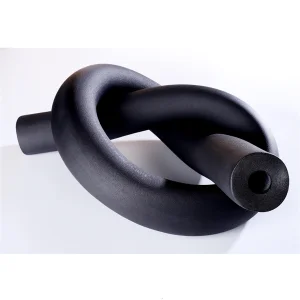
To control condensation and heat transfer, specifying agencies look to the material physics of closed-cell elastomeric foams. Standard NBR/PVC (Nitrile Butadiene Rubber/Polyvinyl Chloride) insulation operates on a thermodynamic principle of microcellular air entrapment. The material consists of millions of microscopic, independent gas cells that resist the movement of thermal energy and moisture molecules.
1. Thermal Conductivity (λ-Value) and Thermal Resistance (R-value)
Thermal conductivity represents a material's inherent capacity to conduct heat. For NBR/PVC elastomeric systems, this value remains exceptionally low (typically ≤ 0.034 W/(m·K) at 0°C). This performance is achieved through precision-controlled chemical expansion processes during manufacture, creating a highly uniform closed-cell structure. By trapping air in microcells, convective heat transfer inside the insulation is minimized, keeping ductwork temperatures stable over long distribution runs.
2. Vapor Permeability and the Moisture Resistance Factor (μ-Factor)
Unlike open-cell fibrous products (such as glass wool or rock wool), which require external vapor barriers, closed-cell elastomeric rubber foam functions as an integrated vapor barrier. When moisture penetrates a fibrous insulation system, its thermal conductivity increases exponentially—every 1% moisture absorption by volume can lead to a 10% or greater decrease in insulation efficiency. Elastomeric foams possess a high water vapor diffusion resistance index (μ ≥ 10,000), preventing vapor migration throughout the entire thickness of the material.
China's Manufacturing Supremacy: The Dacheng Industrial Advantage
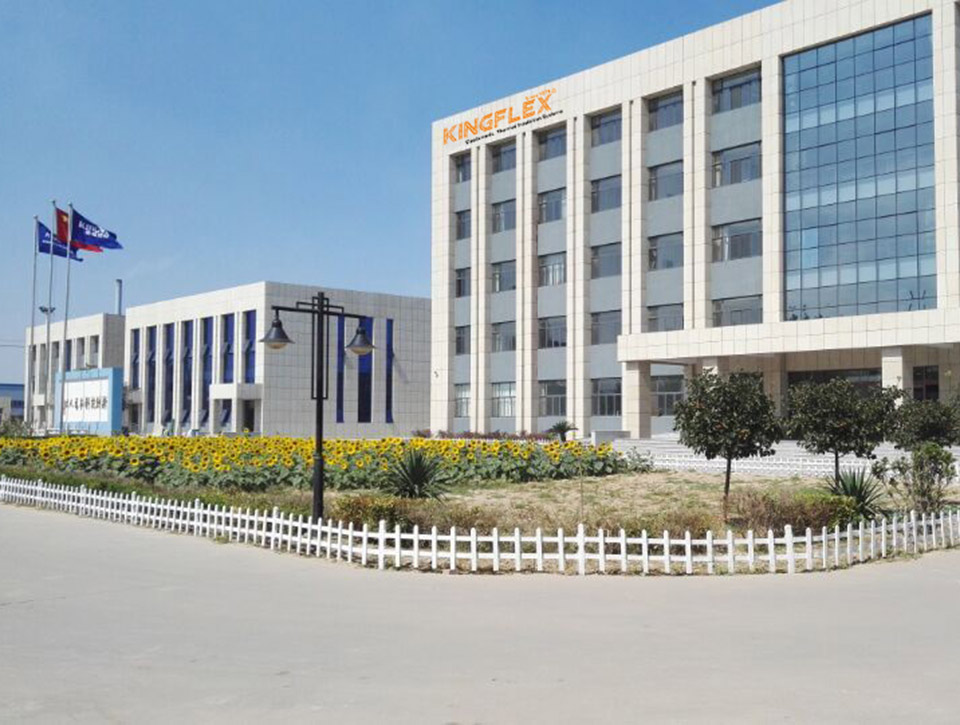
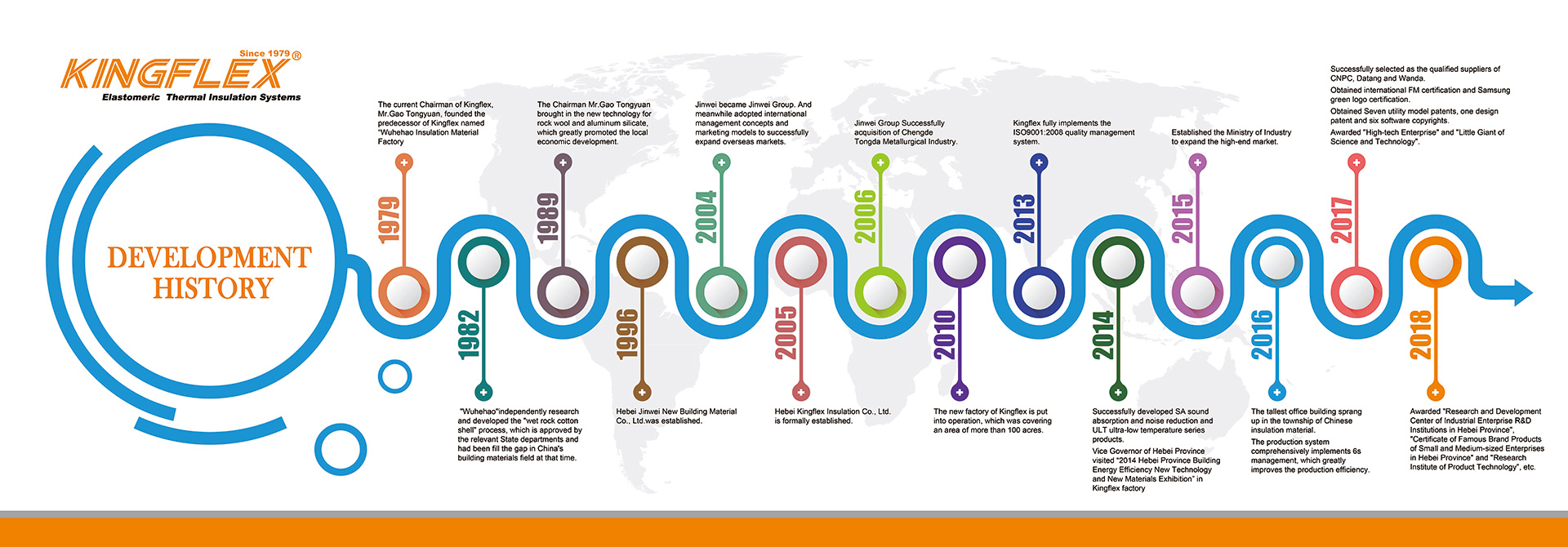
China has established itself as the global manufacturing hub for advanced elastomeric thermal insulation, with the Dacheng region leading the industry in green building materials. Dacheng's manufacturing base leverages integrated supply chains, advanced chemical manufacturing, and high-throughput automation. Kingflex Insulation Co., Ltd. operates in this industrial hub, running 5 large automated assembly lines with an annual capacity exceeding 600,000 cubic meters.
This localized cluster yields significant advantages for international procurement teams:
- High-Speed Chemical Vulcanization: Continuous extrusion and microwave vulcanization lines ensure uniform foam density (40-55 kg/m³) and consistent physical properties across production runs.
- Vertical Raw Material Integration: Sourcing high-purity NBR monomers and PVC stabilizers within the region reduces production lead times and stabilizes manufacturing costs.
- Advanced Test Verification: Integrated laboratories allow for real-time testing of thermal conductivity, moisture absorption, smoke density, and flame spread parameters to ensure international compliance.
Technical Specifications: Kingflex Product Standards
Base Material Matrix
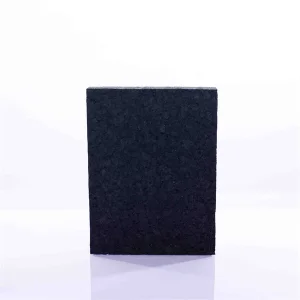
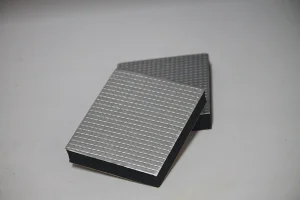
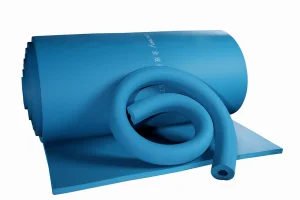
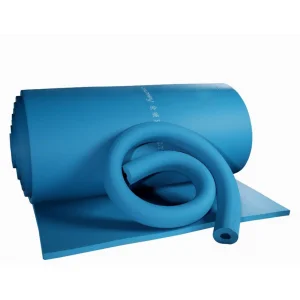
Nitrile Butadiene Rubber / Polyvinyl Chloride (NBR/PVC) polymer blend
Available Thicknesses
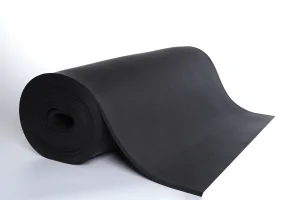
6mm to 50mm (Custom OEM gauges available)
Apparent Density
40 kg/m³ to 55 kg/m³
Service Temperature Limit
-40℃ to +105℃ (-40°F to +221°F)
Fire Safety Performance
Class 0 / Class 1 (BS 476), UL 94 V-0, ASTM E84 compliant
Inner Diameter (ID) Range
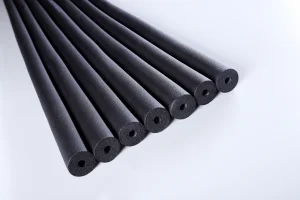
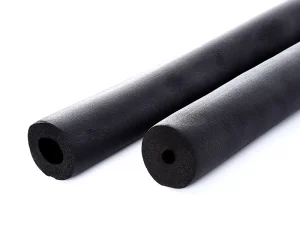
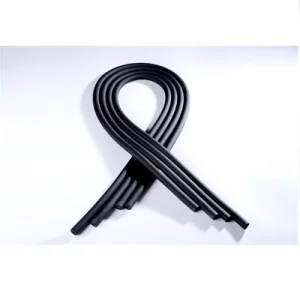
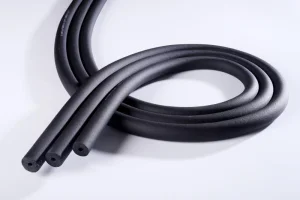
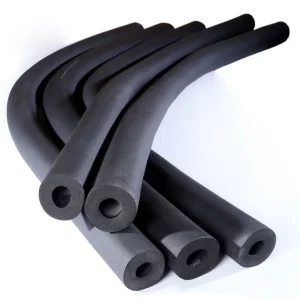
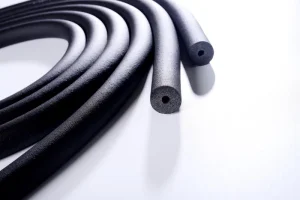
6mm to 114mm (suitable for standardized copper and steel pipe sizes)
Wall Thickness Options
9mm, 13mm, 19mm, 25mm, 32mm, 40mm
Compression Resilience
≥ 80% (under standard static loading cycles)
Water Vapor Permeability
≤ 2.8×10⁻¹¹ g/(m·s·Pa)
Localized Applications & Custom Engineered Scenarios
Elastomeric NBR/PVC insulation is engineered to perform across diverse architectural and industrial environments. Each application presents unique environmental challenges:
1. Commercial HVAC Ductwork and Plenum Systems
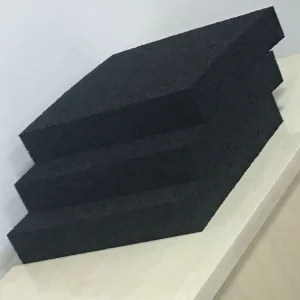
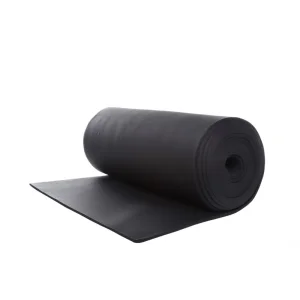
In offices, hotels, and retail malls, duct networks route conditioned air through ceiling plenums. Temperature swings in these spaces can cause condensation on uninsulated ducts. Installing NBR/PVC sheets prevents condensation and reduces the transmission of low-frequency aerodynamic noise generated by fans and dampers. When acoustic performance is a primary design driver, open-cell elastomeric variants can be specified to absorb sound energy within the air distribution stream.
2. Cleanrooms and Controlled Industrial Environments
Microelectronics factories, pharmaceutical plants, and biotechnology facilities require strict airborne particle control. Fibrous insulation materials can shed micro-fibers, which can damage silicon wafers or contaminate biological cultures. Closed-cell rubber foam does not shed fibers and features a smooth, low-friction surface that resists dust collection, simplifying sanitation and maintaining compliance with ISO cleanroom standards.
3. Cryogenic and Low-Temperature Utility Piping
Liquefied gas processes and industrial chilling systems operate at temperatures down to -40°C. If ambient air reaches the cold pipe surface, moisture freezes, creating ice dams that degrade insulation. Closed-cell NBR/PVC and specialized cryogenic elastomerics block moisture migration, keeping the system dry and maintaining thermal performance over long run cycles.
4. Marine, Offshore, and Coastal Infrastructure
Salt spray, high relative humidity, and mechanical vibrations accelerate corrosion under insulation (CUI) in maritime environments. Elastomeric NBR/PVC foam is naturally resistant to chemical attack, salt water, and oil. The flexible foam absorbs vibrations from vessel engines and pumps, preventing stress cracks at joints and connections.
Strategic Sourcing and Logistics Management
For international supply chain managers and HVAC contractors, purchasing from China factories involves managing logistics, certification alignment, and material volume optimization.
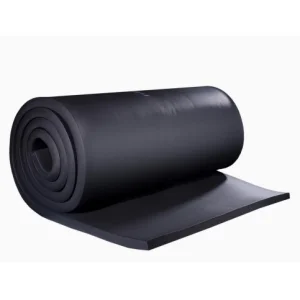
- Volumetric Optimization: Elastomeric foam is lightweight but bulky. Kingflex optimizes shipping containers by packing sheet rolls and nested pipe sleeves together, reducing maritime freight costs per cubic meter.
- Product Traceability: Modern Chinese manufacturing utilizes digital batch tracking. Every production lot, from raw polymer blending to extrusion and curing, is documented. Samples from each run are stored to verify compliance with international standards (BS 476, CE, REACH, RoHS, UL 94, ASTM).
- OEM Customization: Factories offer surface finishes, including aluminum foil cladding for UV and mechanical protection, self-adhesive backing for faster installation, and customized colors to identify fluid systems.
Future Trends: Next-Generation Elastomeric Insulation
The insulation industry is evolving to address green building initiatives and smarter building systems. Future developments focus on key technological trends:
- Halogen-Free Formulations: Manufacturers are developing halogen-free elastomeric foams that do not contain chlorine or bromine. These materials reduce the toxicity of smoke in fire situations, making them suitable for mass transit, underground railways, and high-density public spaces.
- Smart Sensing Integration: Research is exploring the integration of thin, conductive moisture sensors beneath the insulation layer. These sensors feed data back to Building Management Systems (BMS), alerting facilities teams to condensation leaks before they cause structural damage.
- Bio-Based Feedstocks: To lower the embodied carbon of building insulation, companies are testing natural rubber matrices and recycled polymer fillers. These bio-based options aim to deliver the same thermal properties and flame resistance as petrochemical-based materials.
 Kingflex