China Factories with Both Aluminum Foil and Self-Adhesive Insulation Technology

A Comprehensive Engineering White Paper on Advanced NBR/PVC Closed-Cell Foam Systems for High-Performance Thermal and Vapor Barrier Solutions

1. Structural Thermodynamics of Composite Foil-Adhesive Elastomeric Systems

Understanding the physics of dual-barrier protection in advanced thermal environments.

Reflective Radiant Heat Shielding

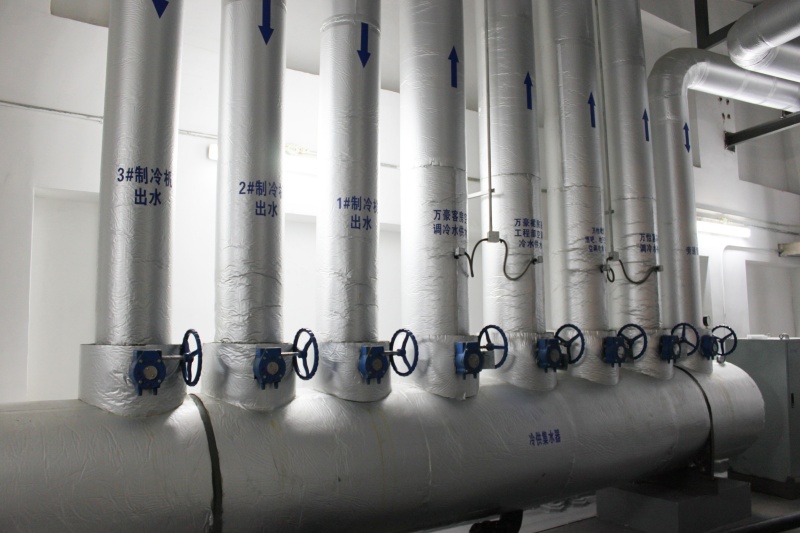
Aluminum foil facing offers a highly reflective surface that blocks up to 97% of radiant heat transfer. Integrated seamlessly at the factory, it operates as a durable mechanical and UV-resistant skin, minimizing heat gain in high-ambient environments.

Hermetic Vapor Barrier Integration

The laminated aluminum layer achieves a near-zero water vapor transmission rate ($\mu \ge 20,000$). When combined with self-adhesive backing, the risk of moisture migration through seams and joints is functionally eliminated, preventing Corrosion Under Insulation (CUI).

Rapid Mechanical Installation

Factory-applied pressure-sensitive adhesive (PSA) backings eliminate the necessity for field-applied liquid adhesives. This dramatically lowers volatile organic compound (VOC) emissions during installation while accelerating project execution timelines by up to 60%.

In modern industrial and commercial building systems, managing heat gain and preventing surface condensation are critical requirements. Specifying elastomeric NBR/PVC insulation that features both an aluminum foil facing and a self-adhesive backing represents the pinnacle of material efficiency. Standard field lamination often suffers from inconsistent bonding agent distribution, structural delamination, and human error. In contrast, factory-integrated lamination under precise thermal and pressure controls guarantees a uniform, high-bond adhesion that withstands thermal cycles ranging from $-40^\circ\text{C}$ to $+105^\circ\text{C}$.

By eliminating the micro-gaps typical of field lamination, the composite system provides a continuous defense. The structural layers work in harmony: the aluminum foil acts as an external shield protecting the flexible elastomer from ozone, ultraviolet light, and physical impact, while the pressure-sensitive adhesive ensures a full-surface bond to the pipe or duct surface, preventing airflow and capillary condensation behind the insulation body.

40+
Years Industry Legacy
600K+
Annual Capacity (m³)
66+
Exporting Countries
98%
Closed-Cell Structure

2. Global Industrial Scale and Supply Chain Dominance

Why China-based integrated manufacturing hubs command the global thermodynamic insulation supply chain.

As the demand for energy-efficient buildings accelerates worldwide under strict green mandates, China’s industrial insulation hubs—specifically in regions like Dacheng, the recognized capital of green building materials—have transitioned from low-cost component manufacturers to global leaders in custom R&D and advanced materials synthesis.

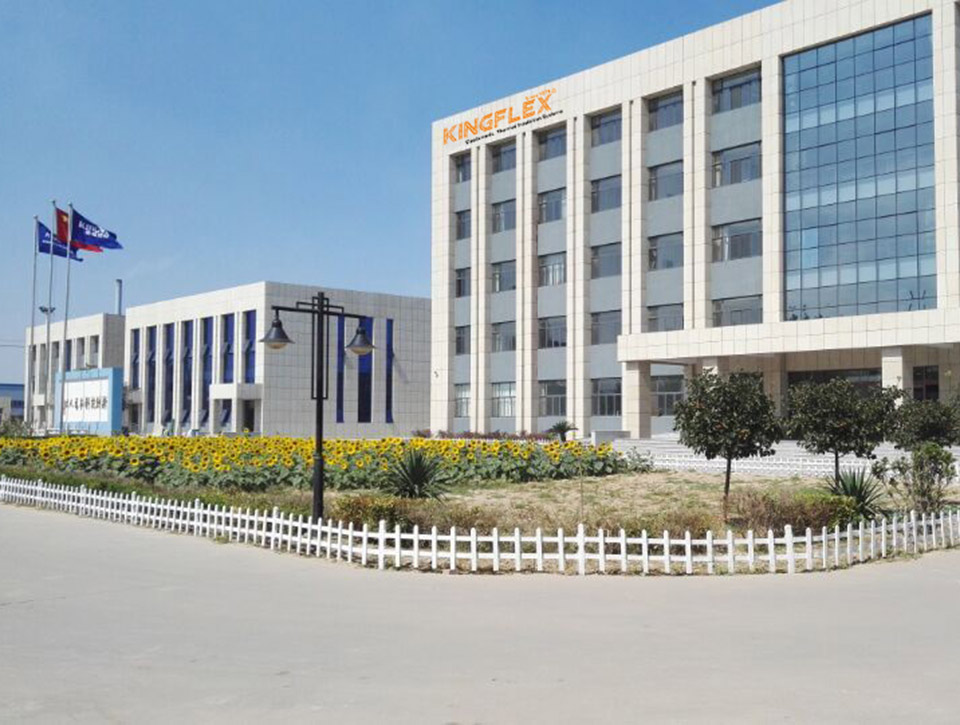
Having a centralized production line that can apply both aluminum foil and self-adhesive layers onto NBR/PVC closed-cell foam ensures significant economies of scale. Kingflex Insulation Co., Ltd. operates 5 large automatic assembly lines with an annual capacity exceeding 600,000 cubic meters. Such scale makes it possible to maintain stable supply chains, provide custom sizes, and secure international certifications simultaneously.
By controlling the raw chemical compounding of NBR/PVC, the cell structure formation, the extrusion process, and the final laminations under one roof, we eliminate intermediate supply chain delays and logistics costs. This highly vertical manufacturing integration is why global buyers favor Chinese factories for high-performance infrastructural projects.

Kingflex Automated Manufacturing Plant

3. Comprehensive Material Property Specifications

Engineering comparisons validating factory-applied foil & adhesive over conventional methods.

Performance Metric Kingflex Dual-Composite (Foil + Adhesive) Standard NBR/PVC (Unfaced) Field-Applied Laminated Insulation

Thermal Conductivity ($\lambda$) at $0^\circ\text{C}$ $\le 0.034\text{ W}/(\text{m}\cdot\text{K})$ $\le 0.035\text{ W}/(\text{m}\cdot\text{K})$ $0.036 - 0.039\text{ W}/(\text{m}\cdot\text{K})$ (due to air gaps)
Water Vapor Permeability ($\mu$) $\ge 20,000$ (Near-absolute barrier) $\ge 10,000$ Inconsistent (dependent on manual tape seams)
UV & Weathering Resistance Outstanding (Reflective Aluminum Shield) Moderate (Degrades over time if exposed) Varied (Subject to localized adhesive failure)
Fire Classification Class 0 / Class 1 (BS 476 Part 6 & 7) Class 1 / Class B Unpredictable due to non-rated field adhesives
Installation Speed Factor $3\times$ Faster (Peel-and-stick installation) Baseline 1x $0.5\times$ (requires liquid adhesive curing)

4. Localized Application Scenarios & Engineering Case Studies

Where the dual protection of aluminum foil and self-adhesive backing makes the critical difference.

HVAC Ductwork in High Humidity

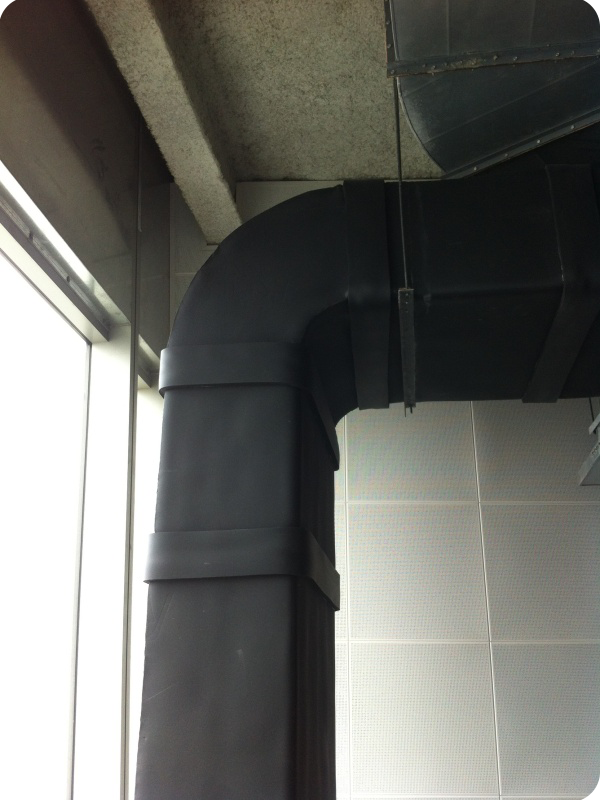
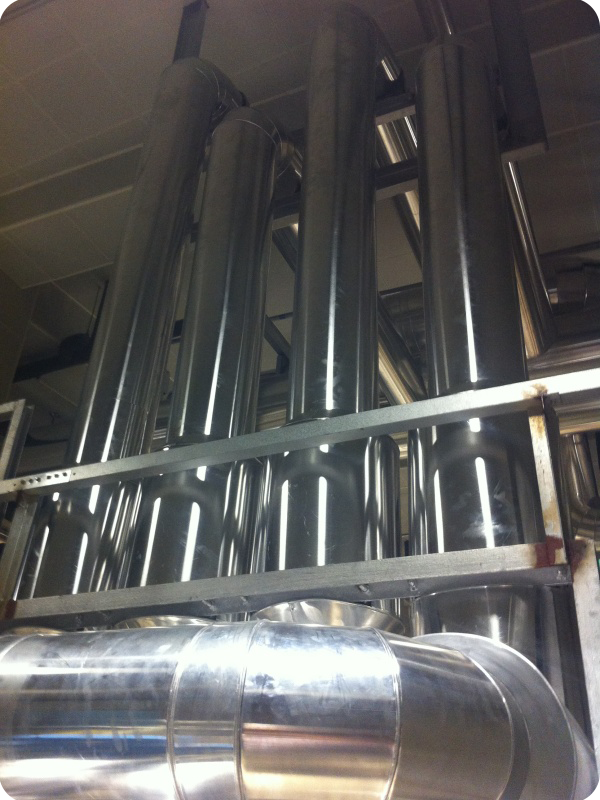
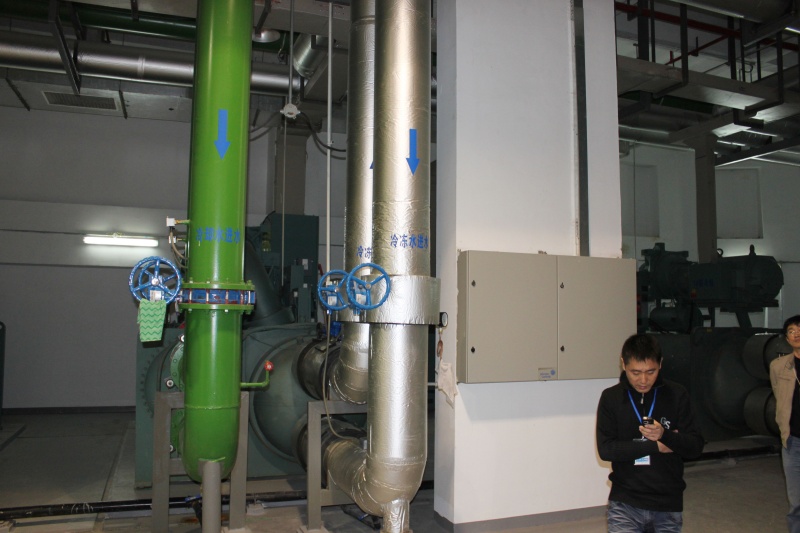
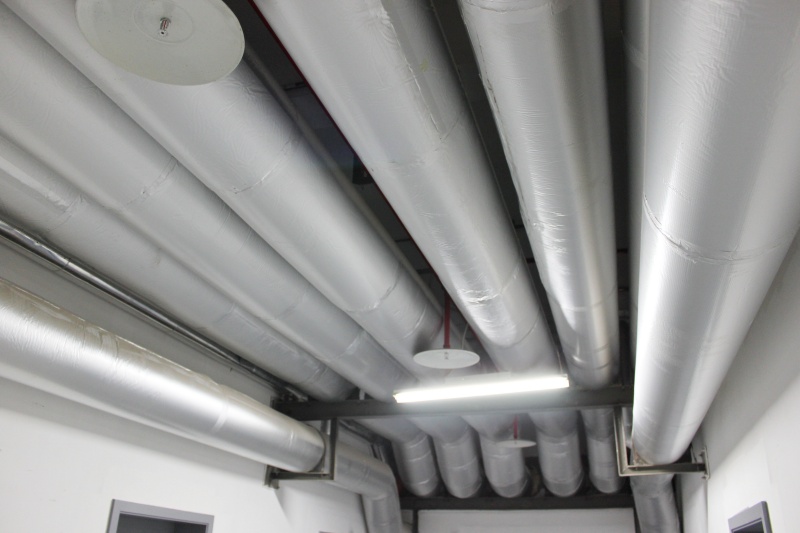
In equatorial or high-humidity regions, standard HVAC ducting suffers from persistent condensation. Incorporating factory-laminated self-adhesive rolls with aluminum skins prevents moisture contact with the sheet metal, mitigating duct corrosion and structural sagging.

Cleanroom Environments

Hospitals, pharmaceutical facilities, and microelectronics plants demand dust-free environments. Traditional insulation materials shed particles. Laminated foil surfaces encapsulate the foam entirely, ensuring zero fiber or particulate shedding into ventilation systems.

Heavy Chemical & Chilled Pipelines

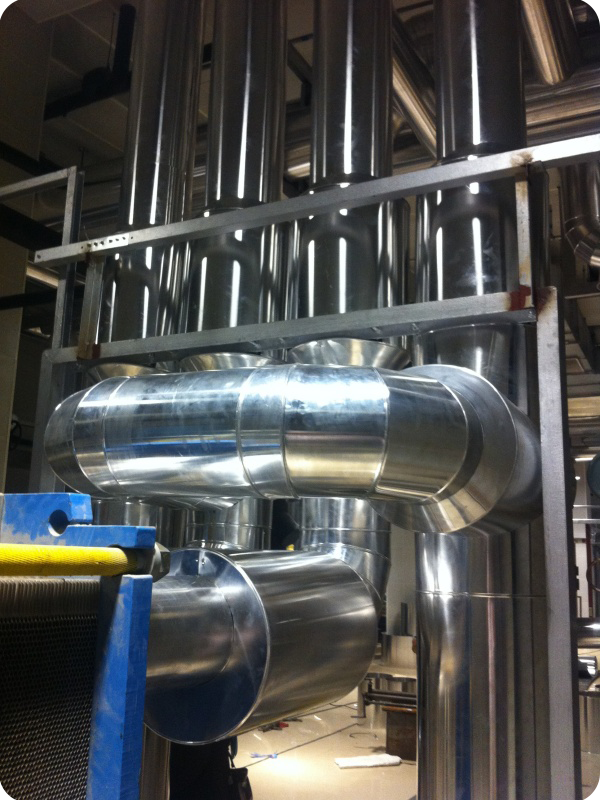
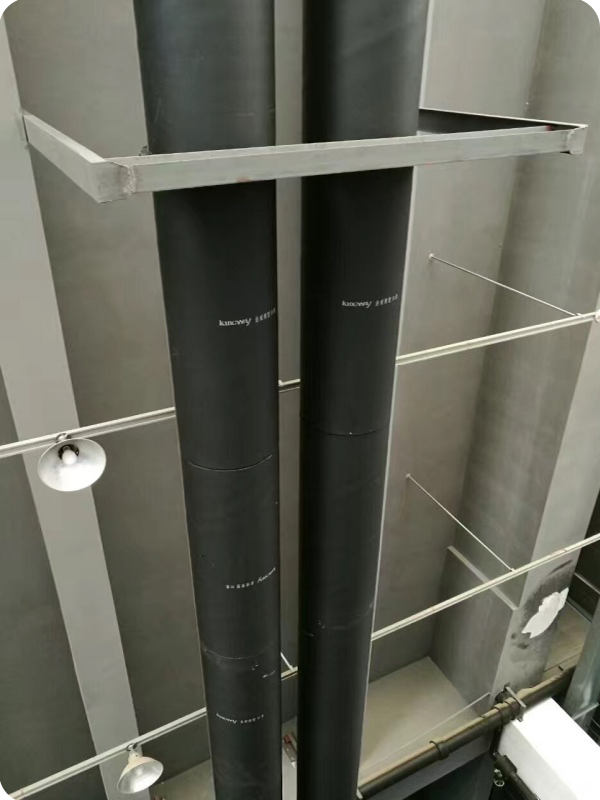
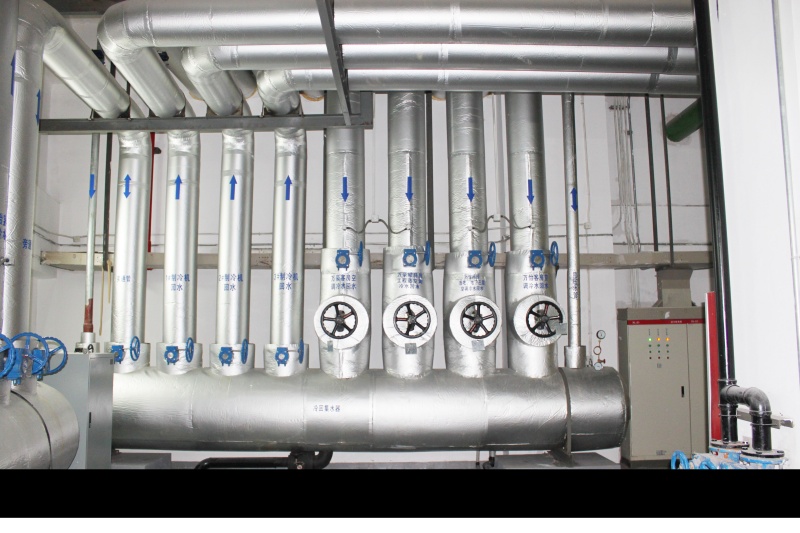
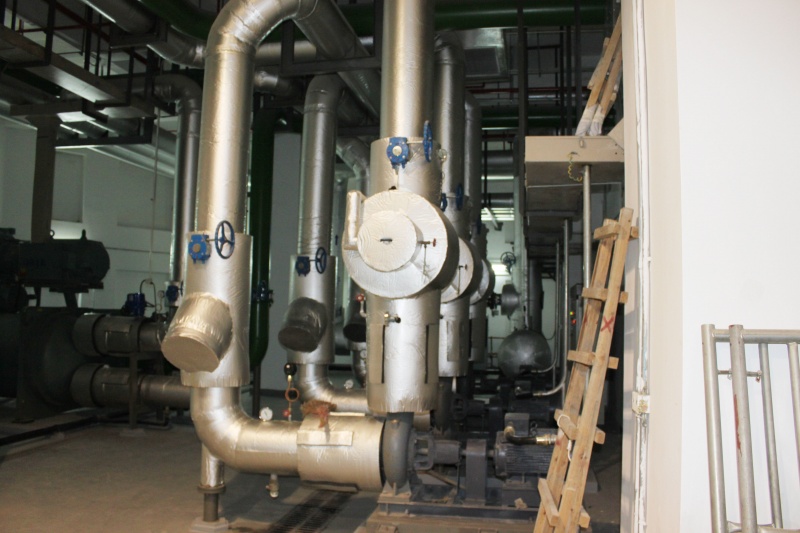
Petrochemical installations require robust pipe protection. Our flexible NBR/PVC tubes, complete with aluminum foils, prevent mechanical punctures from tools and surrounding steelwork, while the high-density self-adhesive backing prevents air pockets that lead to corrosion under insulation (CUI).

HVAC Ducting Laminated Insulation Project Cleanroom Ventilation Installation Process Piping Thermal Shield Cryogenic Systems Foil Protection

5. Established E-E-A-T: The Kingflex Legacy
Over 40 years of engineering expertise and industrial thermal stewardship.

Our Strategic Journey

Kingflex Insulation Co., Ltd. is a professional manufacturing and trading combo for thermal insulation products. Our research, development, and production departments are located in Dacheng, China—the recognized global capital of green-building materials.
Established by the Jinwei Group, which has a legacy spanning over 40 years since its founding in 1979, Kingflex inherits a pioneering spirit. Jinwei Group was the first manufacturer of thermal insulation materials north of the Yangtze River, charting the course for the modern Chinese insulation sector.
We are an energy-saving, environmentally friendly enterprise concentrating on research, development, production, and sales. In operation, Kingflex takes energy saving and consumption reduction as its core concept. We provide complete solutions through consultation, R&D, production, installation guidance, and dedicated post-sale service.
R&D Competency & Technical Force

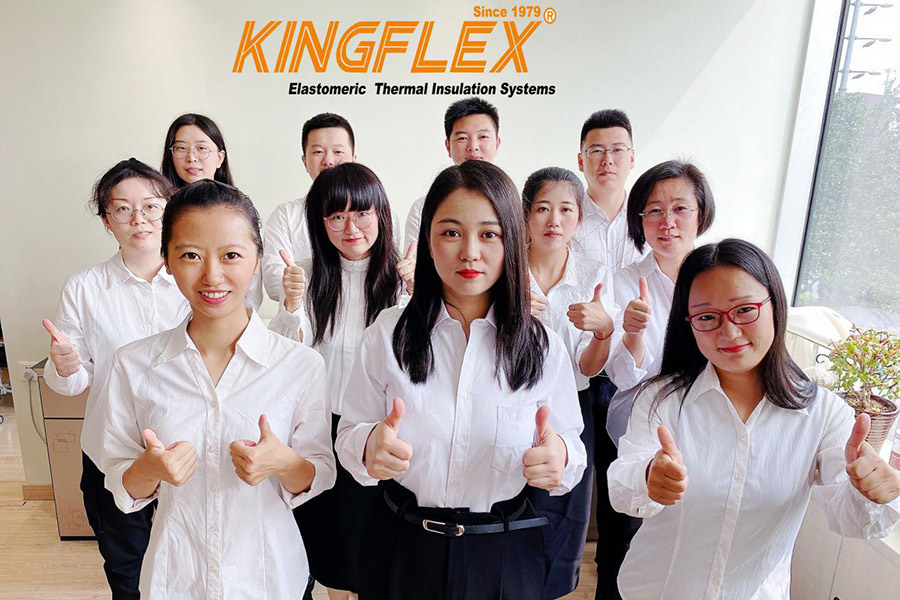
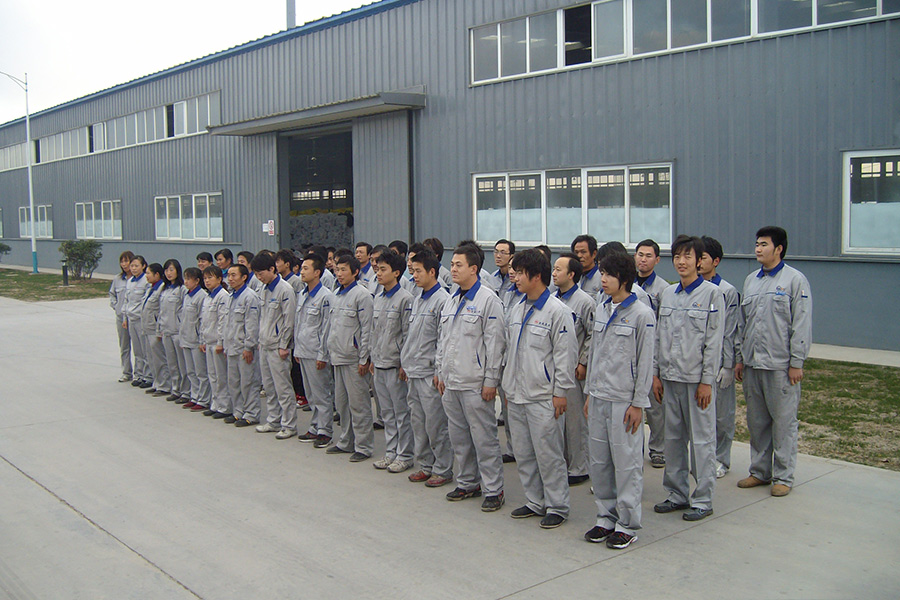
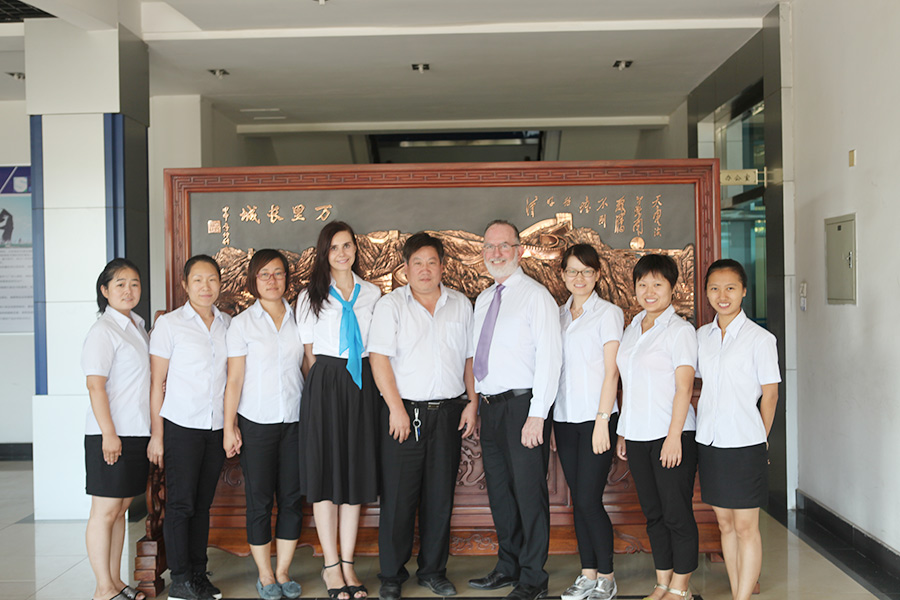
Our operational strength lies in our highly qualified personnel. Our team is a tight-knit, talented group with a shared vision of giving consistently first-class service to our clients. The R&D department features 8 professional engineers who continuously innovate in material sciences, closed-cell ratios, and chemical formulation improvements.

We support our global commercial presence with 6 professional international sales specialists and 230 skilled production workers who manage our automated processing lines.

Kingflex R&D Team
International Compliance & R&D Laboratory

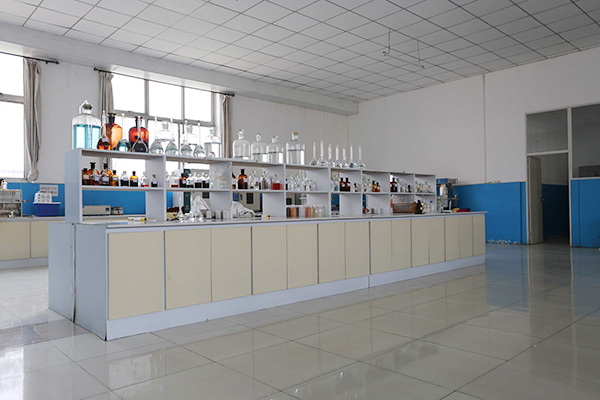
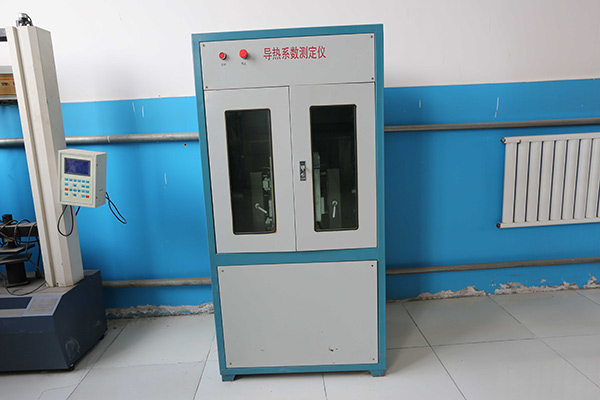
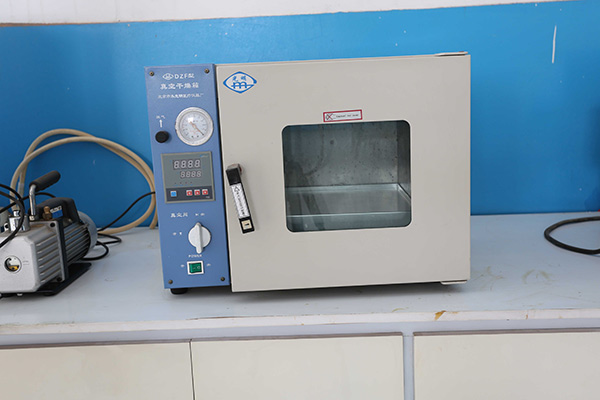
To support critical infrastructure globally, Kingflex complies with strict quality standards. Our product catalog undergoes consistent batch testing in our in-house lab, focusing on density distribution, flame propagation, smoke density, and moisture absorption.
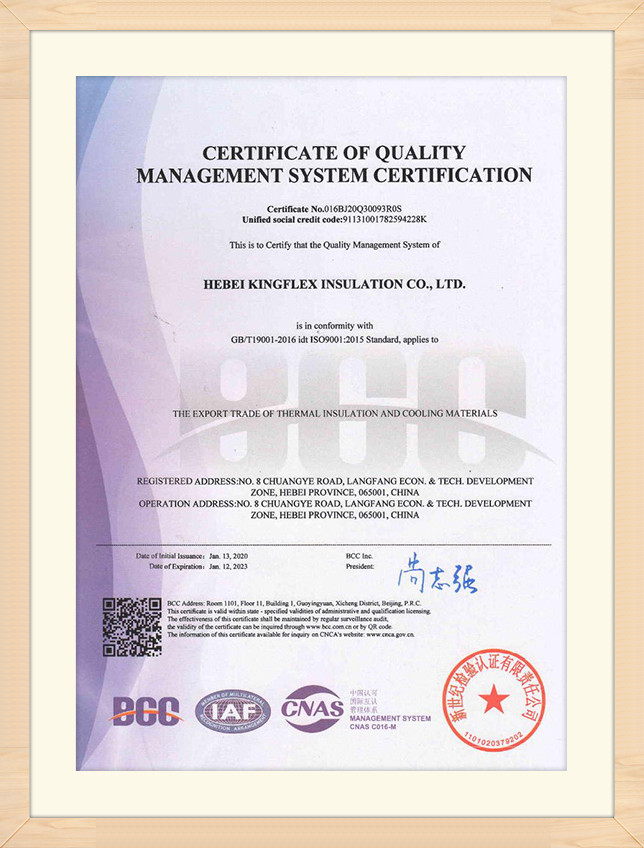
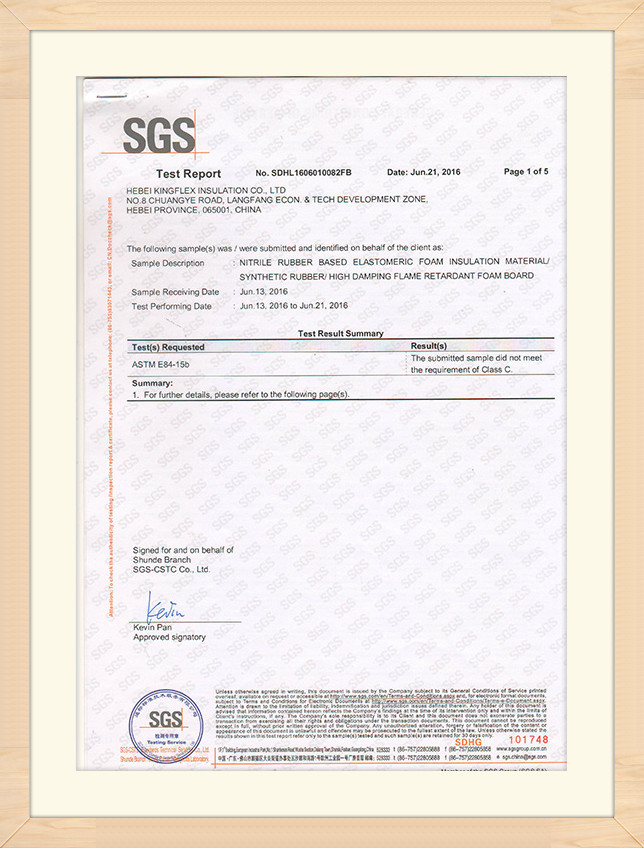
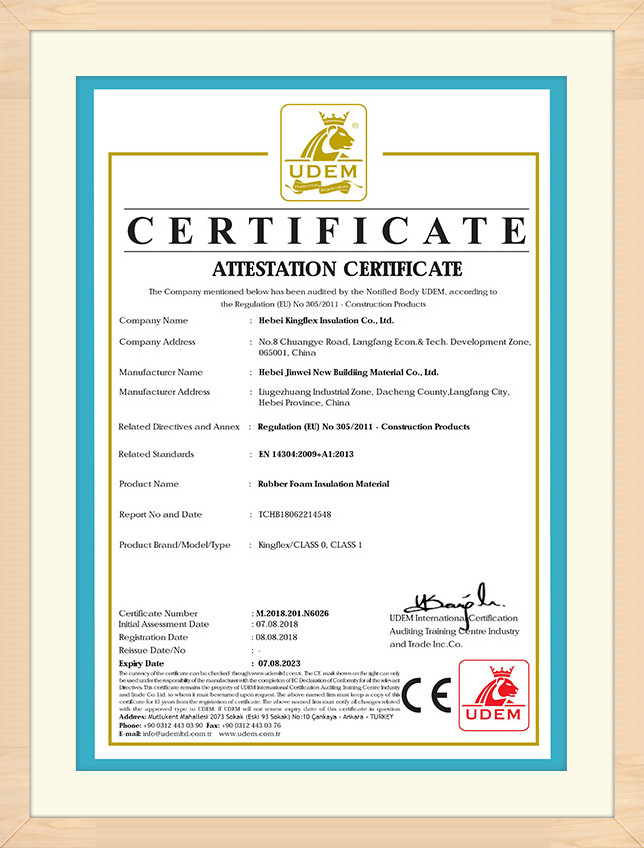
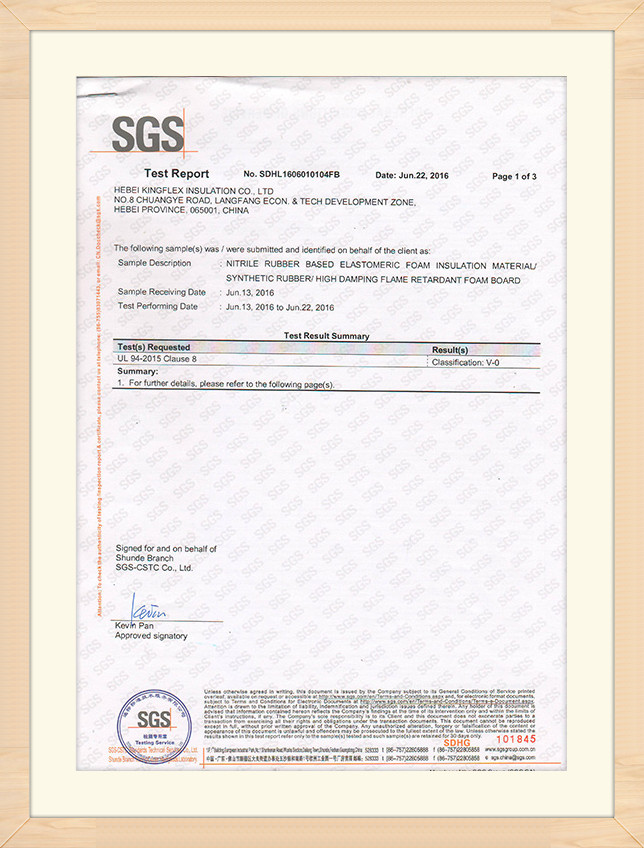
Our manufacturing plant maintains rigorous certifications. These include BS 476 Part 6 & 7, CE, REACH, RoHS, UL94, and ASTM, ensuring seamless localized support and compliant approvals in highly regulated jurisdictions.

Testing and R&D Lab

Global Certification Portfolio

Quality Management System ISO Certificate CE Mark Product Conformity Cert FM Approval Certificate Environmental System Certificate

Factory & Operational Excellence

Factory Production Line Raw Chemical Compounding Area High-Speed Adhesive Lamination Line Insulation Sheets Warehouse Inventory
Foil Facing Application Machine Quality Control Inspections Custom Slitting Machine Packaging and Export Logistics

6. Industrial Validation and Client Verification

Transparent records of project delivery, site applications, and partner feedback.

Global Project Integration

Kingflex insulation solutions are actively deployed across aerospace, industrial gas pipelines, residential HVAC configurations, and large-scale public facilities. Over the last 16 years, our commercial teams have exported insulation materials to 66 foreign countries, adapting to diverse regional codes and building regulations.

Kingflex Project Site Installation

Client Communications & Verification

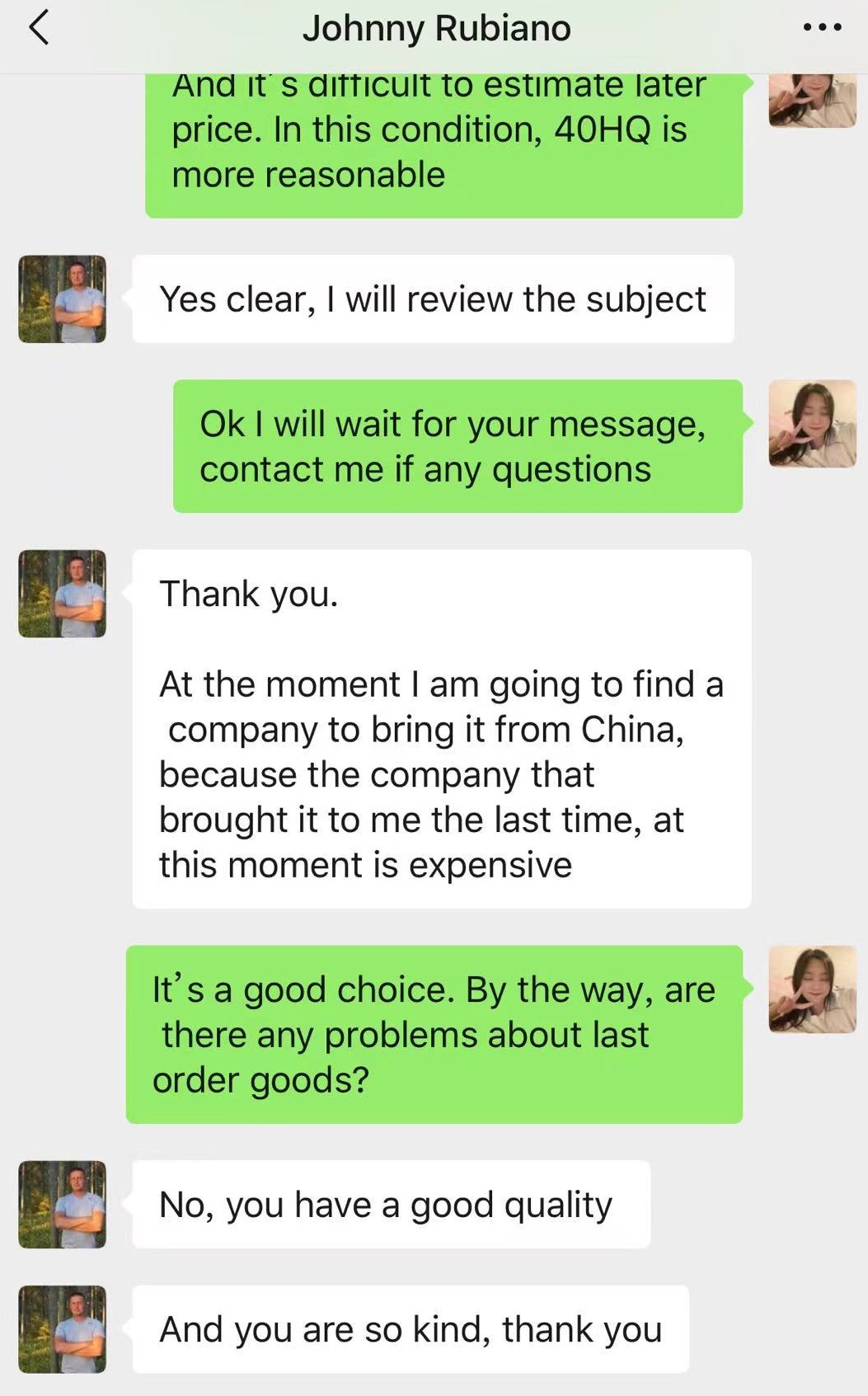
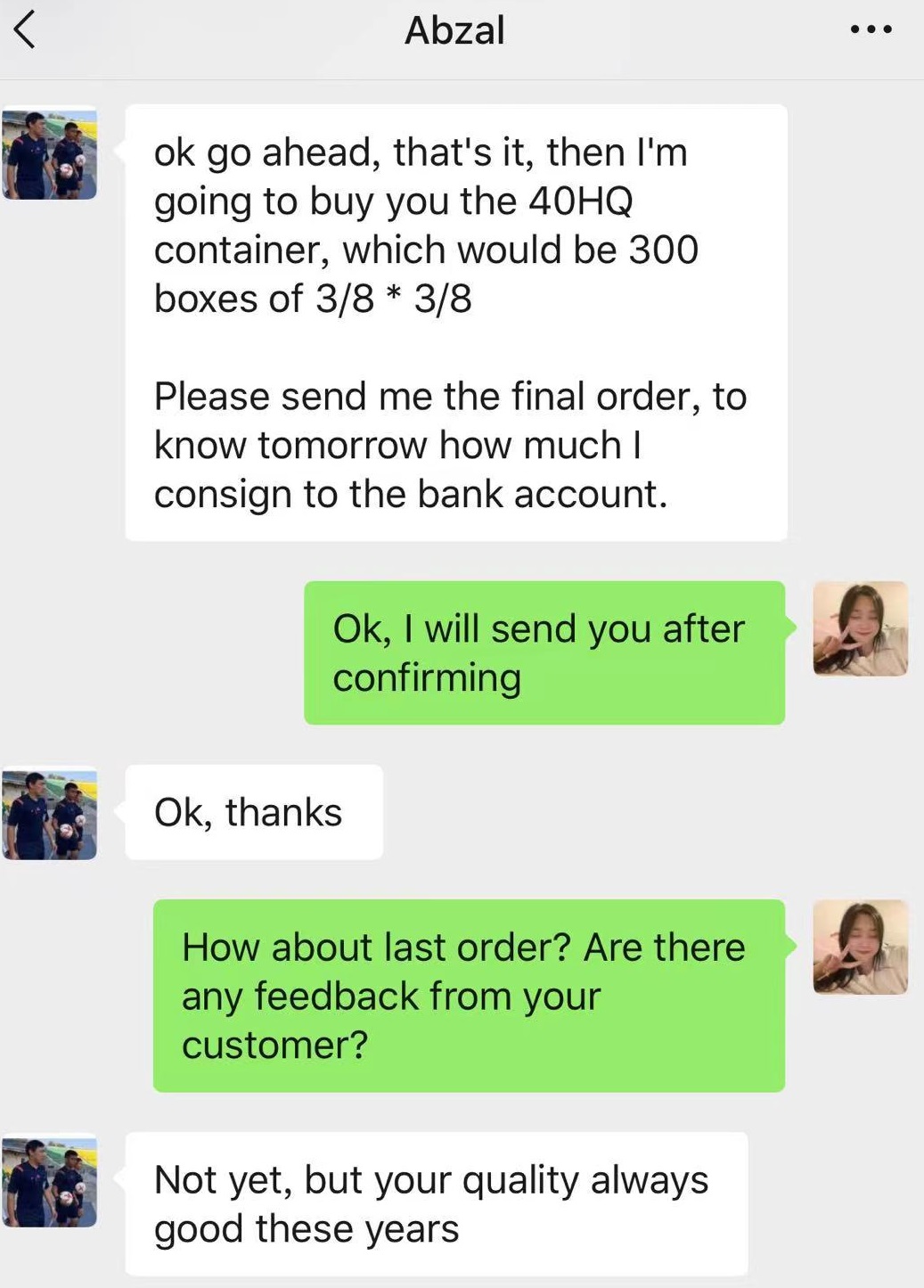
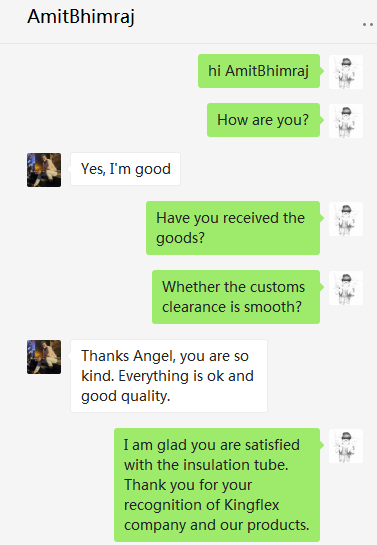
We work closely with global engineering consultants. We provide live technical support, design calculations, and physical performance verification. Below are verified records of client interaction and engineering feedback validating our structural adhesion and foil durability in harsh field conditions.

Client Communication Record

Quality Control Logs

We log every batch of foil-adhesive laminations. Our pressure-sensitive tapes and release liners are tested for peel strength and aging resistance to ensure that adhesive backings maintain their integrity over a 15-year service life.

Verification Report 1 Verification Report 2 Verification Report 3 Verification Report 4

7. Core Standard Specifications Catalog

Technical reference datasets for design and mechanical engineers specifying NBR/PVC systems.

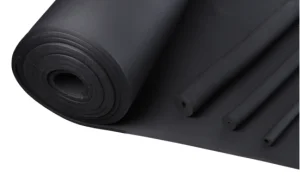
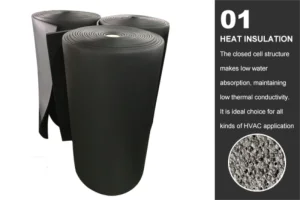
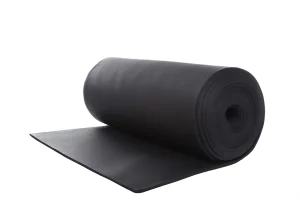
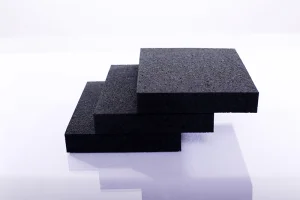
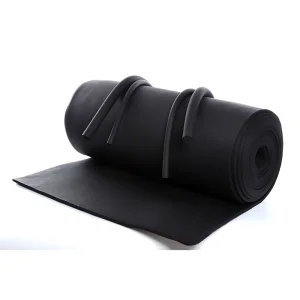
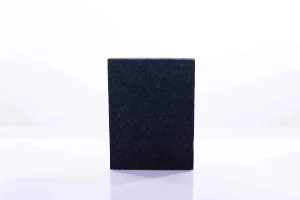
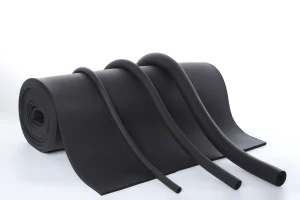
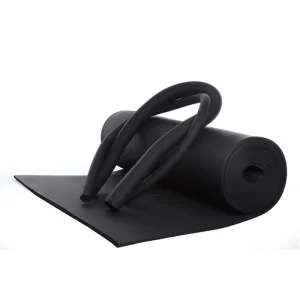
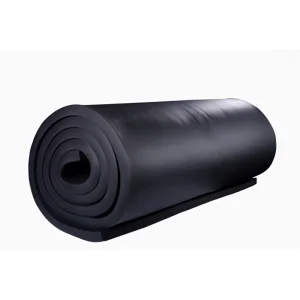
Black Rubber Foam Insulation Sheet Roll

Our premium closed-cell NBR/PVC sheeting is designed for wide-area systems like HVAC ducts, tanks, and structural panels.

  • Material Chemistry: Elastomeric NBR/PVC polymer blend.
  • Thickness Availability: 6mm to 50mm.
  • Bulk Density: 40 to 55 kg/m³.
  • Operational Range: $-40^\circ\text{C}$ to $+105^\circ\text{C}$.
  • Closed-Cell Rate: Over 98%.
  • Resilience properties: Compression recovery over 80%.

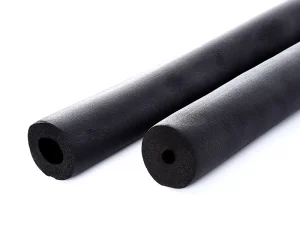
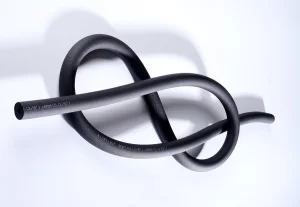
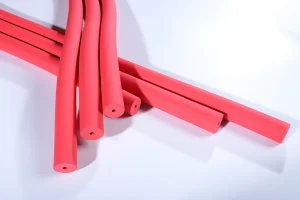
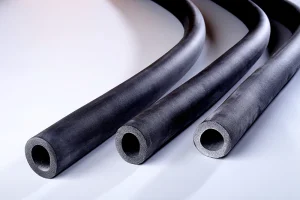
Black Rubber Foam Insulation Pipe

Extruded hollow elastomeric profiles specifically calibrated for structural copper and iron piping networks.

  • Wall Thickness Range: 9mm to 40mm.
  • Internal Diameter (ID): 6mm to 114mm.
  • Forming Process: Direct continuous extrusion.
  • Safety: Self-extinguishing fire-retardant properties.
  • Coating Finish: Smooth micro-barrier outer skin.
  • Utility: Limits risk of pipe freezing and structural cracking.

Integrated Facing Technologies

Options for custom aluminum foil lamination and high-tack adhesive configurations.

  • Foil Type: Reinforcing mesh glass scrim + Alu layer.
  • Adhesive Base: Acrylic solvent-based pressure-sensitive adhesive.
  • Release Liner: Siliconized PE film/paper.
  • Adhesion Strength: $\ge 12\text{ N}/25\text{mm}$.
  • Foil Permeance: $0.02\text{ Perms}$ (ASTM E96).
Rubber sheet rolls stack Alu foil laminated sheets Self adhesive backing foam close up Finished composite insulation roll

8. Technology Roadmap & Material Science Future

Anticipating energy standards and detailing next-generation thermodynamic innovations.

Bio-Based & Halogen-Free Elastomers

Regulatory frameworks (like REACH and RoHS) continue to tighten rules on halogenated flame retardants. Kingflex's engineering department is testing bio-based NBR resins synthesized from plant-derived feedstocks. This reduces lifecycle carbon footprints while maintaining structural fire resistance.

Aerogel Hybrid Composites

To reduce spatial requirements in highly compact marine or aerospace installations, we are developing silica-aerogel-infused NBR foams. This hybrid approach will lower thermal conductivity values further, allowing thinner insulation sheets to provide the same performance.

Intelligent Lamination Processes

By using real-time machine vision systems on our assembly lines, we can monitor the uniformity of our self-adhesive coatings down to the micron. This ensures a consistent, high-tack bond across the entire roll and prevents delamination under cycling temperatures.

9. Comprehensive Technical Q&A / FAQ

Answers to common engineering queries regarding design, installation, and compliance.

Q1: What is elastomeric rubber foam insulation used for?

A1: It is mainly used for HVAC ducts, air conditioning pipes, building thermal insulation, industrial pipeline cold insulation, and sound insulation systems.

Q2: Is Kingflex rubber foam insulation fire resistant?

A2: Yes, our rubber foam insulation products are formulated with flame retardants, allowing them to meet key building safety codes including BS 476 Class 0, Class 1, and UL94 standards.

Q3: What is the difference between rubber foam and rock wool insulation?

A3: Rubber foam is flexible, closed-cell, and highly moisture-resistant, making it ideal for HVAC, cold pipelines, and condensation control. Rock wool is a high-density fibrous material with high-temperature resistance, making it suitable for industrial steam applications and structural fire stopping.

Q4: Do you provide customized insulation products?

A4: Yes, we offer comprehensive OEM services, including custom sizes, wall thicknesses, foil lamination combinations, and pressure-sensitive self-adhesives to fit specific projects.

Q5: What certifications do your products have?

A5: Our materials have passed BS 476, CE, REACH, RoHS, UL94, ASTM, and other international certifications, verifying compliance and quality for global mechanical engineering specifications.

Q6: Does Kingflex products have traceability?

A6: Yes, all our raw material logs, curing records, testing logs, and batch numbers are archived for quality control and field traceability.

Q7: What thickness of Rubber foam insulation sheet roll can you produce?

A7: Our automatic continuous assembly lines can produce sheet rolls ranging from 6mm to 50mm in thickness.

Q8: What is the expected service life of rubber plastic pipe and board?

A8: When properly specified and installed according to guidance (especially with protective foil facing), our insulation systems provide a service life of 10 to 15 years.

Q9: Why is factory-applied aluminum foil superior to field-applied aluminum tape?

A9: Factory application laminates the foil to the foam substrate under controlled pressure and temperature. This prevents micro-air pockets and wrinkles that can collect condensation, and ensures the vapor barrier remains continuous.

Q10: How does the self-adhesive layer withstand extreme winter temperatures during installation?

A10: We formulate our pressure-sensitive adhesives (PSA) with low-temperature tackifiers. This ensures high initial shear and peel strength even when applied in temperatures near freezing, preventing edge lifting.