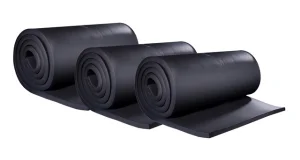
Industrial-grade elastomeric insulation engineered for temperature extremes from -200°C to +105°C in the Osaka Bay industrial district.
Premium Cryogenic Solutions for Osaka Projects
High-performance closed-cell elastomeric tubing and insulation sheet configurations optimized for immediate integration into Japanese LNG terminal and petrochemical pipeline networks.
The Osaka Industrial Landscape & Cryogenic Insulation Imperatives
The Kansai metropolitan area, centered on the dynamic economic hub of Osaka, stands as one of East Asia’s most critical clusters for heavy chemical processing, energy imports, and high-tech manufacturing. The industrial belts along Osaka Bay—spanning the Sakai-Senboku coastal petrochemical complexes and the key liquid gas importation terminals—require absolute thermal efficiency and system integrity. Because cryogenic processes manage fluids like Liquefied Natural Gas (LNG) at -162°C and liquid nitrogen down to -196°C, standard HVAC insulations are rendered obsolete.
To prevent catastrophic boil-off, eliminate systemic moisture ingress, and protect piping systems from Corrosion Under Insulation (CUI), Osaka's design institutes demand advanced closed-cell materials. Kingflex’s elastomeric formulations, designed to operate effectively at temperatures down to -200°C, offer the required durability, chemical resistance, and ease of installation needed to keep Osaka's energy terminals running safely.
Osaka's Local Cryogenic Applications
Liquefied Natural Gas (LNG) Value Chain: Insulating low-temperature vaporizers, loading lines, and storage vessel connections within Sakai and Senboku port facilities.
Chemical & Ethylene Plants: Keeping process lines at stable sub-zero environments in the Sakai industrial corridor.
High-Precision Cleanrooms & Laboratories: Supplying liquid nitrogen piping systems for Osaka's semiconductor and biomedical research centers.
Marine Transport: Insulating carrier pipelines for liquefied gas vessels docking at Kansai ports.
Need Technical Specifications for an Osaka Project?
Our engineering team provides heat transfer calculations, custom sizing, and JIS-compliant material certifications for Japanese industrial applications.
Technical Blueprint: Closed-Cell Elastomeric vs. Traditional Fibrous Materials
Why Osaka's leading industrial plants are moving away from open-cell designs to modern closed-cell technology to safeguard their cryogenic assets.
At cryogenic temperatures, the temperature gradient between the pipe interior (down to -200°C) and the external ambient air is immense. This differential creates a powerful vapor drive. If moisture penetrates the insulation, it freezes, expands, and destroys the insulation material. Water also increases thermal conductivity by up to 24 times, leading to severe thermal loss.
Performance Indicator
Kingflex Cryogenic Elastomeric Foam
Traditional Glass / Rock Wool
Cellular Glass
Operating Temp Range
-200°C to +105°C
-120°C to +450°C (Not ideal for deep cryo)
-260°C to +430°C
Thermal Conductivity (λ at 0°C)
≤ 0.035 W/(m·k)
≥ 0.042 W/(m·k)
≥ 0.048 W/(m·k)
Water Vapor Permeability
μ ≥ 10,000 (Built-in Vapor Barrier)
High (Requires heavy outer cladding)
Excellent (But highly brittle)
Flexibility & Vibration
High (Absorbs pipe contraction/expansion)
Poor (Fibrous structure settles)
Extremely Brittle (Prone to cracking)
Installation Complexity
Low (Highly flexible, easy to wrap/seal)
Medium (Requires complex cladding)
High (Requires expansion joints & layers)
Vapor Barrier Excellence
Kingflex NBR/PVC closed-cell structure has an inherent resistance to moisture ingress, eliminating the need for complex, heavy vapor barrier coatings on your low-temperature lines.
Thermal Expansion Cushioning
Cryogenic pipelines shrink significantly. Our elastomeric foam expands and contracts dynamically with the pipes, avoiding the gaps and joint failures common in rigid glass systems.
CUI Mitigation
By keeping water and chloride ions away from the stainless steel pipe surface, our material protects against stress corrosion cracking in humid coastal climates like Osaka.
Our Company: Kingflex Insulation Co., Ltd.
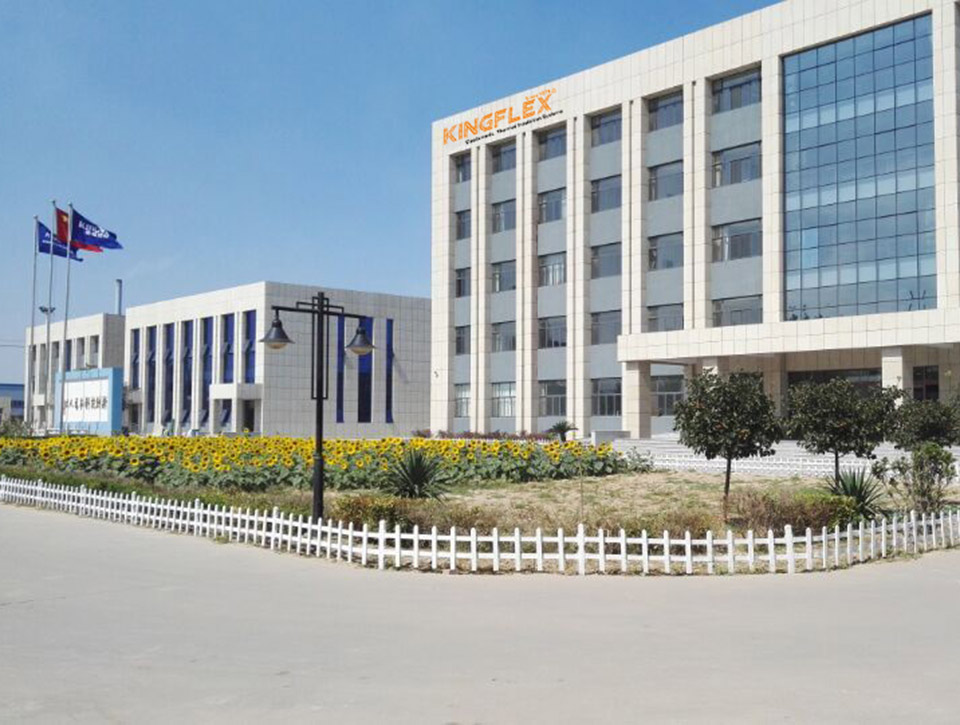
Kingflex Insulation Co., Ltd. is a professional manufacturing and trading combo for thermal and cryogenic insulation products. Our research, development, and advanced production facility is located in Dacheng, China—a region famous for energy-saving green building materials.
Operating with the core concepts of energy conservation and thermal efficiency, we deliver comprehensive insulation solutions. From initial consultation and custom engineering to production and installation guidance, we provide end-to-end support for projects worldwide.
Established by the Jinwei Group, which has a manufacturing history spanning over 40 years (founded in 1979), Kingflex inherits a legacy of quality. We were among the pioneers of thermal insulation production in China, and we continue to set benchmarks for reliability and technical excellence.
For contractors and buyers in Kansai, balancing procurement budgets with technical performance is a constant challenge. By choosing Kingflex, Osaka projects benefit from direct access to one of Asia's largest elastomeric production facilities.
Our factory houses 5 large automatic assembly lines, generating an annual capacity of over 600,000 cubic meters. This scale ensures stable lead times and cost efficiency that localized distributors find hard to match.
Located near major northern Chinese shipping ports like Tianjin and Qingdao, we offer rapid shipping routes directly to the Port of Osaka. Most orders reach Osaka in 5 to 7 days, matching the speed of regional logistics networks while delivering significant factory-direct savings.
JIS Compliant R&D
Our engineering team develops formulations aligned with JIS standards (JIS A 9511 for cellular plastic insulation), simplifying regulatory approval for Japanese engineering firms.
Comprehensive Quality Control
Every production run is fully traceable, complete with testing certificates for fire safety (UL94, BS 476) and thermal conductivity (ASTM C518).
Product Specifications & Material Guidelines
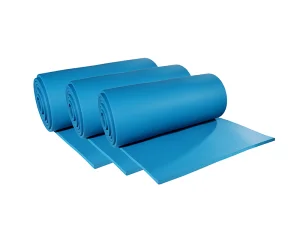
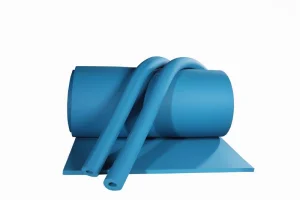
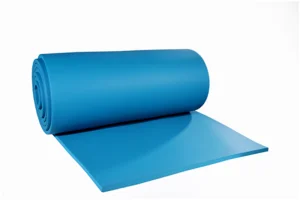
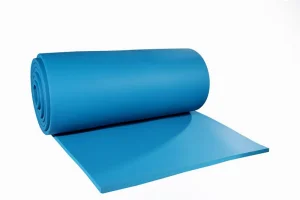
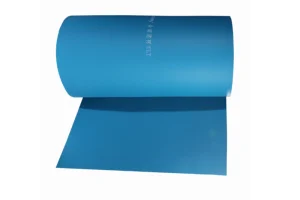
Black Rubber Foam Insulation Sheet Roll
Designed for large vessels, ducts, and wide-diameter industrial pipelines in chemical plants.
Material: Premium NBR/PVC blend
Thickness Range: 6mm - 50mm
Density: 40 - 55 kg/m³
Service Temperature: -40°C to +105°C (Up to -200°C with multilayer setups)
Closed-Cell Rate: > 98%
Compression Resilience: > 80%
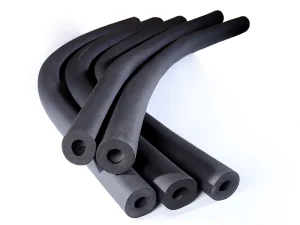
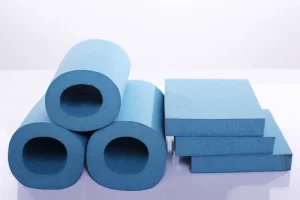
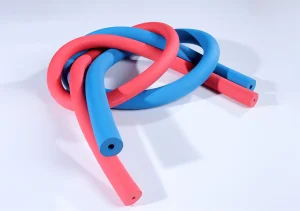
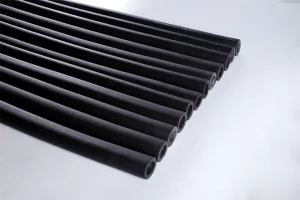
Black Rubber Foam Insulation Pipe
Extruded tubing designed for direct application on cold-water, refrigerant, and low-temperature process lines.
Material: High-density NBR/PVC
Wall Thickness: 9mm - 40mm
Inner Diameter (ID): 6mm - 114mm
Flame Retardancy: Self-extinguishing, Class 0 / Class 1 (BS 476)
Moisture Resistance Factor (μ): > 10,000
Osaka Cryogenic System Product Matrix
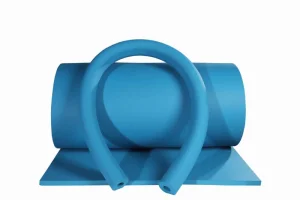
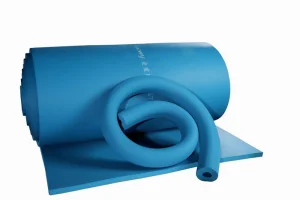
A comprehensive selection of flexible elastomeric sheets, tubes, and specialized systems engineered for temperature control down to -200°C.
Essential technical insights on applying, sizing, and choosing elastomeric rubber foam insulation for cryogenic installations.
Q1: What are the primary applications of elastomeric rubber foam insulation in cryogenic systems?
A1: It is primarily specified for industrial pipeline cold preservation, HVAC ductwork, chilled water loops, and low-temperature process piping. In cryogenic systems (such as liquid nitrogen or LNG setups), it prevents severe ambient heat gain, eliminates surface condensation, and controls thermal expansion stress down to temperatures of -200°C.
Q2: How does Kingflex rubber foam perform in fire tests?
A2: Our products are engineered to be highly flame-retardant and self-extinguishing. They comply with international fire standards, including BS 476 (Class 0 and Class 1), CE safety protocols, ASTM E84, and UL94, ensuring compliance with strict industrial and building safety codes in Japan.
Q3: How does closed-cell elastomeric rubber foam compare with rock wool or glass wool?
A3: Closed-cell rubber foam features a built-in vapor barrier (with a high resistance factor of μ ≥ 10,000), making it highly resistant to moisture ingress. In contrast, rock wool and glass wool are open-cell materials that absorb moisture easily, requiring a complex external vapor barrier to avoid losing insulation efficiency in low-temperature setups.
Q4: Does Kingflex support custom OEM thicknesses and profiles for Osaka energy projects?
A4: Yes, we provide full OEM customization. We manufacture custom sheet roll thicknesses from 6mm up to 50mm and tailor pipe inner diameters (ID) and profiles to fit the unique specifications of your design institutes and plant layouts.
Q5: Which certifications back Kingflex's low-temperature material line?
A5: Our cryogenic materials are certified under CE, REACH, RoHS, UL94, and ASTM. We provide full material traceability for each production run, ensuring your project meets global industrial quality standards.
Q6: What is the typical design service life of your elastomeric insulation products?
A6: Under normal operating conditions and when installed according to guidelines, the structural service life of Kingflex rubber plastic foam is 10 to 15 years.
Q7: How do you prevent cracking in NBR/PVC insulation at temperatures below -100°C?
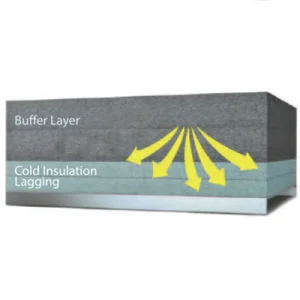
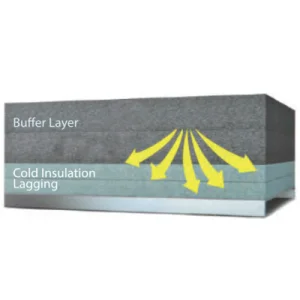
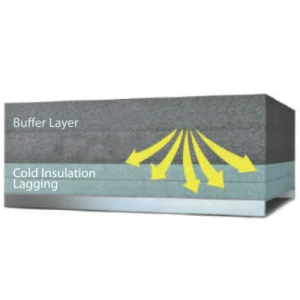
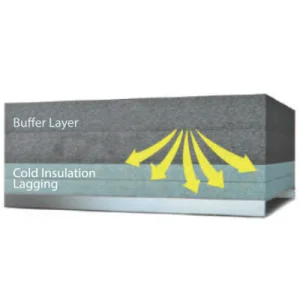
A7: At extremely low temperatures, elastomers become rigid. To prevent stress cracking, our cryogenic insulation uses a multi-layer design that allows the innermost layers to move independently of the outer protective wraps, accommodating the pipe's thermal contraction.
Q8: How does Kingflex support local installations in Osaka?
A8: We provide detailed installation manuals, engineering calculations for thermal thickness, and remote technical support. For large-scale projects, we coordinate with local Japanese engineering partners to guide your field crews through the installation process.
Begin Your Cryogenic System Calculation Today
Ensure safety, limit boil-off, and prevent Corrosion Under Insulation on your next project. Contact our technical team for custom project estimates and direct pricing.
 Kingflex